Drawing our bean sprouts
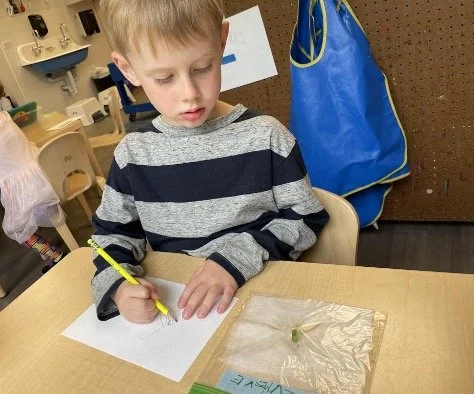
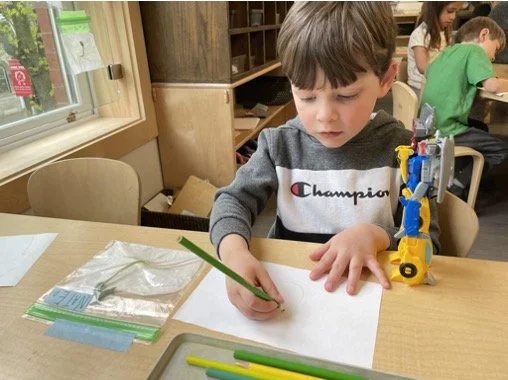
It has been exciting to watch what is happening to the bean seeds we have hanging on our windows. Some have sprouted roots, stems and even leaves, while others have little to no growth. Some have developed some mold, which seems to have stopped the growth. This week, we invited children to draw the sprouts. We have placed a few on tables along with colored pencils and papers. Children looked very carefully at each sprout in order to duplicate what they saw, inspiring not only drawings, but discussions about the differences in each sprout. Some were long, some had leaves, some had curled around each other and in some, we could still see the remnants of the bean’s outer covering. What caused these differences, some wondered, while others had pretty firm ideas about it. The bag was too small, the napkin was too wet, there wasn’t enough water, not enough sun, the bean fell off of the napkin. This led to discussions about what else could be planted and how. Do all plants get started on napkins? While a few seemed sure that they do, others had some first hand knowledge of planting in soil. This led to children thinking about the plants that they see growing outside. We are encouraged to see children grow in their ability to make connections between what we do in the classroom with what happens outside in nature.
Putty
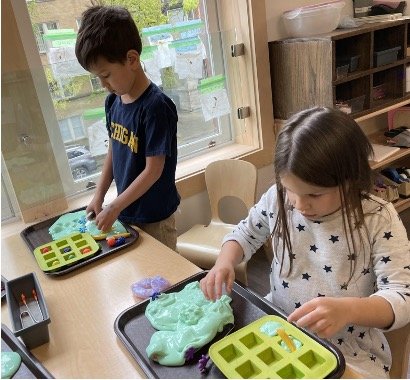
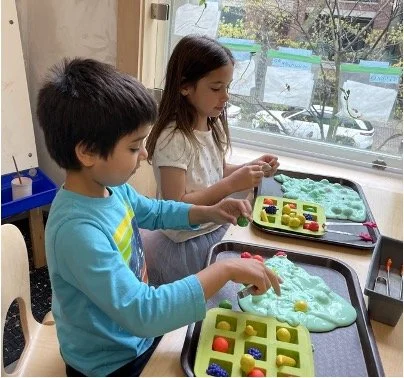
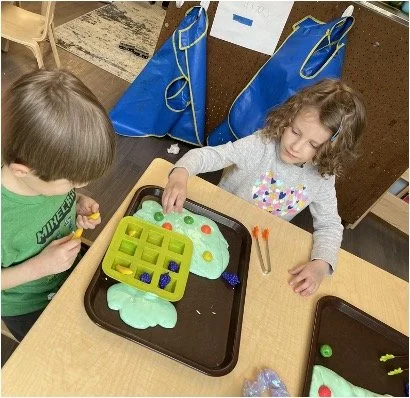
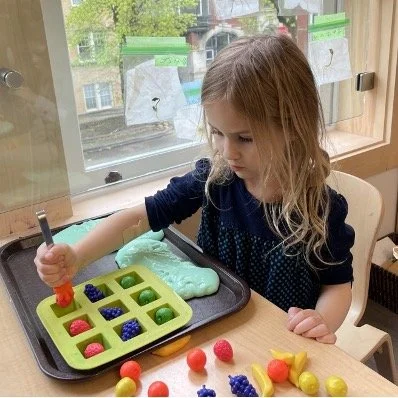
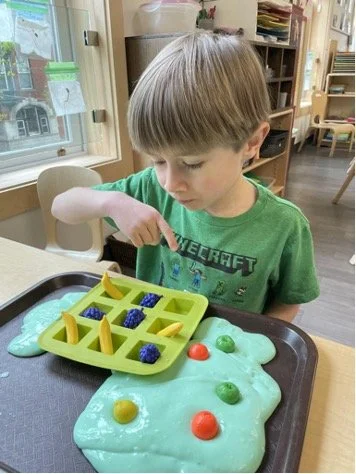
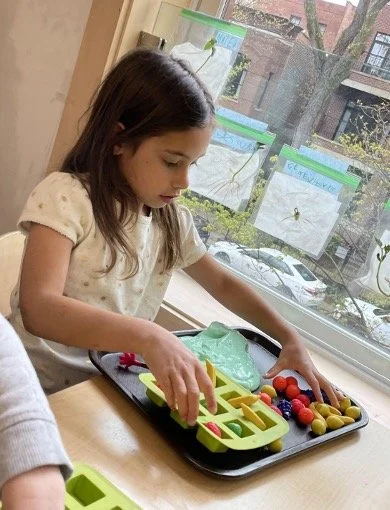
This week, we added tongs with fruit and sorting trays to the putty. Children have been sorting their fruit, creating patterns, making baked goods and ice cream and even playing tic tac toe with the fruit. As children use the fruit for their creations or patterns, some of them have been looking for more of a certain type. This has led to many discussions about how many each child has, how they are using them and how many more they want than they already have. We’ve been seeing lots of counting, comparing and discussion of number as a result.
Fishing
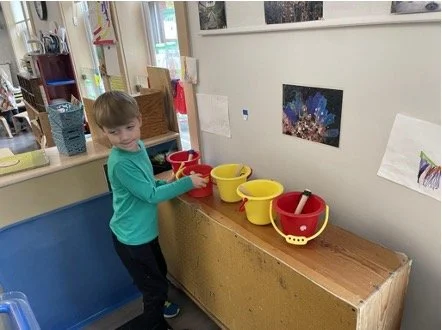
We turned our water table into a “pond” for fishing. In the pond are fish with paper clips which can be “caught” by poles with magnets tied to the end. Those who wish to fish can take a bucket with a pole. The bucket can be used to hold the fish they catch and when they are done, they return the fish to the pond and the rod to the bucket.
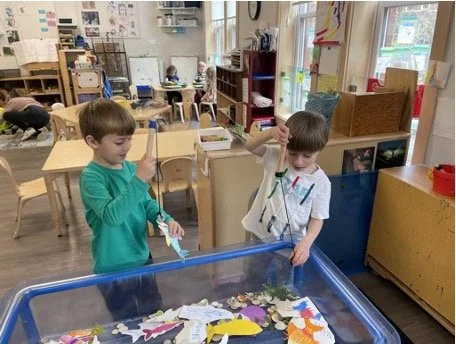
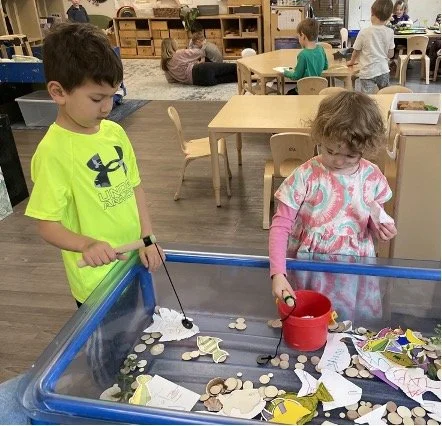
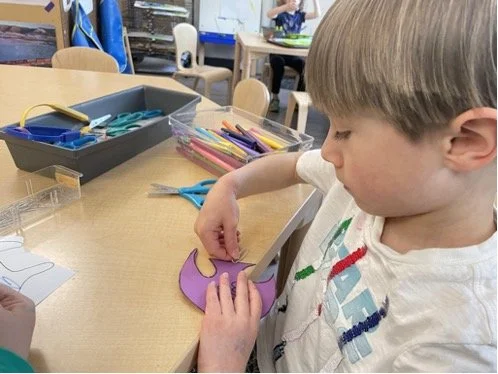
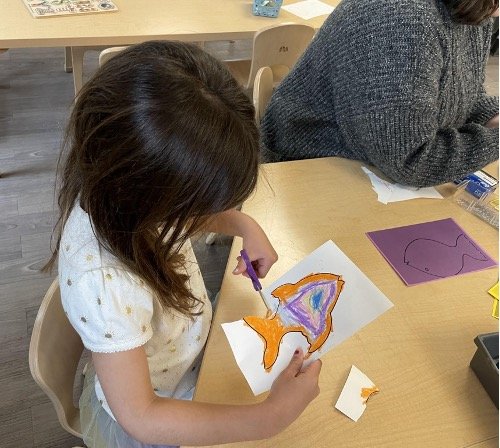
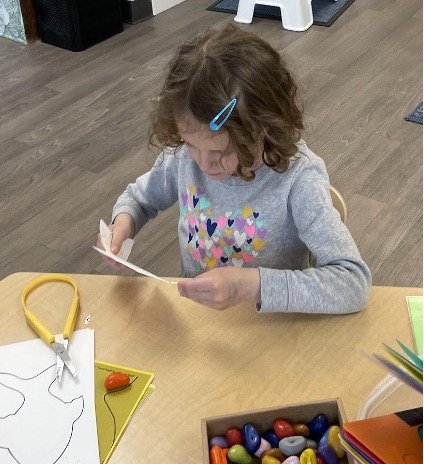
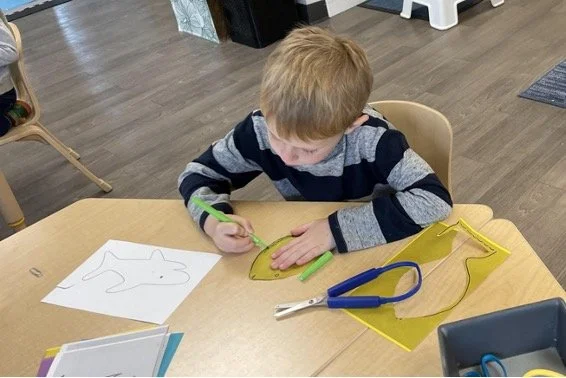
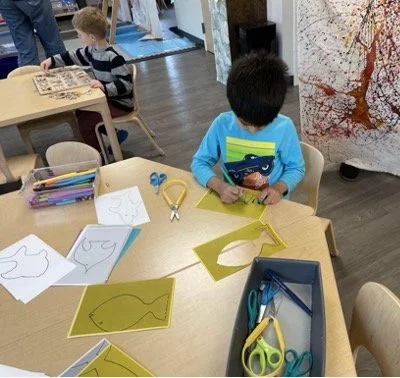
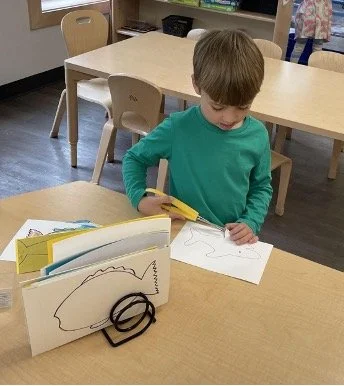
Children have also been creating fish to catch in the pond. To make fish, they choose a fish template and then decorate it. Then, the fish must be cut out. It takes both fine motor control and patience to follow the lines of the fish with scissors. Once the fish is fully cut-out, it is time to add a paperclip, which will allow the fish to stick to the magnet. But how does one attach a paperclip to a paper? It is tricky to fit the clip onto the paper. Opening up the clip a little can help, but if you open it too much, it won’t stay on. It is also a challenge to work around your own fingers. It takes some fortitude, and sometimes some encouragement, to persist in the face of these challenges. Children have shown an interest in taking their fish home, so we’re helping them remember to write their names on the fish they make, while also reminding them that, for the time being, the fish will remain at school so that we can catch them in the pond.