Click “Subscribe” below to download your class assisting calendar for easier viewing alongside your personal calendar:
We’d like to begin welcoming parents to sign up for a turn to visit the classroom in February. What this means for you is that you may email us to schedule a date to come in and spend the afternoon with your child. You can come for the whole time or part of the time, but be sure to let us and your child know what your plan is. When you’re here, we recommend that you follow your child’s lead and play with them. Expect that you might get messy. Keep in mind that your presence will be a new thing for your child at school. They may be somewhat uncomfortable with the idea, and may not react the way you think they will when the day arrives. We’ll help you through it. We find that it can be easier to navigate this exciting experience if one parent comes at a time so we encourage you to schedule separate visits if two parents in your family are interested. However, if this is a challenge for you, please let us know.
We try to have at least one day a week without visitors, so we’ll start by asking you to limit your scheduled visits to Tues, Weds, or Thurs. Again, if that’s a challenge for you, please let us know. We’ll try to wrap up visits in May so that we can close out the school year without visitors. Hope we get to see you at school soon!
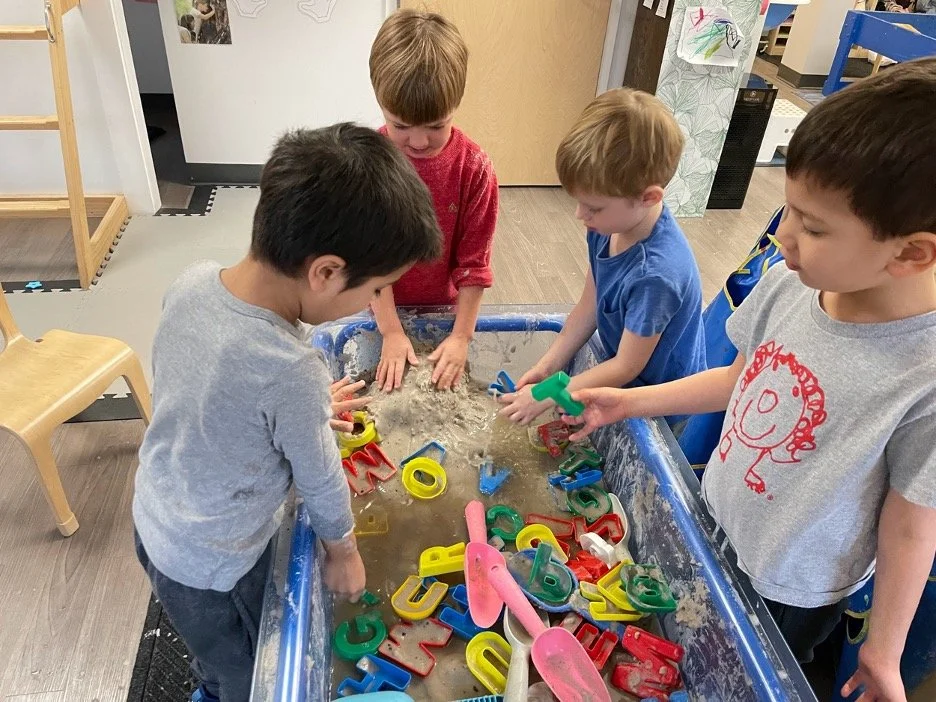
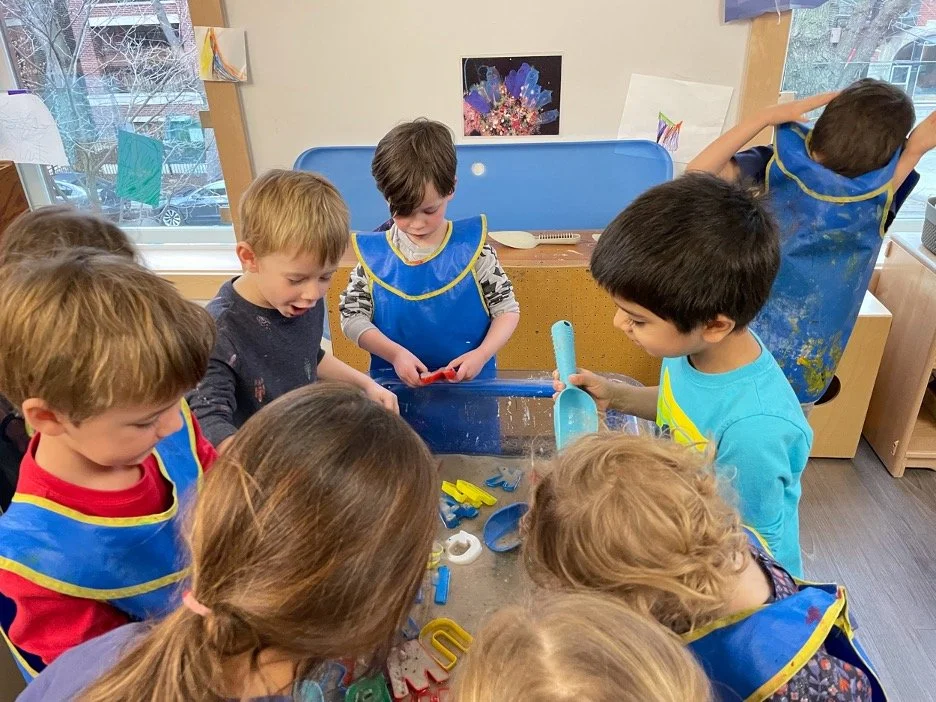
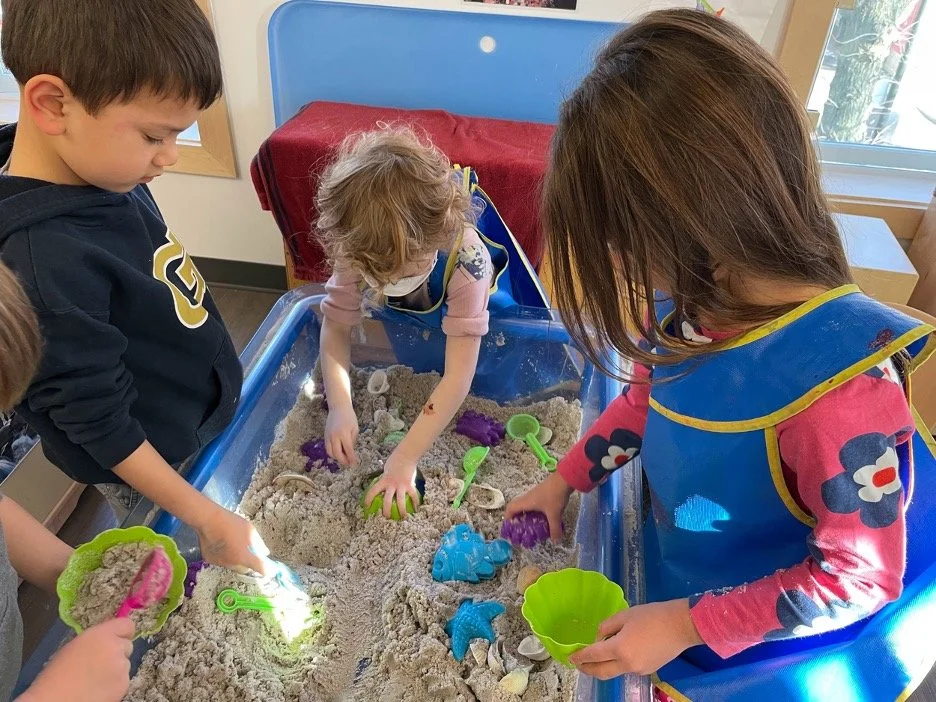
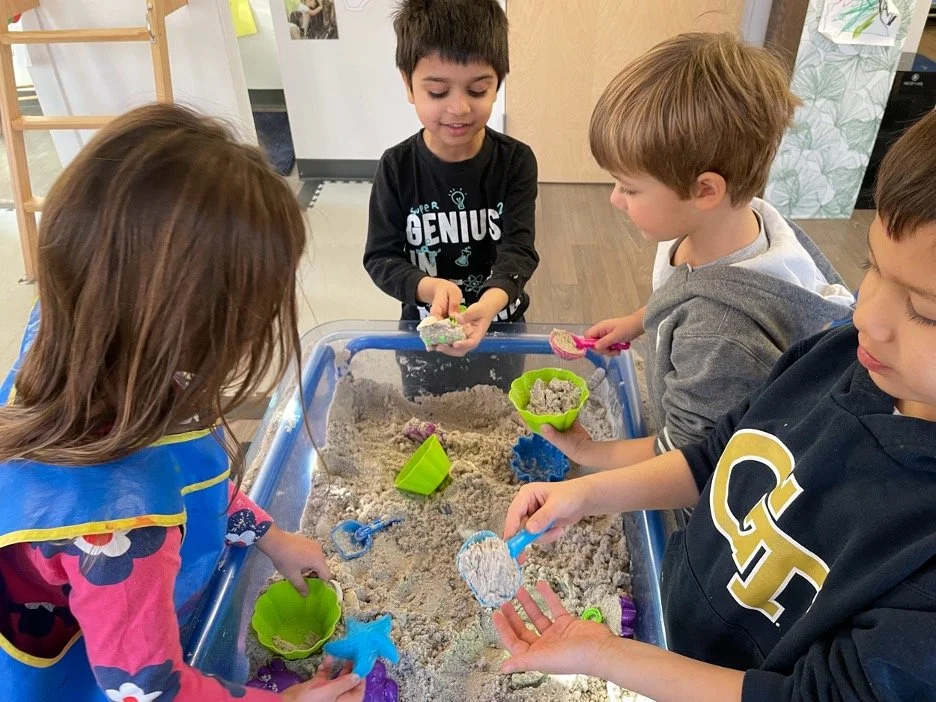
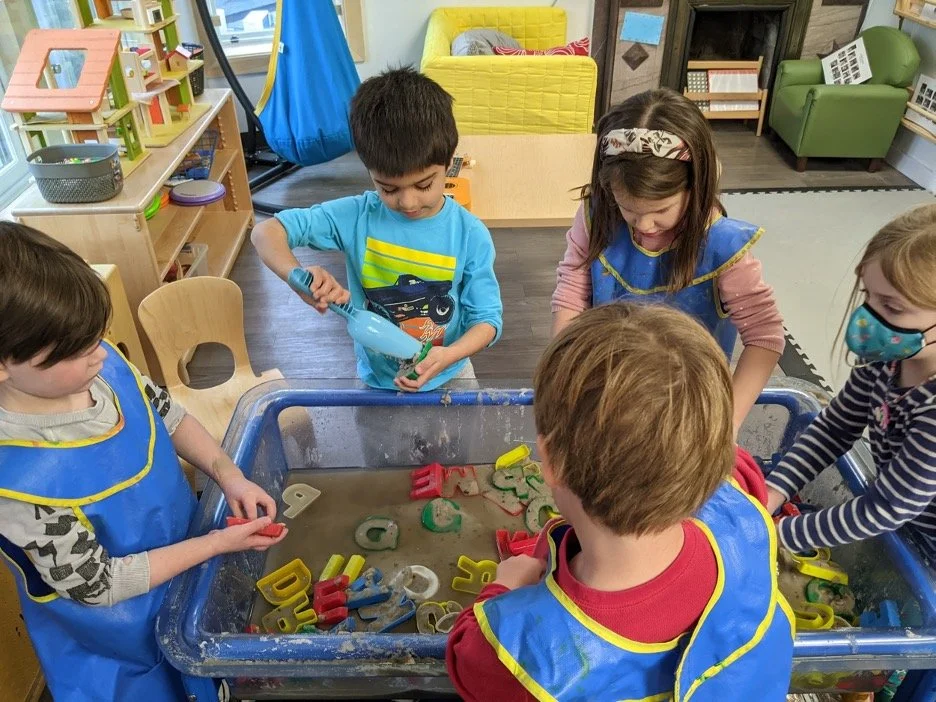
Perhaps your child has mentioned that we no longer have sand in the sand table. Where did it go? Teachers scooped out all of the dry sand and carried it over and into the water table. We then added water, and placed letter molds in the wet sand for exploring. Some children were a little worried about the change in our physical arrangement. And some were so thrilled they could barely contain their excitement. Though we know this can be a challenge for some, we also know that weathering small changes can help to build flexibility. It also gave us an opportunity to voice some of these feelings for children. We affirmed what children noticed and tried to identify what they might be feeling. It looks a little different. Are you worried that things have changed? Everything else will stay the same at school.
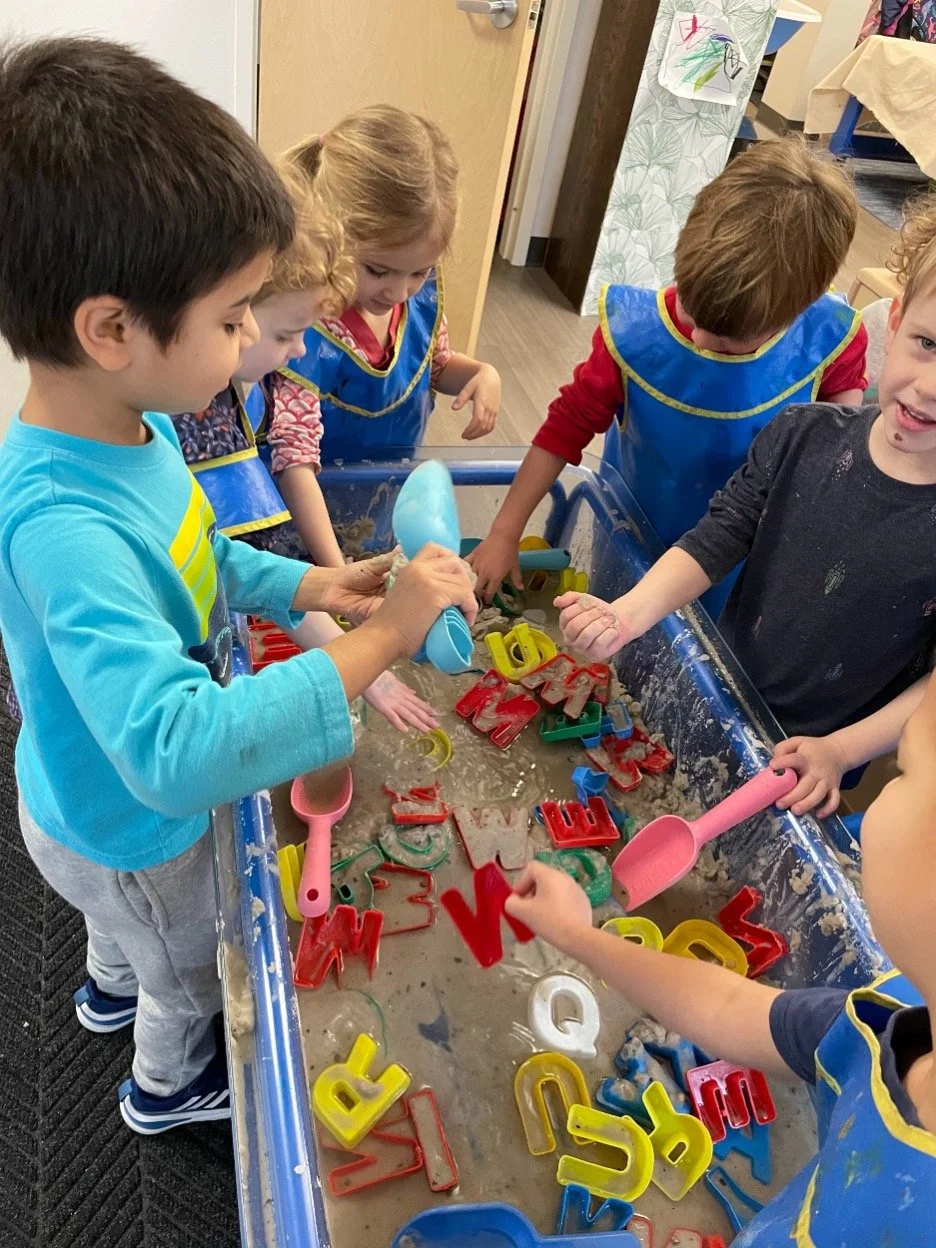
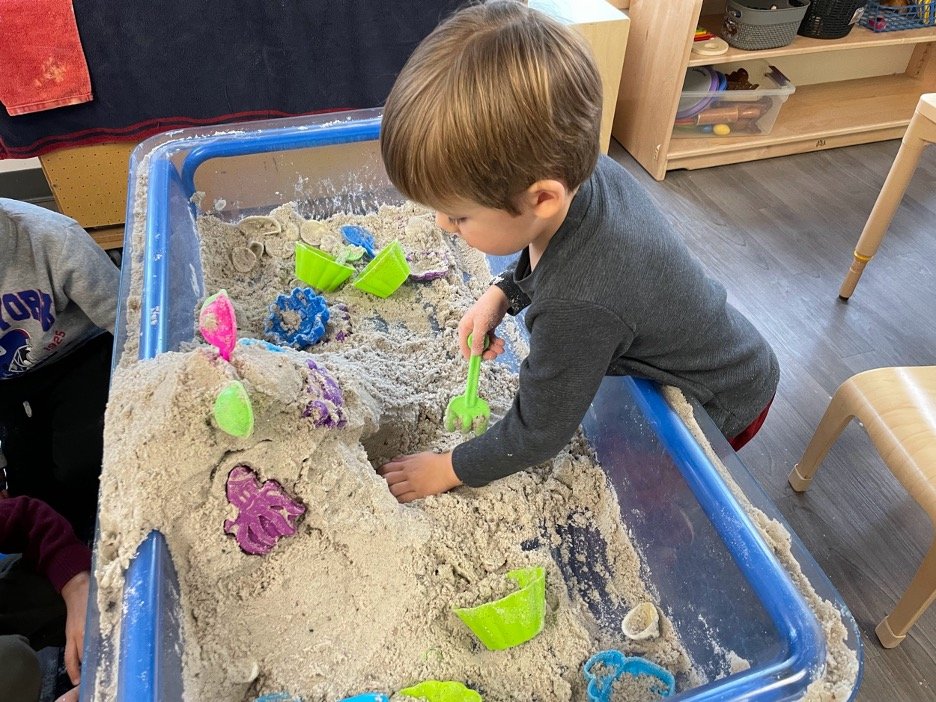
Experiencing a familiar material in a novel way is one way that we spark children’s thinking and build their awareness of the world around them. By changing the physical property of sand, you use it in different ways and notice new things about it. It also provides a different sensory experience. Children are engaged in experimenting with how sand behaves when it is wet. They experimented with using shovels to create sand castles, molding letters out of sand and making big mounds of wet sand. Some children love the texture and feel of wet sand. For others, tolerating the way it can stick to your skin is a challenge. For those who find it more challenging, we provide tools so that they can interact with the wet sand without touching it, if they prefer. Engaging in such sensory experiences helps to build a child’s ability to process and organize sensory input. When they are done, we show children how to rub the sand off of their hands and refer them to towels or the sink if necessary.
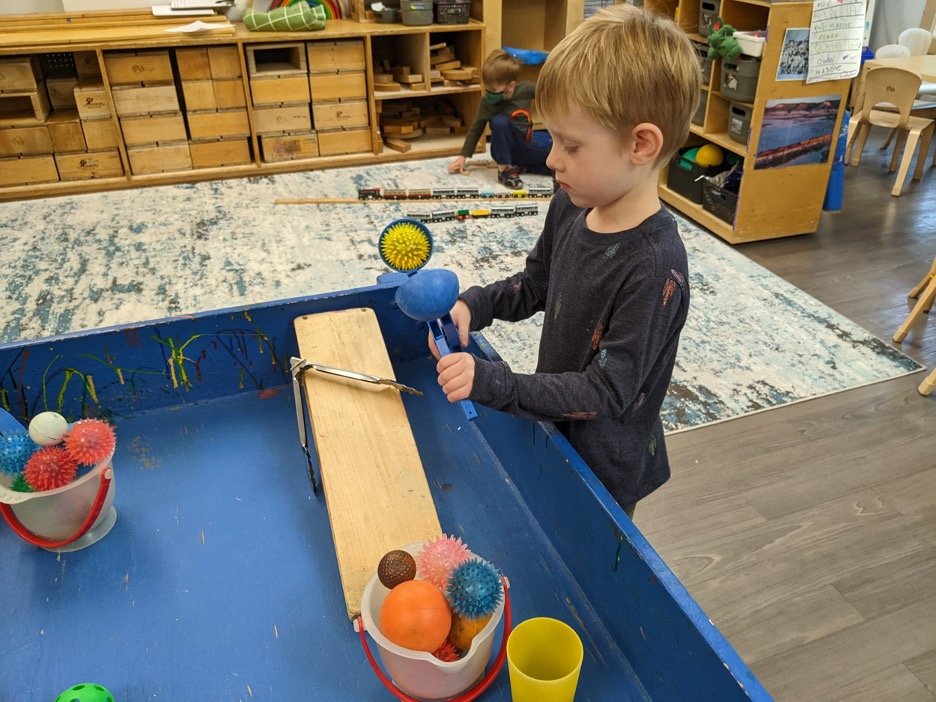
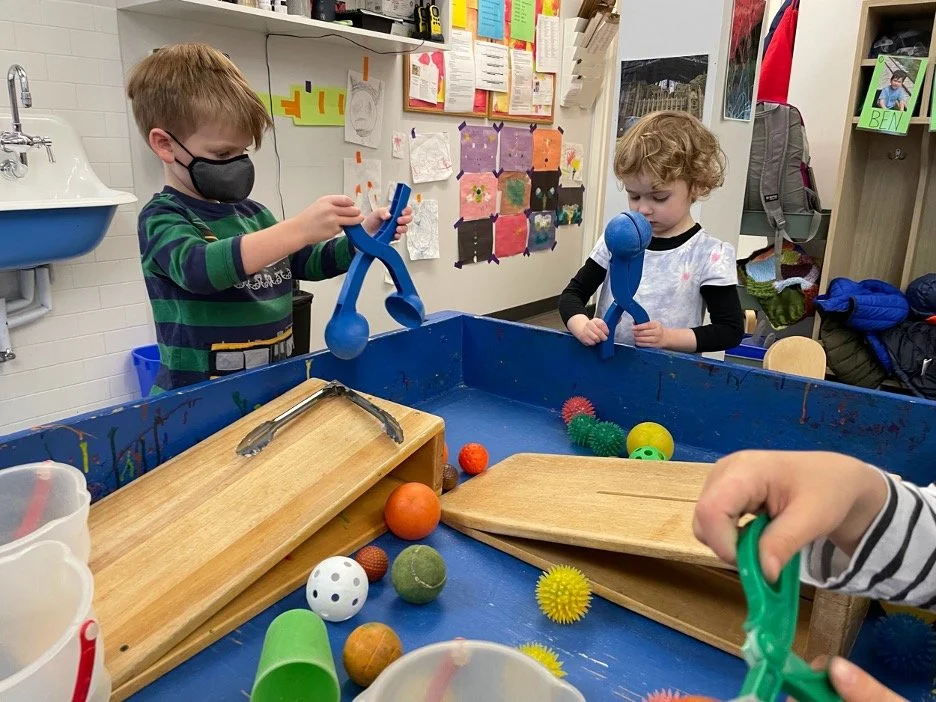
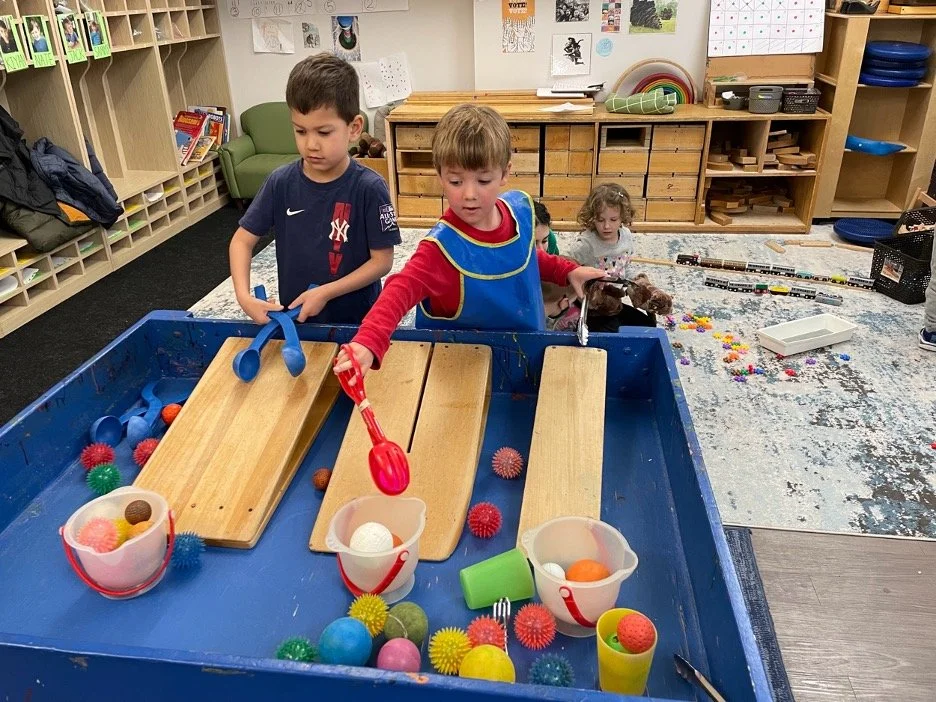
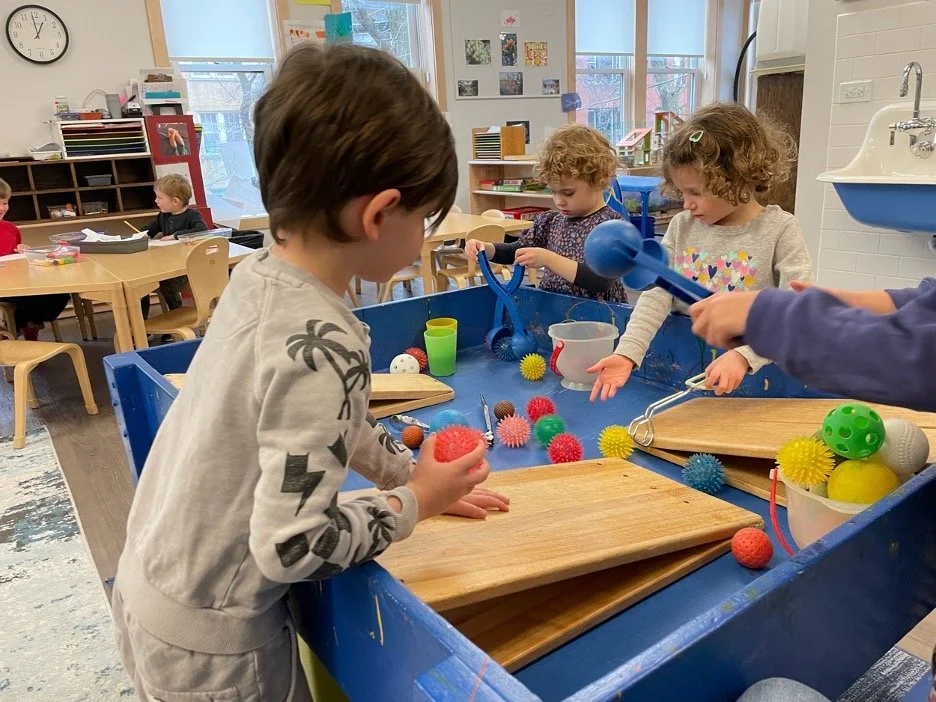
Now that our sand table no longer has sand in it, we have filled it with a variety of balls and tongs. Children have been exploring how the tongs work and filling buckets with balls. Many children have been engaged in sorting and like to collect one specific type of ball. Others have sorted them by color while others have acted out a variety of pretend scenarios with these materials. This activity promotes hand eye coordination, hand strength and dexterity while providing opportunities to explore mathematical concepts such as sorting by attributes and comparing sizes.