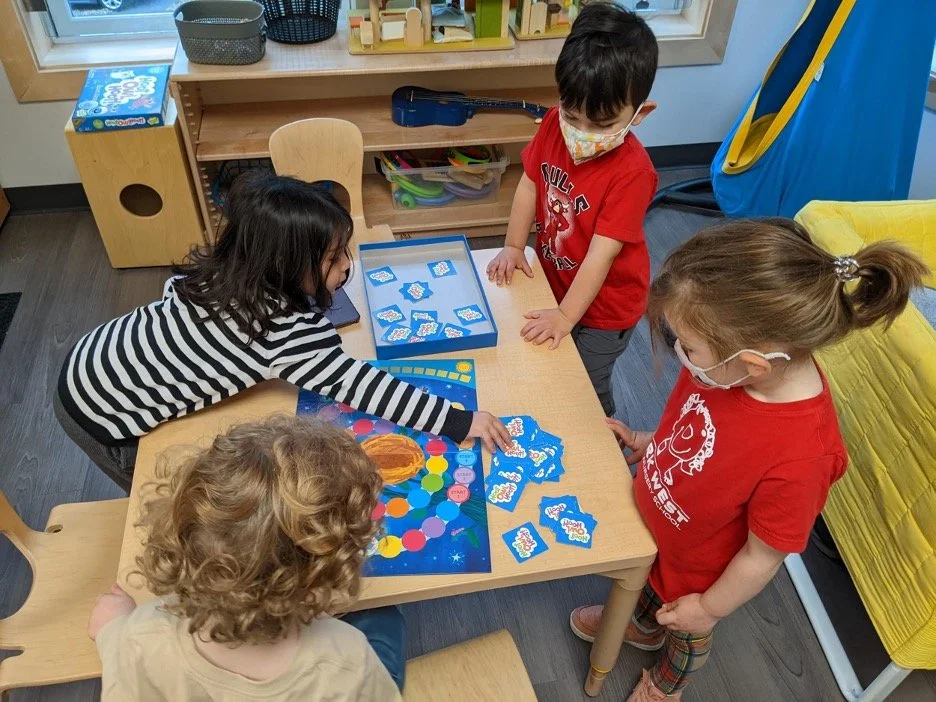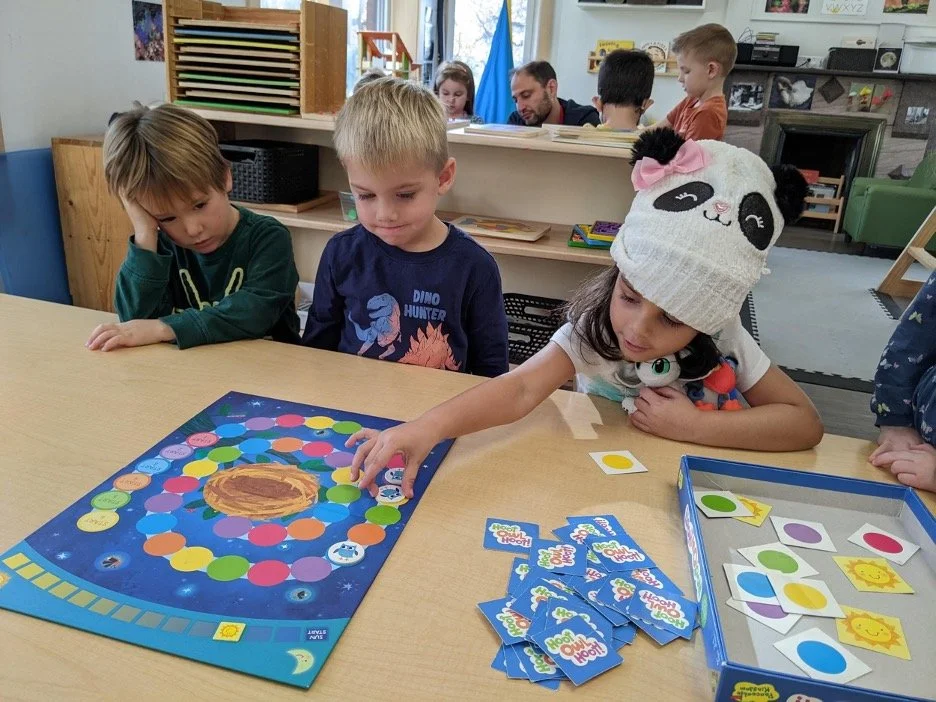
Have you heard about the Hoot Owl Hoot Game at home?
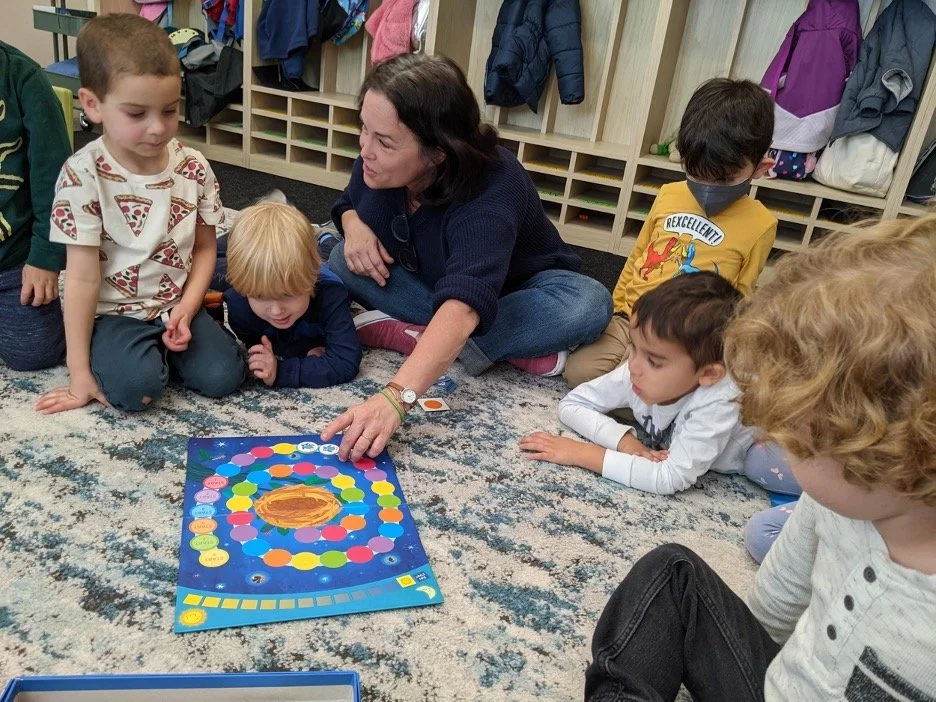
This week we introduced this new board game in the 4am class. And while we have had other board games on our shelves since the beginning of the year (Snail Race, Teddy Bear Bingo, Garden Matching Game) we felt that kids were ready for this next step, demoing a board game during our group time. Most of the games we have in our room are cooperative games. We choose these games because players work together toward the same goal. There are no individual winners or losers. This is not to say that we are against competitive games, only that cooperative games foster a feeling of community and a shared purpose which can create a climate of inclusion and foster negotiations that feel good to preschoolers. Introducing a brand new game to a group of 18 3 and 4 year olds requires a lot of patience and focus for everyone, teachers and children alike. It requires kids to stay on the edge of the rug, so that everyone can see. This is so much harder than it sounds! It requires children to listen to the procedures and rules of the games and to not touch the board or pieces. However, the novelty of this new game and the drama around, “Will the owls make it back to the nest before sunrise?!” had everyone so invested and enthralled, that our community of 4AMers were able to sit back, watch, ask questions, make observations and take it all in.
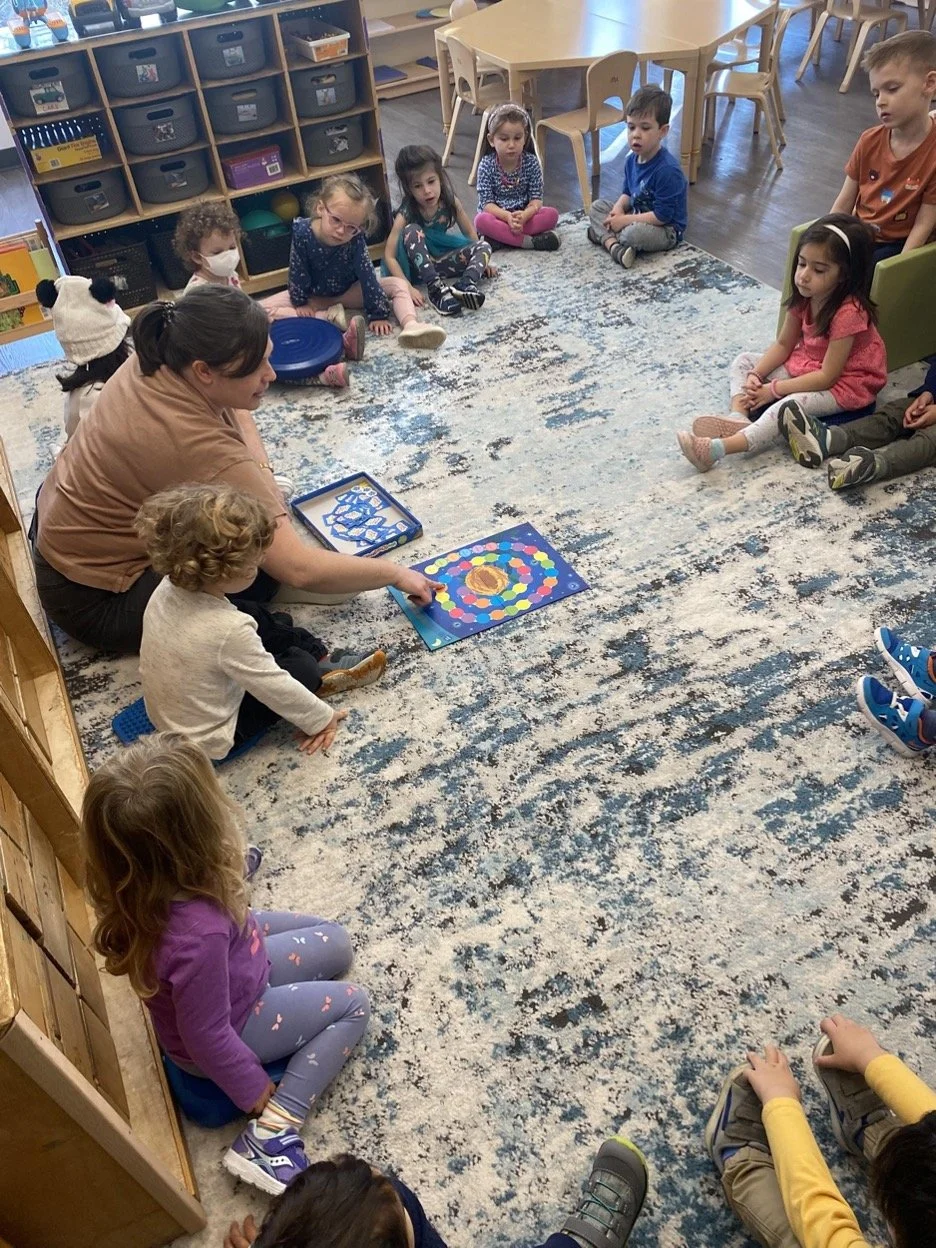
During the group time demo, Amanda opened up the board and started taking out the pieces one by one. The board has a large nest in the middle with a path of colored circles spiraling around, ultimately leading to the nest. The pieces of the game include 3 owl disks and one small sunshine card. There is also a deck of cards with colored circles on them and mixed into this deck are larger sunshine cards. Amanda let everyone know that even though there were three owl disks, that there could be 1,2,3 or 4 players and more importantly, that no one gets to actually BE one of the owls. Instead, the kids playing are really helping all of the owls get home before sunrise. Participants are to take turns choosing a card from the deck. If it’s a color, then they can move one of the owls to the next colored circle on the board. But, if they choose a sun, then the little sun card gets moved closer towards day time. It’s a lot to process for these kids. The teachers then “play acted” together with kids watching, sometimes trying to take two turns rather than letting the other person have their turn in order to demonstrate how to manage these types of disagreements. For example after Kristin’s turn, she tried to take another card right away. Amanda chimed in with, “Kristin, I think I get to go now.” Then Kristin said, “But I want to have another turn right away.” And as if on cue, kids chimed in with, “It’s not your turn Kristin. Don’t worry, you will have a turn again after Amanda.” This play acting acknowledges how children are subverting their own wishes to keep the game going, and emphasizes the structure of turn-taking.
As you can imagine, everyone wanted to play the game during our long play time, and so a sign up list was started. At this point, many kids know what a sign up list is, and even know how to get one started themselves. All you need is a piece of paper, a marker, and then you draw horizontal lines all the way down. Finally, you choose a line and write your letters. Some kids go and get their cubby tag to help them remember their letters, some come and ask a teacher for help, and some who are just getting the gist of writing, fill their space with intentional lines and curves. All of these approaches to early writing are thrilling for us as teachers, and as we can imagine, are thrilling to you as well.