Hi all,
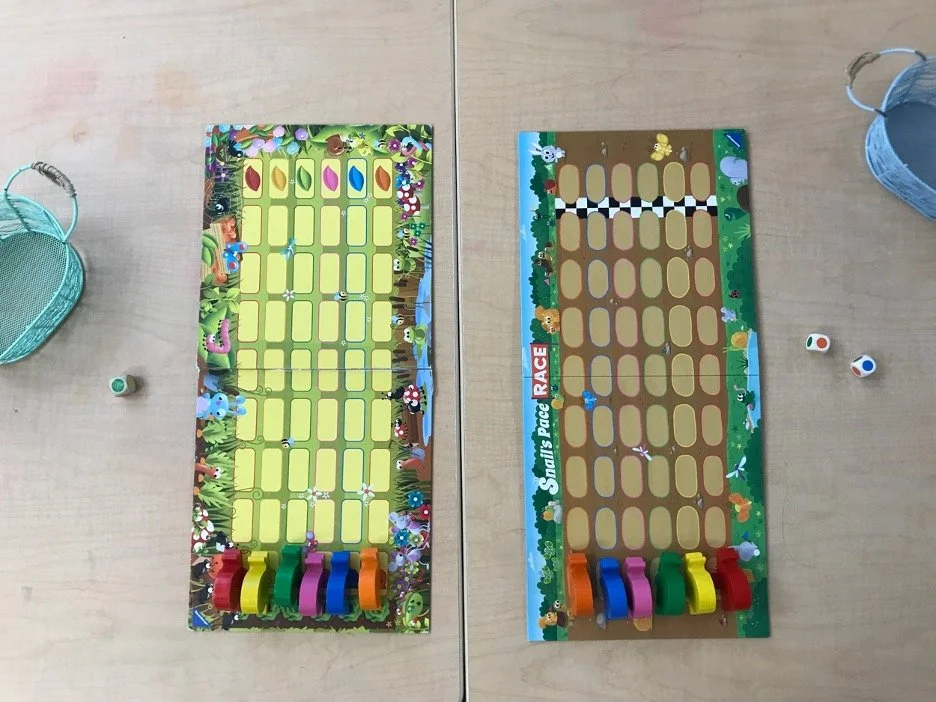
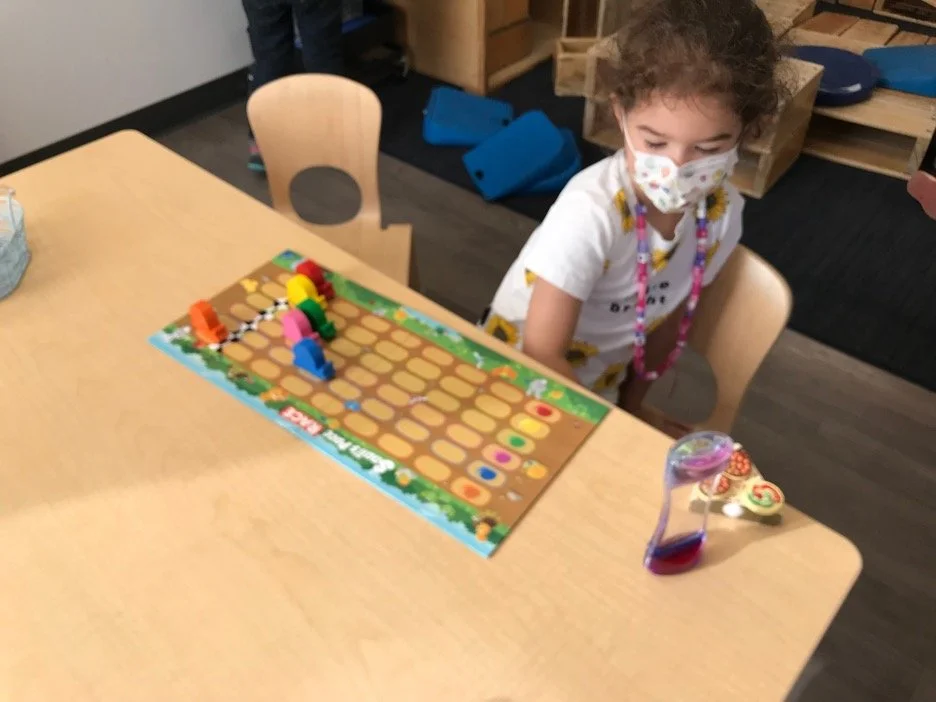
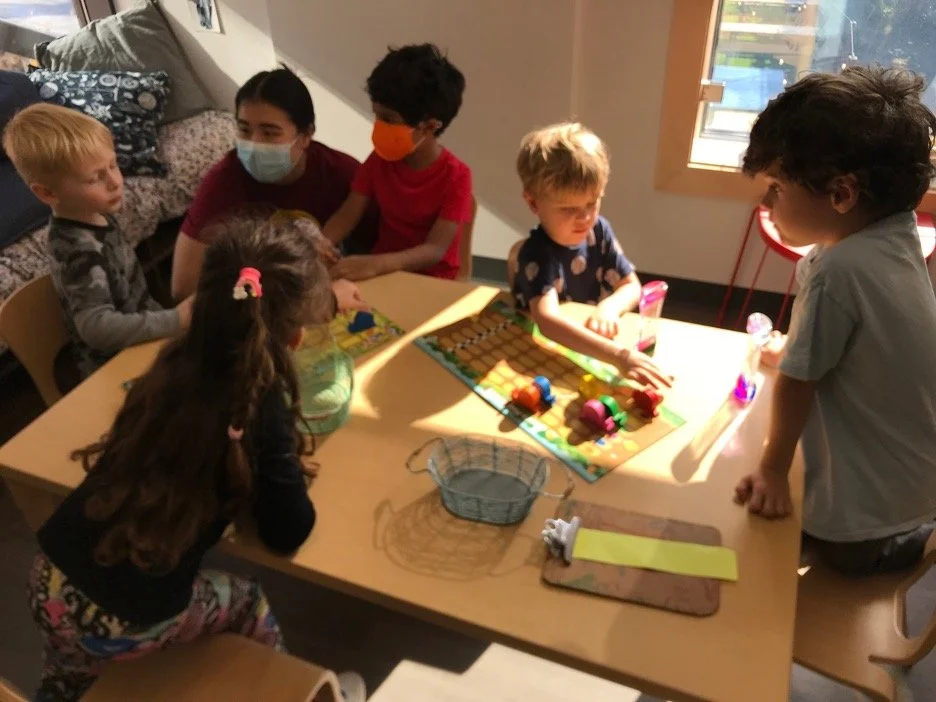
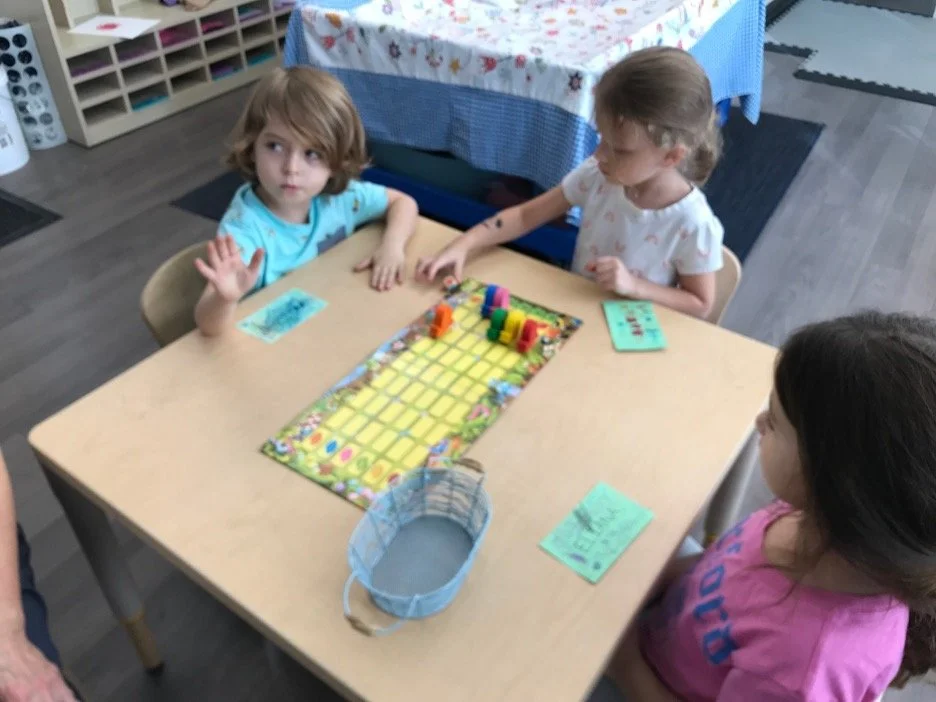
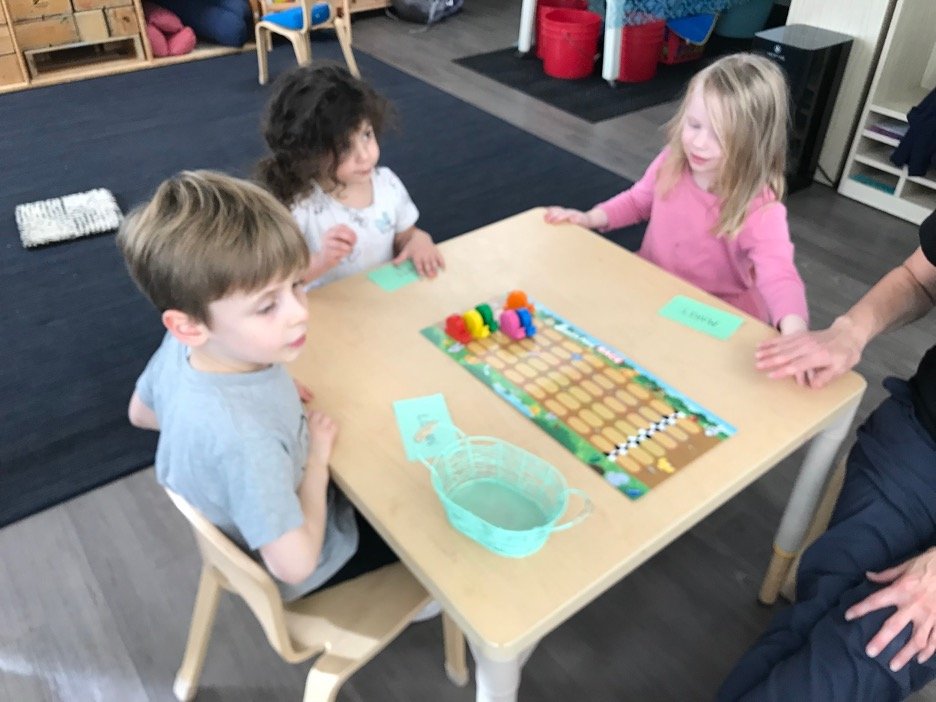
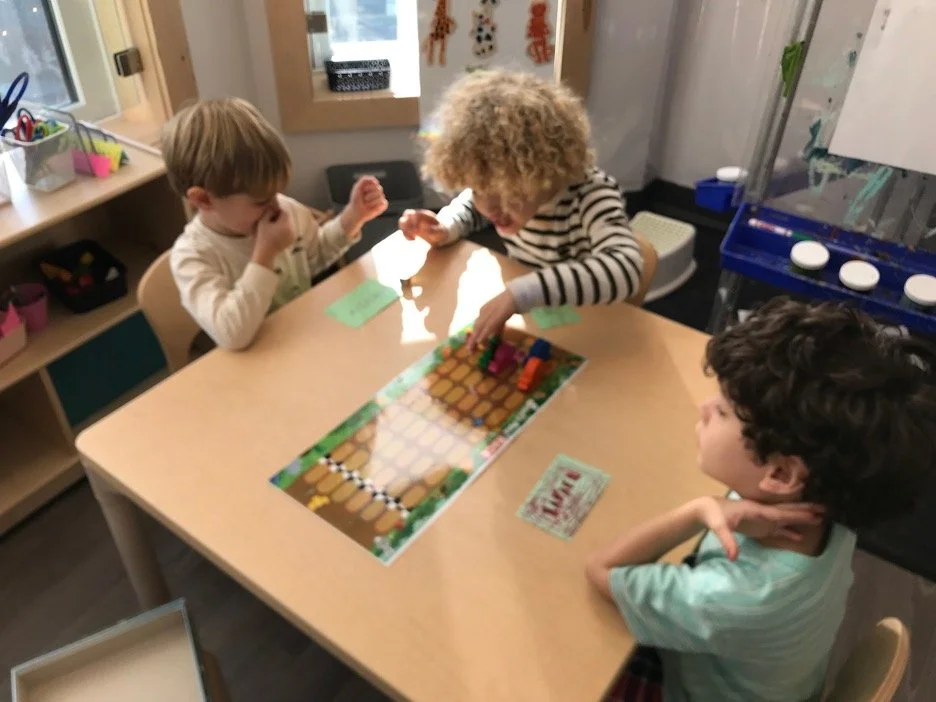
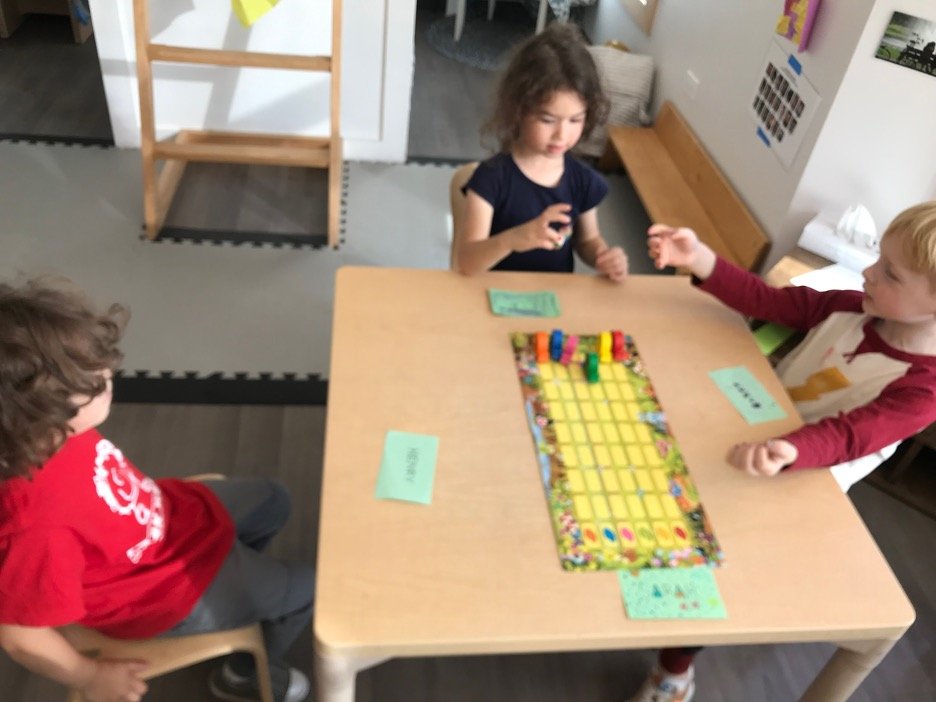
Teachers recently demonstrated a board game called “Snails Pace Race” at group time. Quite a few of our board games are cooperative where players work together to reach the goal. In this game, six different colored snails try to make it to the finish line or a leaf at the end (we have two versions.) Players roll the die and help move the snail that corresponds to the color on the die. All work together to race the snails and see which color makes it to the end first. Teachers showed kids how to set up the board and play together. First, one teacher asked the other if she’d like to join the game. She then described how to play the game, and acknowledged that there were a few things to agree upon before the game started: We will need to take turns. Do you want to play with the rule that the snail moves one space when we roll its color on the die?
Teachers then went through a few rounds of play so that kids could understand the concept. Kids watched as teachers modeled how to communicate and approach a situation when someone isn’t following the agreed upon rules anymore. After a few rounds, one teacher took two turns in a row. This presented an opportunity for the other player to remind her of the rules, Oh, I forgot! I’m just so excited. I’m sorry. Thanks for the reminder. During another turn, a teacher purposefully positioned the die in order to choose the color she wanted. The other immediately commented, Oh! You can’t just choose the color. Remember how we shake the die so that it’s more like a surprise to all of us? This led to a back and forth conversation, But, I really want the blue snail to win. Kids also joined in to remind the teacher that she can’t play that way. She said, Oh, that’s right. We decided to work together to move the different colored snails. Ok. I’ll shake it this time.
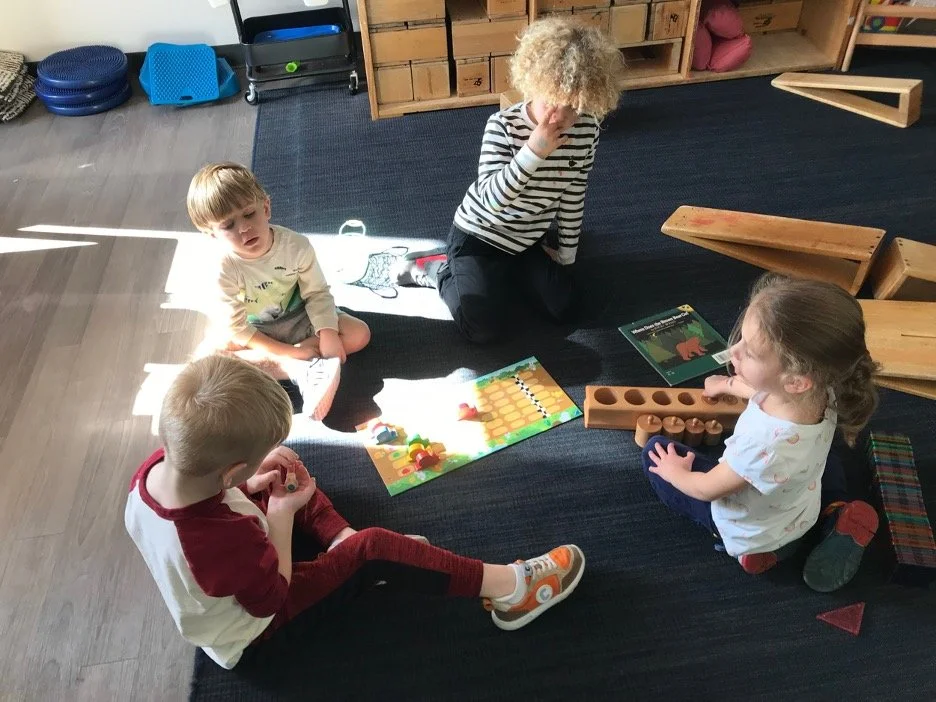
Kids continued to help sort out a few more mishaps, No, no! Snails can only move one space, not two! As teachers, this helps us know that kids have an understanding of the game, are advocating for the agreed upon terms, and know that their input is helpful to our communal experience. There was an excited energy as kids called out, saw which snail was in the lead, tried to stay on the edge of the rug, and resist the urge to come move our snail pieces! Phew. That was a lot for them to manage. Finally, cheers of excitement came as the game ended. Teachers then mentioned that both versions of the game would be on our game shelf for the next play time.
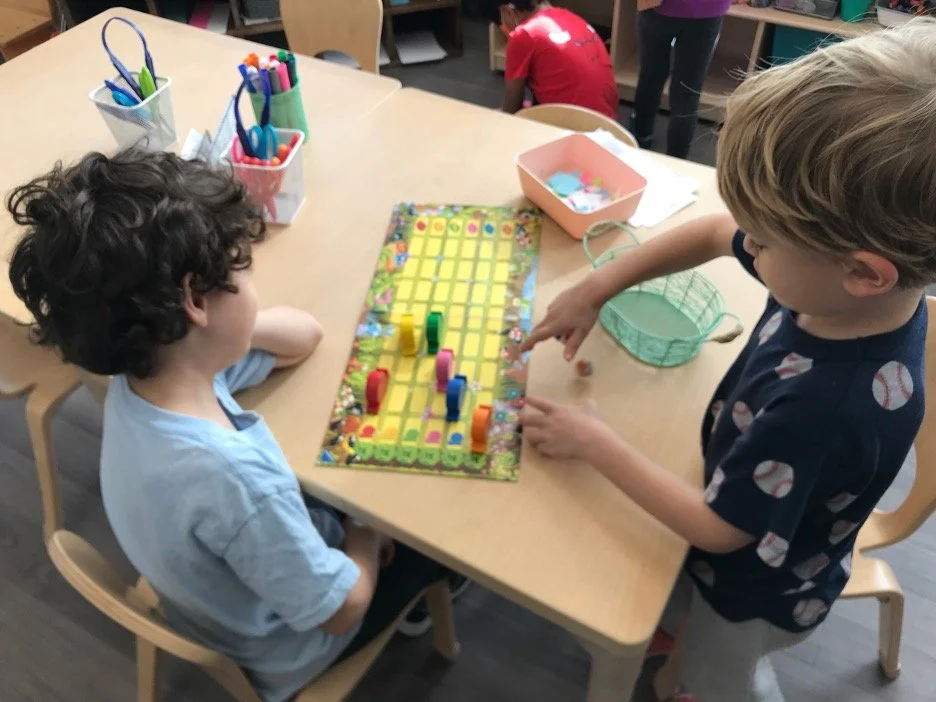
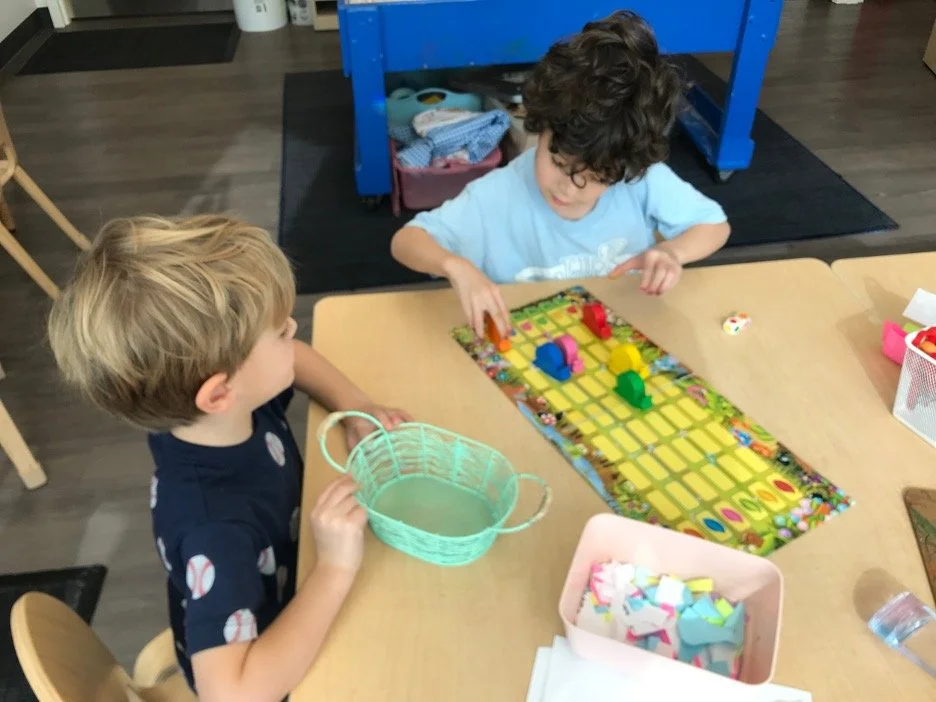
Since then, kids have been playing in groups or pairs. We’ve also seen kids playing solo while side by side with their own boards! When introducing games, we share the general rules and procedures, but also welcome kids’ variations as long as everyone playing agrees. Some kids will want to move the snails more than one space at a time. Oftentimes, players want to continue until all of the other snails have made it to the end, too! And usually, a player’s turn is over if the die lands on something that is no longer needed. Most players like to adjust that rule so that a player keeps rolling until a play can be made. Almost 100% of the time, everyone agrees with this adjustment. It often happens that someone just keeps rolling and nobody protests. Mmm hmm. They’ve come to an unspoken understanding. If this predicament happens when first demonstrating a game, teachers often ask, Hmm, so now what do you think happens? And the crowd resoundingly replies, YOU KEEP ROLLING! We may then share other alternatives and let players decide.
Have you heard about this game yet? We hope you all enjoy the break coming up. Perhaps, you’ll have some time to play a board game!
Best,
Anita, Chris, Sarah