We taught a new song, also recorded by another teacher a few years ago:
3 Little Fishies and a <insert grownup (Daddy, Mommy,etc)> Fishy, Too
Literacy Development
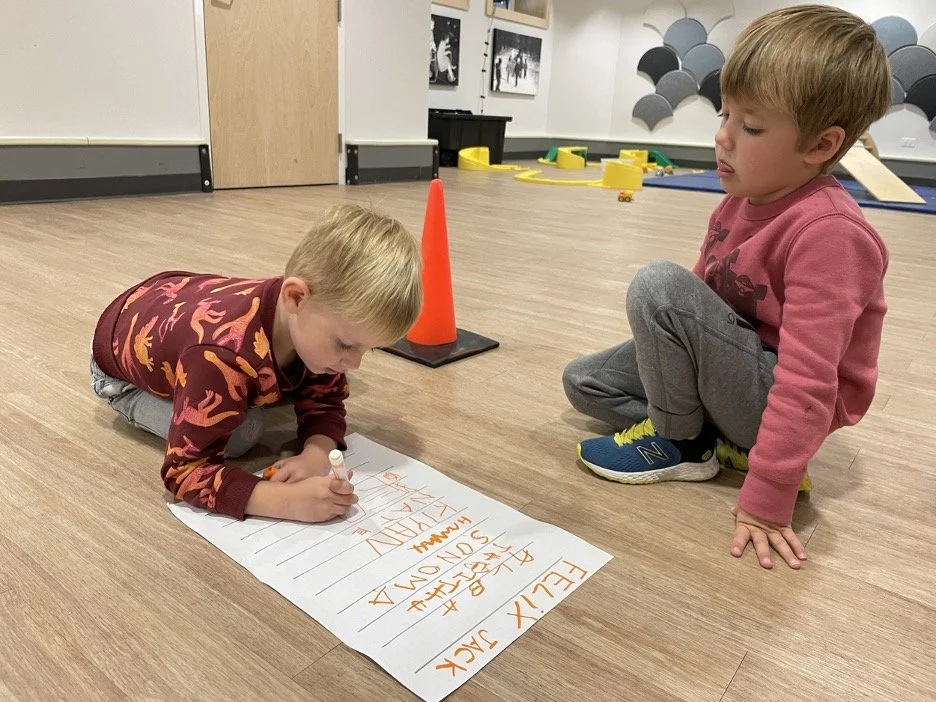
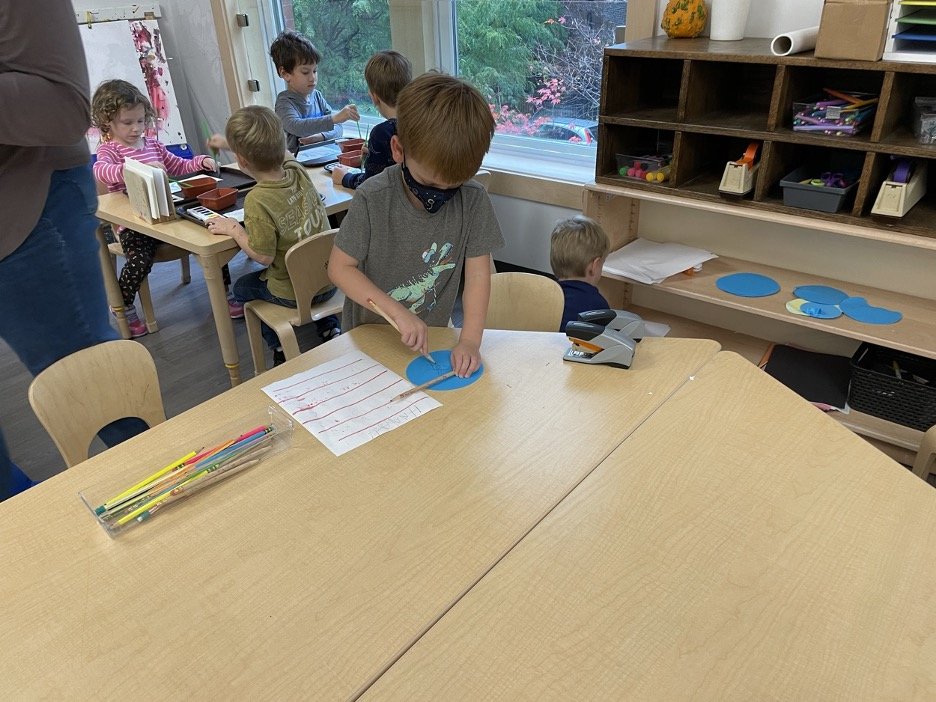
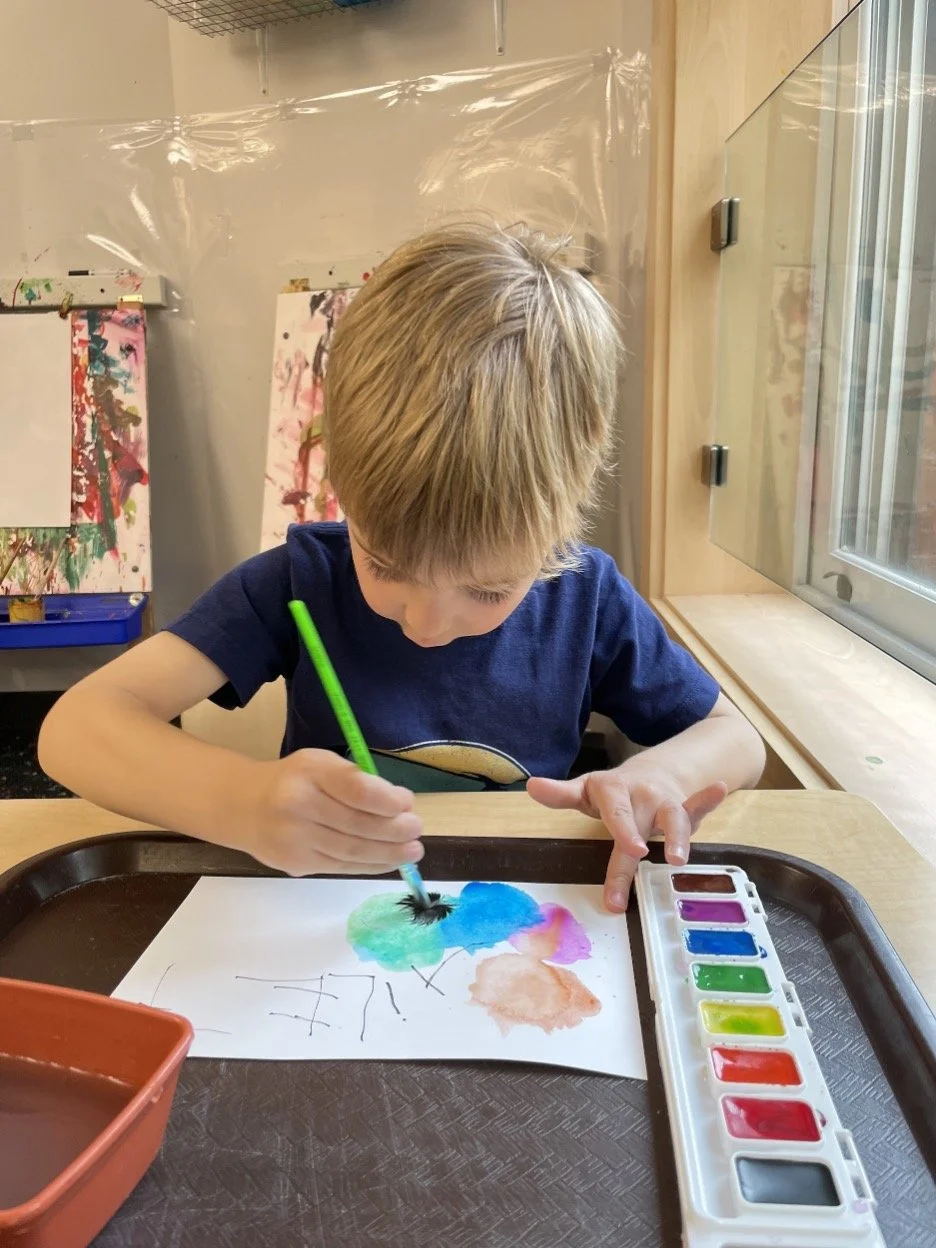
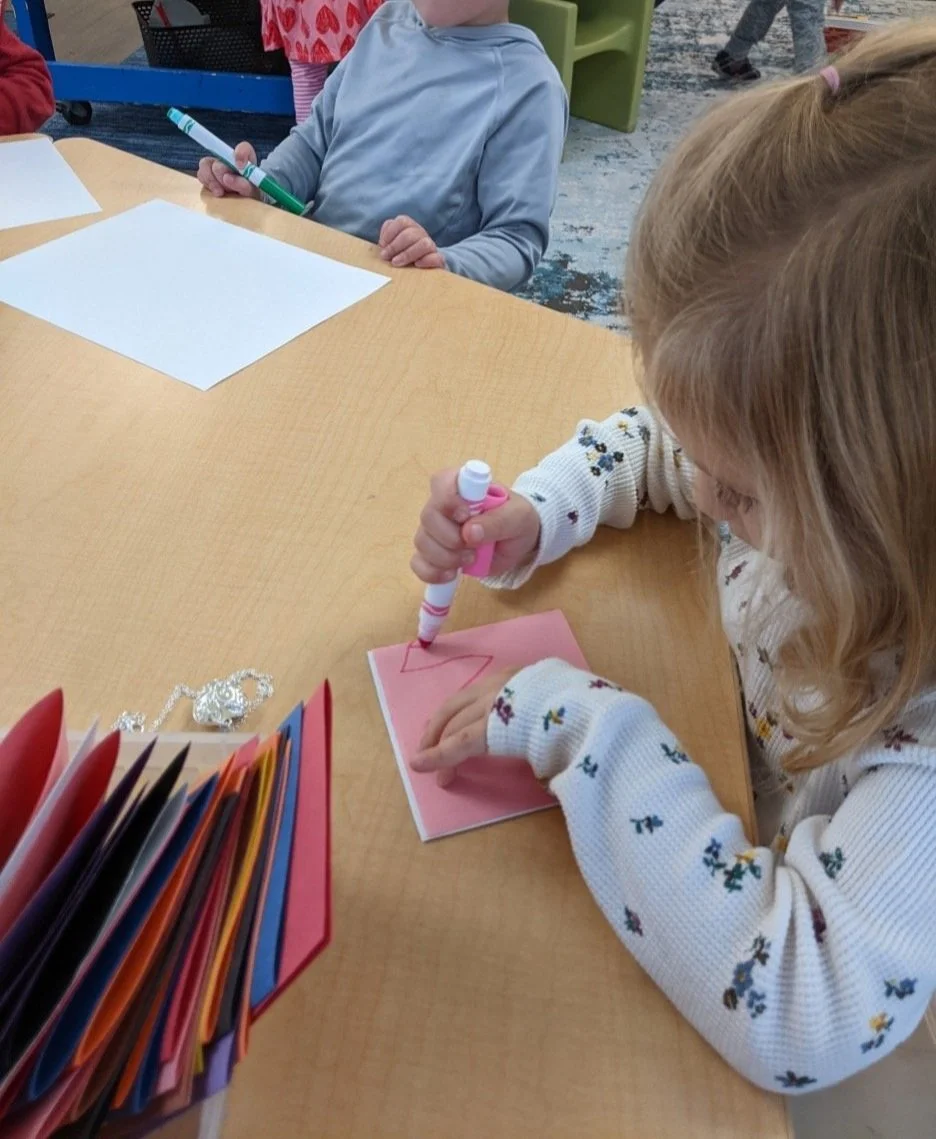
Many kids begin the school year telling teachers they do not know how to write their name when we ask them to put it on a painting or when they want to sign up for a turn. We encourage them to make any marks they do know, to “show us how you do it.” Then, we might ask if we can do it the way we know next to theirs, so they can see the standard shapes of the letters.
On another occasion, we might bring their cubby tag over so they can look at the letters and try to make the same kinds of marks, or draw dots for someone to connect to form a particularly tricky letter.
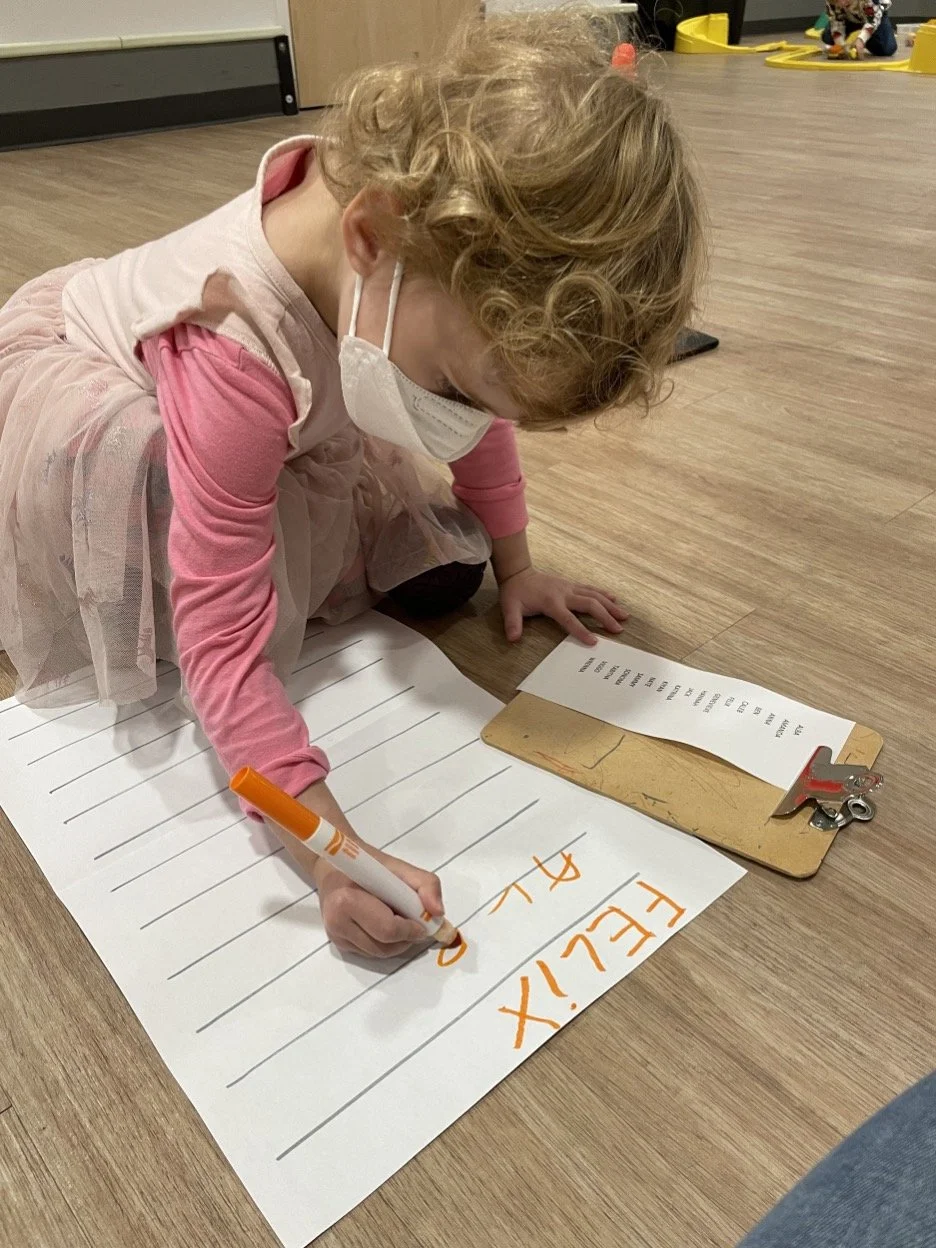
Sometimes, someone needs actual physical support, a teacher’s hand over theirs, to have the confidence and/or physical strength needed to try to make a mark. Each time someone tries, the challenge is less daunting, and eventually kids are writing names on lists and artwork without a reminder to do so. Even if a signature is not a clear A-M-A-N-D-A, teachers get to know them and can decipher them most of the time. We read these signatures aloud at group times, when recalling who has had a turn and who is waiting for a turn, who is next for an activity, demonstrating that all that hard work is worthwhile: the grown-ups can read what has been written.
This is the beginning of understanding the value and meaning of a complex system we use (and often take for granted) everyday. Literacy is not simply memorizing the alphabet and having phonetic awareness. We cannot simply transfer reading and writing to children. We must create literacy-rich environments and provide myriad opportunities for potential breakthroughs in understanding and skill. The ability to read and write is strengthened by a desire to read and write. That desire is deepened when confidence is acquired in a stepwise fashion, and when activities are presented in approachable tasks.
Eventually, we begin to discern who is ready for more than their own name. We might suggest they write their friend’s name on a drawing they’ve made for them, or someone may ask us how to spell MOM for a painting they’ve made especially for you. We might ask someone to make the sign up list for BLOCKS and help them sound out B-L-O-K-S, an invented spelling that is a good first step in understanding the way letters work together. Children who want a teacher to read a favorite book to them each day may one day be encouraged to read it to their peers, and when they say they do not know how to read, a teacher will remind them they know the story and can read the pictures. Another step in the larger process.
Eventually, children will begin to notice letters on street signs or in the grocery store, begin to decipher APPLE on a sign or ask to write CUCMBR (again, invented spelling, to be encouraged) when they make a menu for the playhouse kitchen.
There will be starts and stops, stalls and staggers in this process. Everyone does not do it at the same time, and something that seemed to be solidly understood may seem to suddenly disappear as one’s focus shifts to another area of development. Between 2 and 5 years old, we are all taking in so much information and developing very quickly. Teachers do not expect to see a straight developmental line, but recognize that the path will be individual and lots of things will spring up along the way, all worth exploring and beneficial for building a well-rounded understanding of the world. It’s all interconnected. Group life, our classroom group in this case, offers a good lens for seeing just that.