Paint Project, Washing Babies, and Treasure Hunting

A new song: The Tree Song

It has been a busy week! 

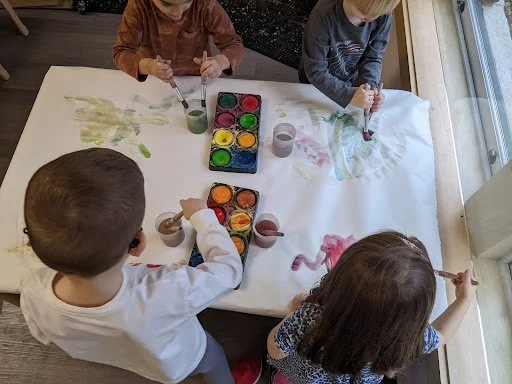
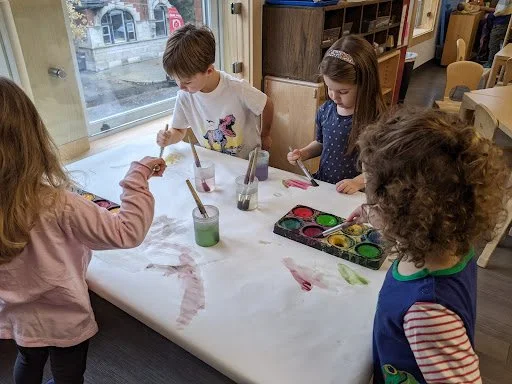
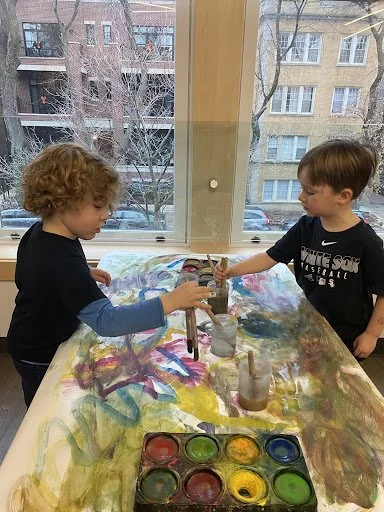
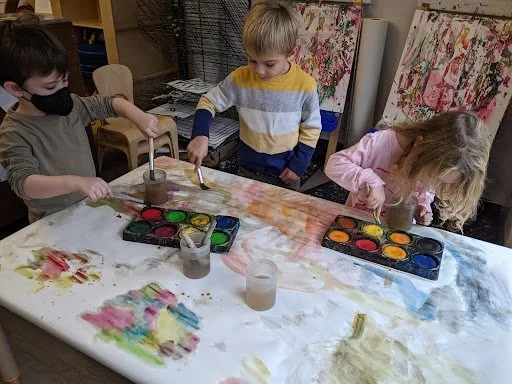
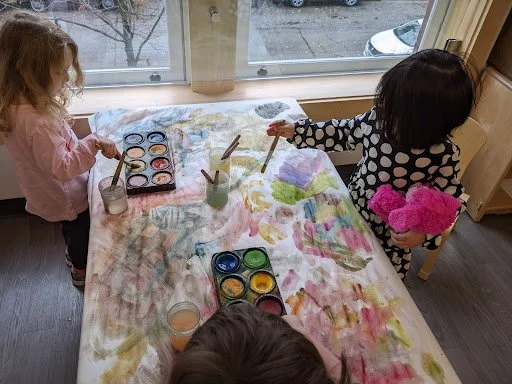
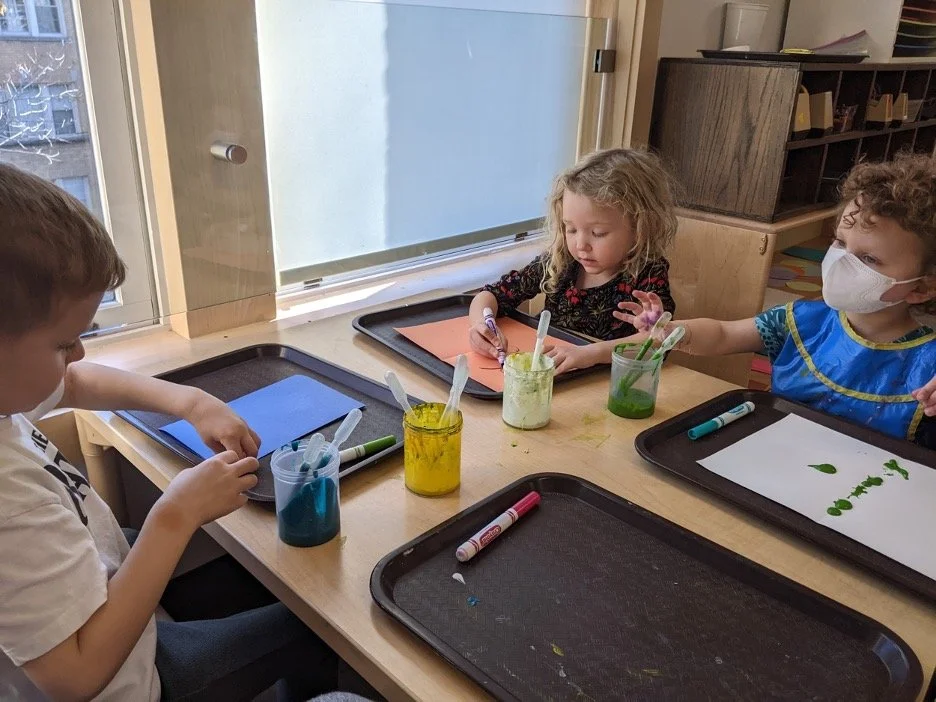
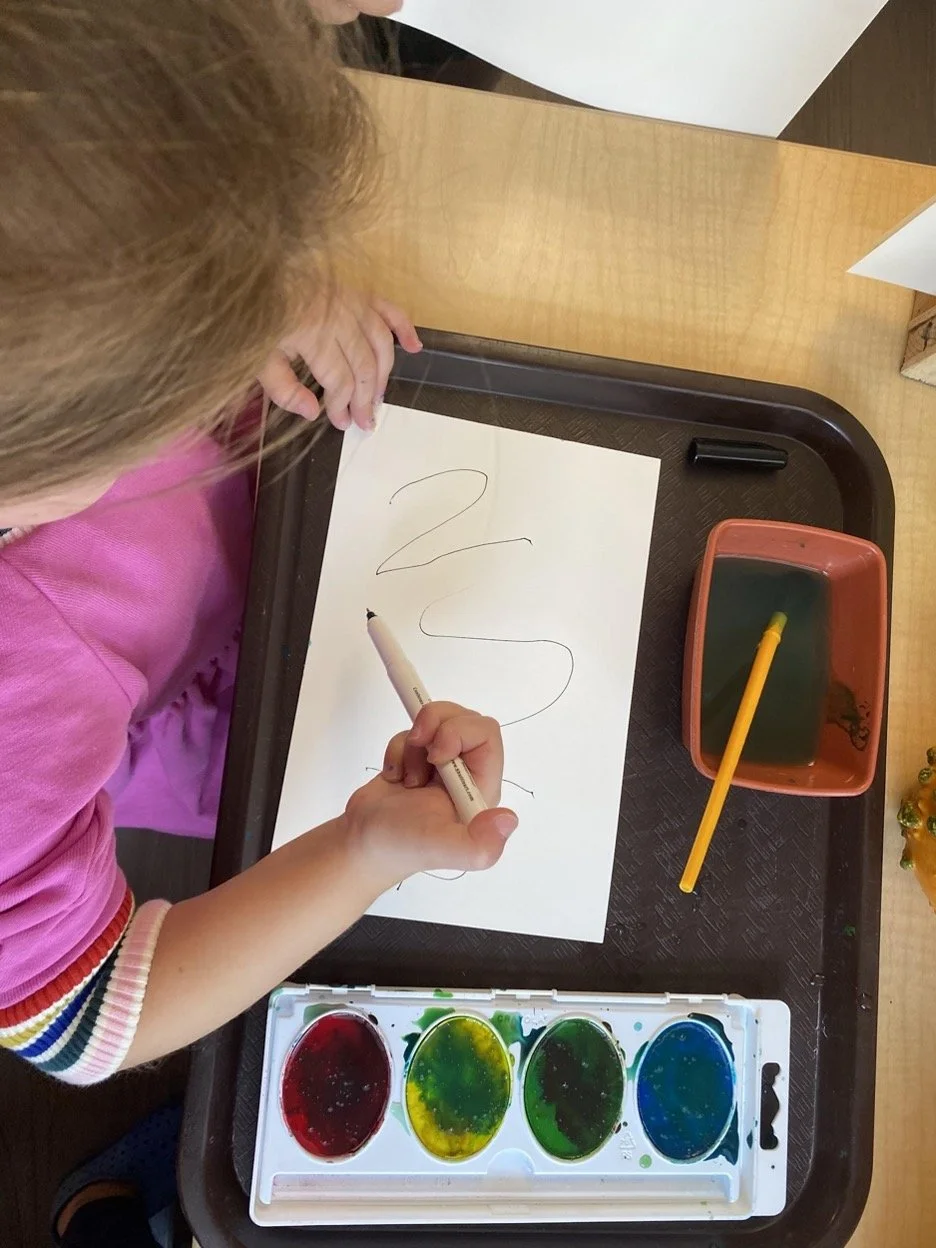
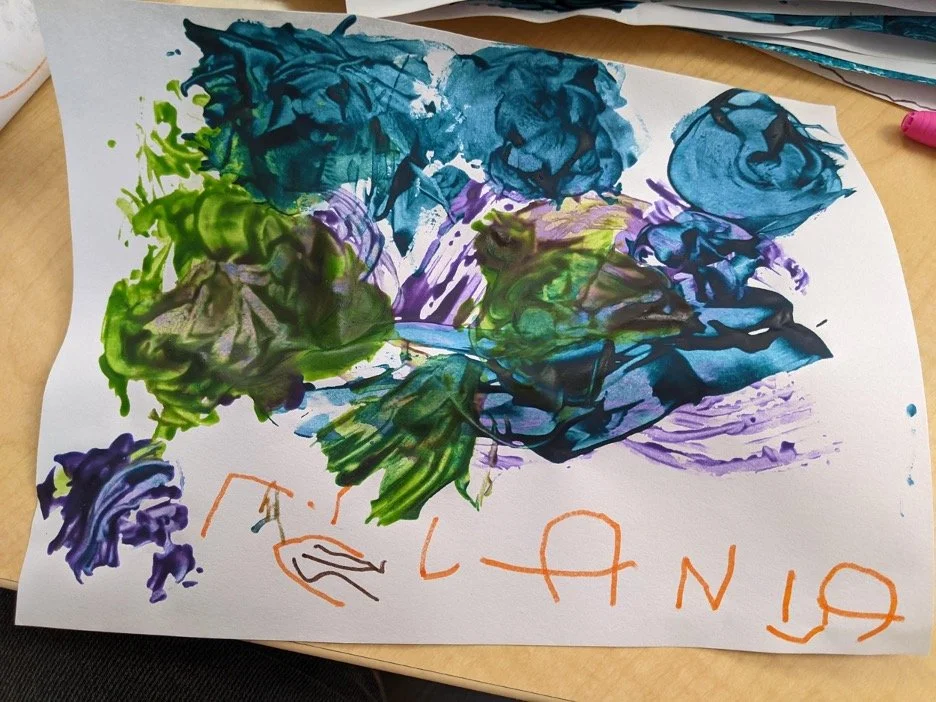
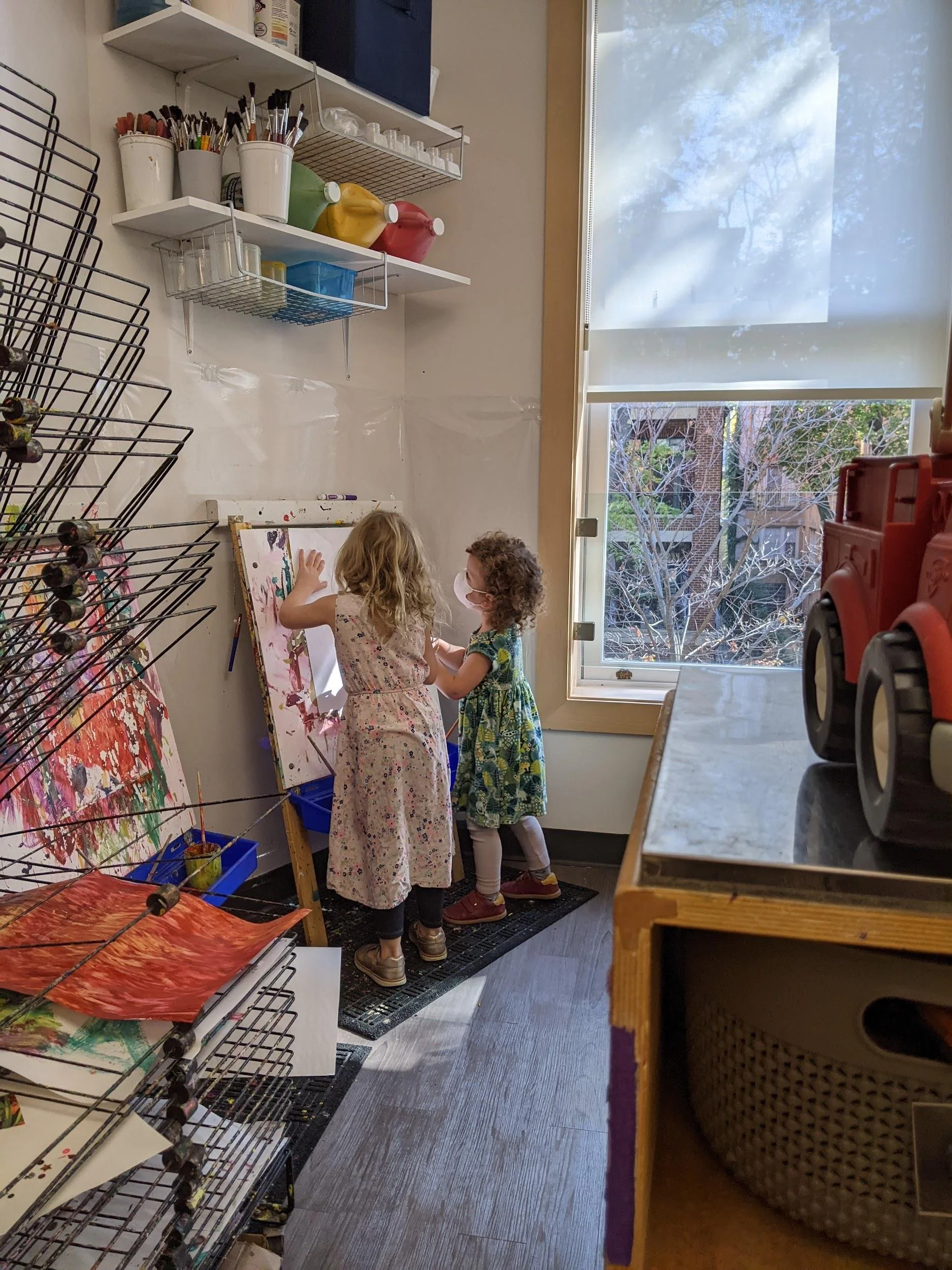
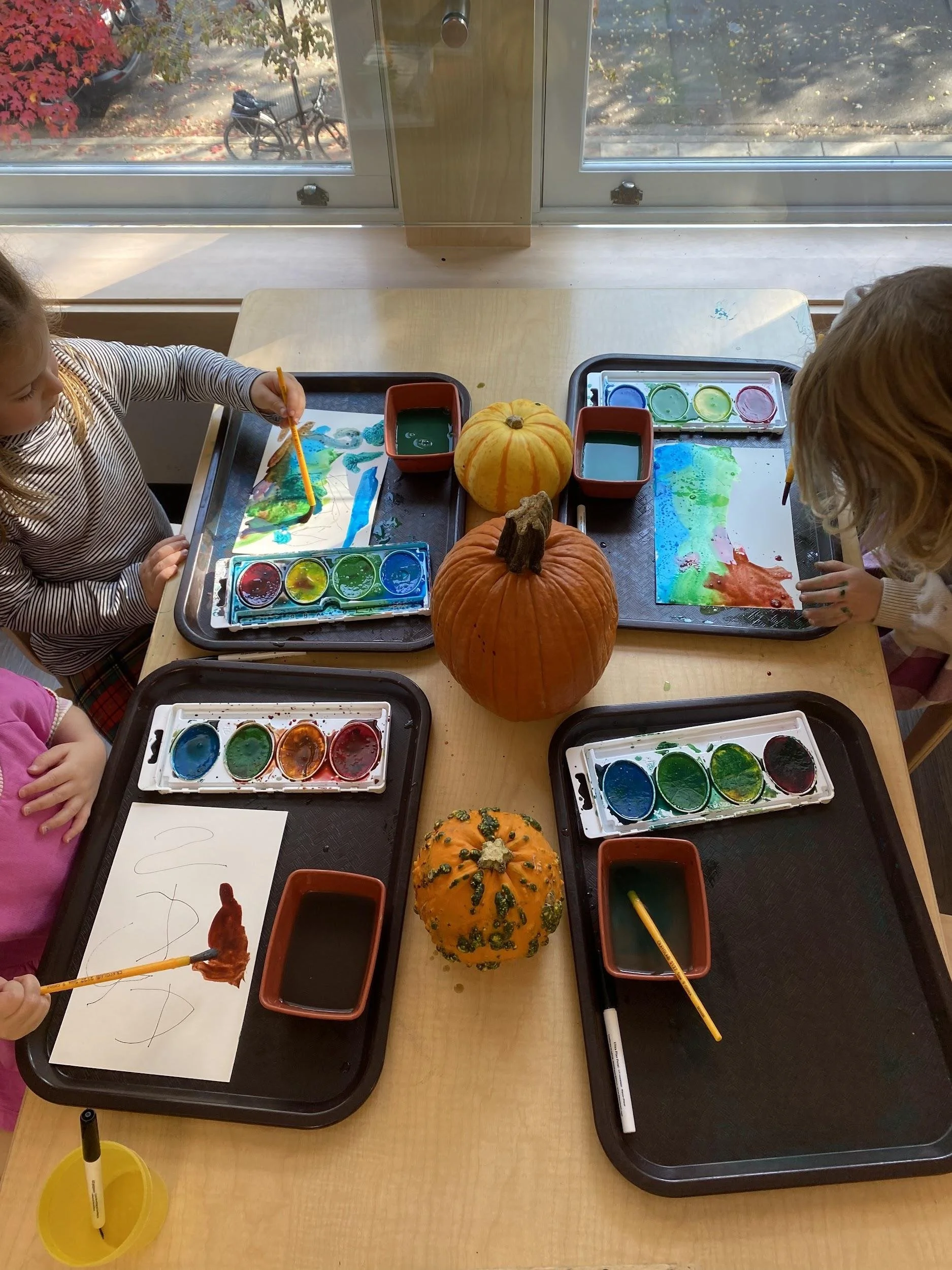
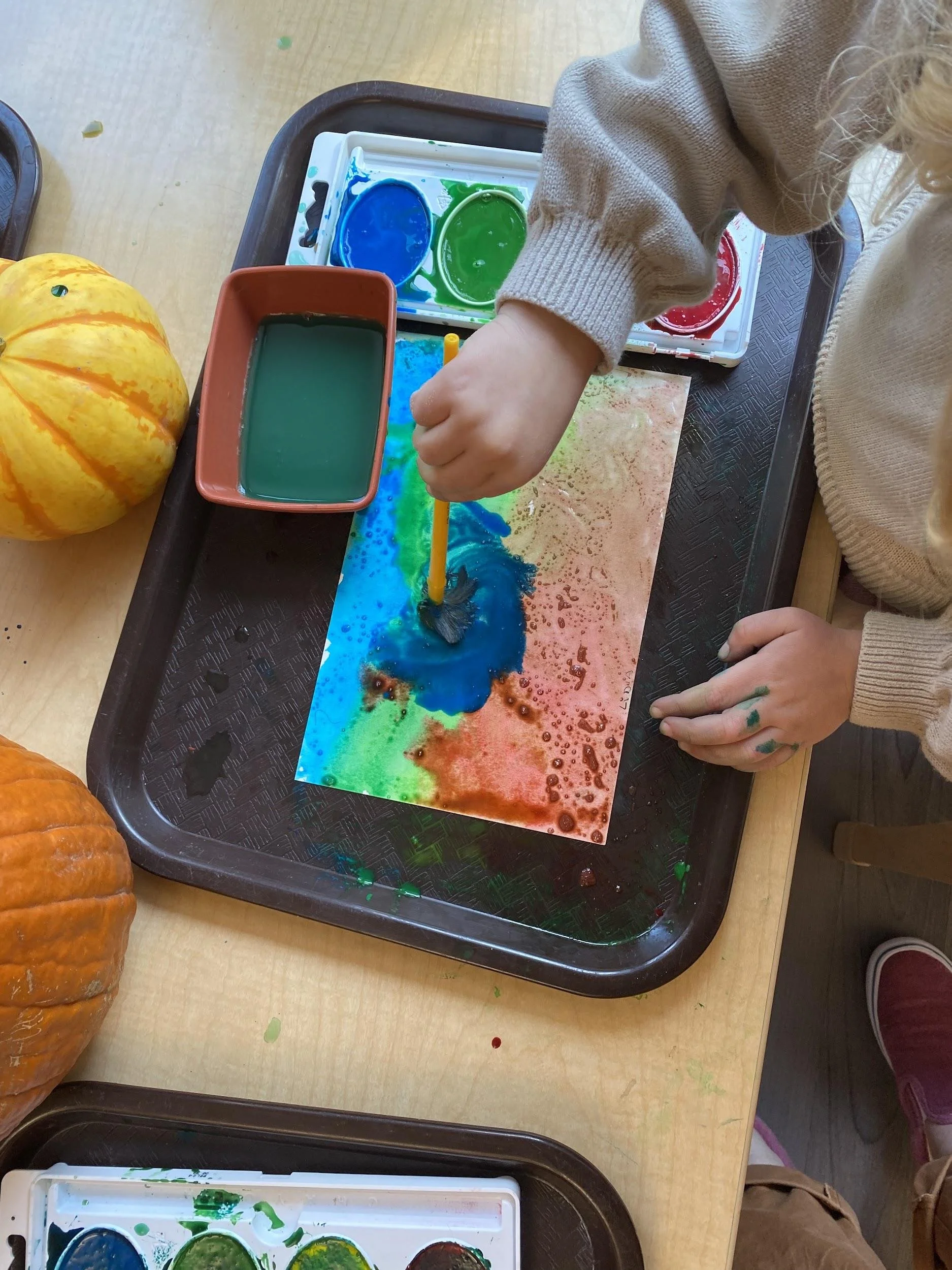
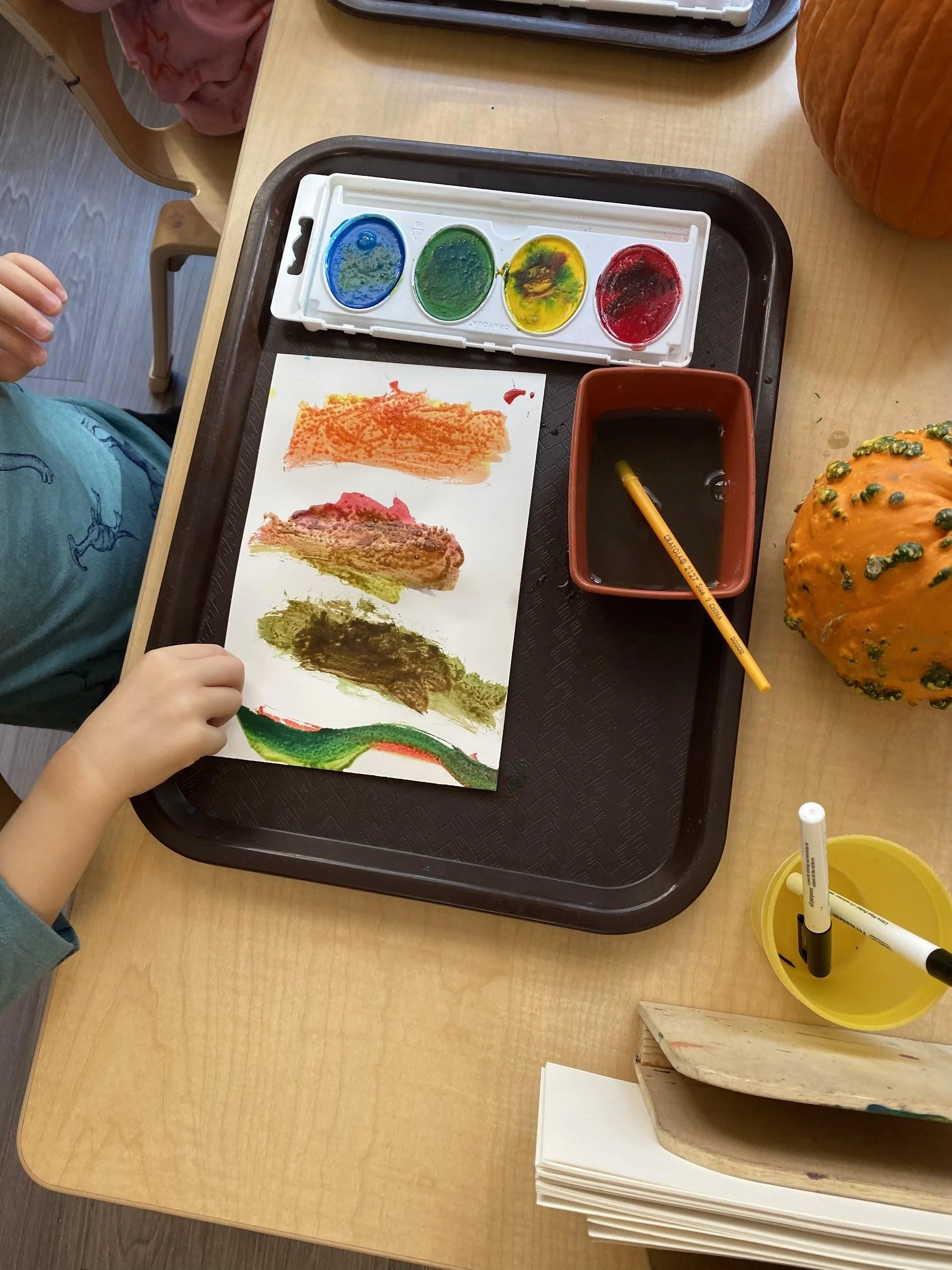
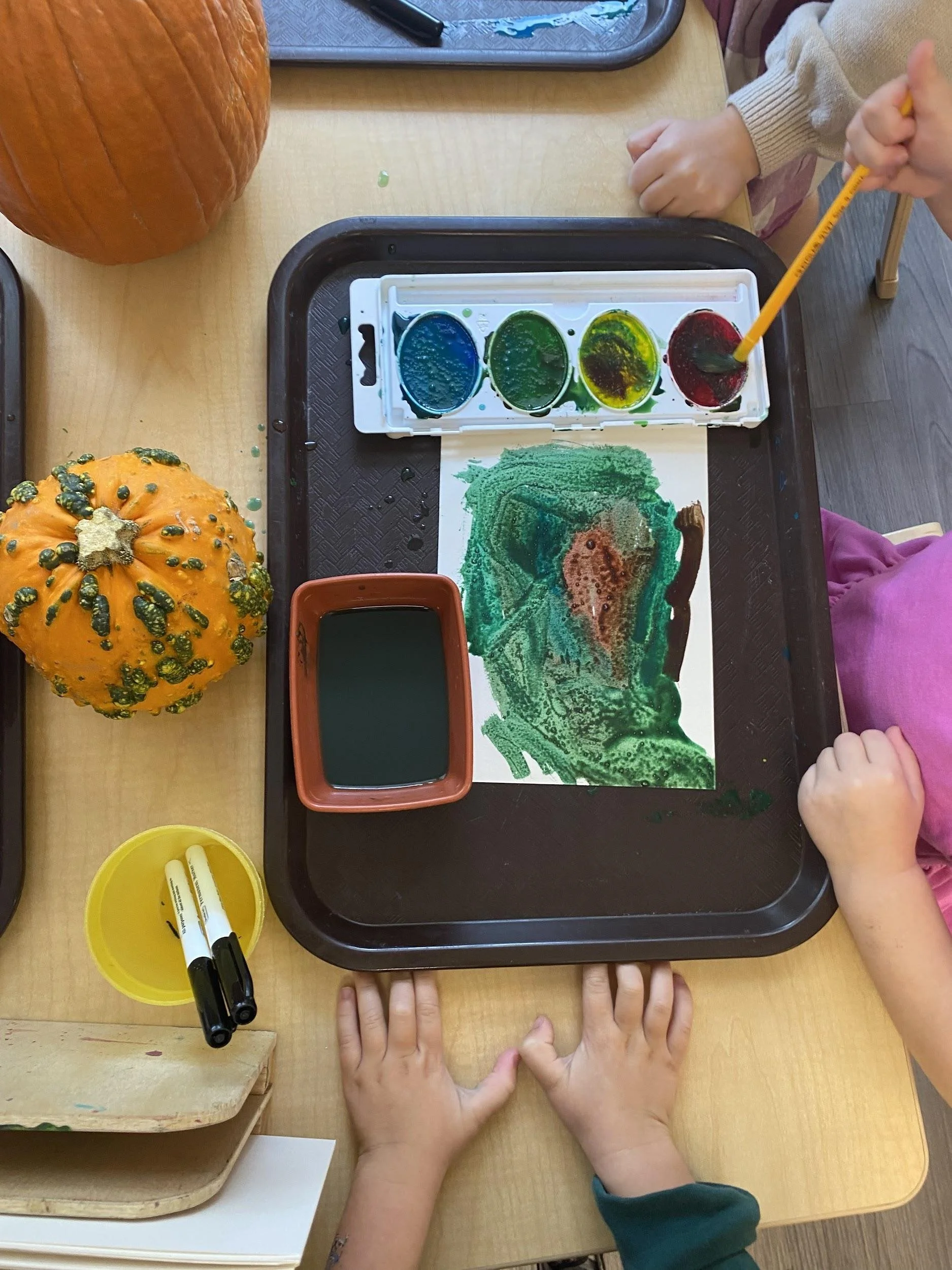
Children have worked on a large-scale painting with tempera cakes at playtime. This type of paint is similar to watercolors in that one must dip a brush in water before swiping it across the tempera cake and then transferring that color to the paper. With multiple colors available, it then becomes important to rinse your brush before trying a new color. Tempera paint is thicker and more opaque than watercolors and creates a different effect. Since the rinse water can quickly get dirty, children sometimes have the inclination to paint with the rinse water and need a reminder that first putting their brushes on the paint cakes will yield stronger colors. It can also be a challenge to remember to rinse the brush when changing colors. Children managed these procedures well and have been excited to see the beautiful mural-sized paintings that we all made together.

Kids’ quotes from painting:

“I’m using three brushes!”

“I made green with some colors.”

“Let’s see what this makes!”

“Hey, I made this dark and brown. I made it with all the paints.”

“Red and blue…purple.”

“Green and blue and orange and green and red and pink made brown.”


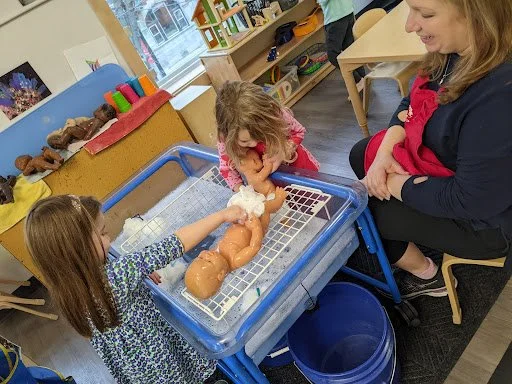
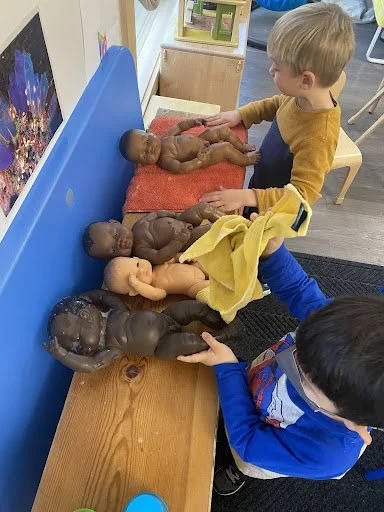
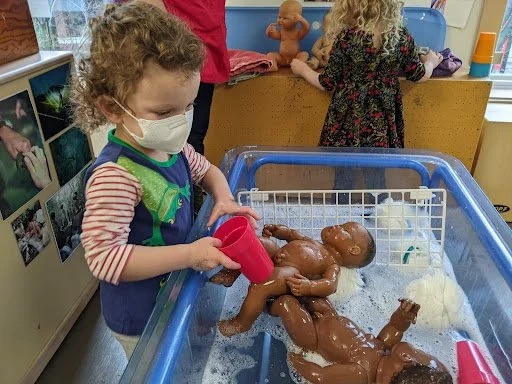
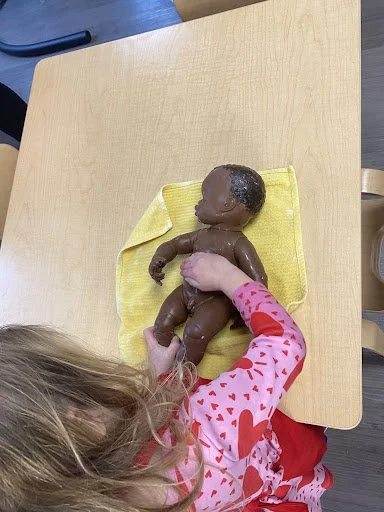
We’ve been washing babies in the water table. Children have been loving the feel of the soapy water, as well as the fantasy play of cleaning and drying babies carefully.

Kids’ quotes from water table play:

“The baby already had a bath and is ready for bed.”

“Scrub, scrub, scrub”

“It’s a washclother!” 

“I need to take care of these babies.” 

“This is what my mom does with my baby.”


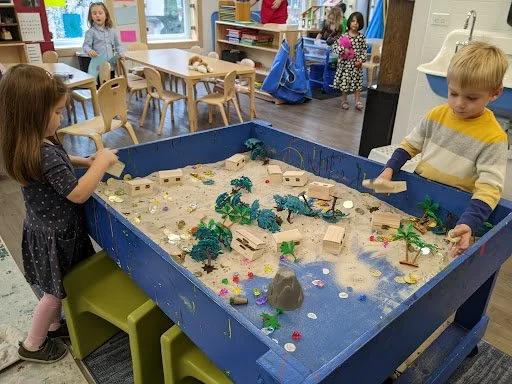
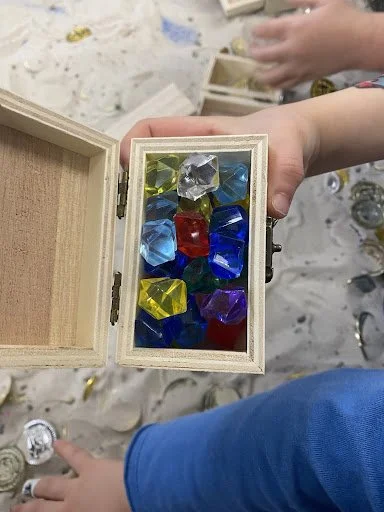
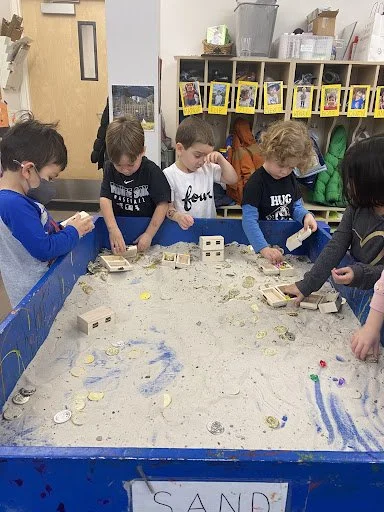
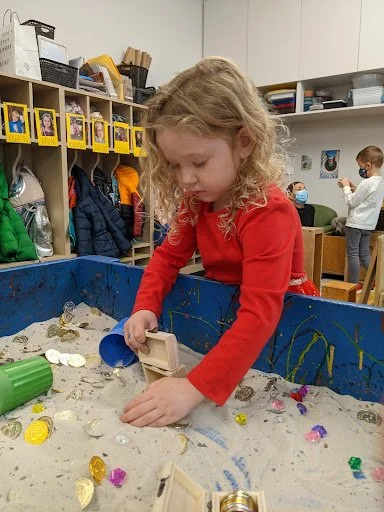
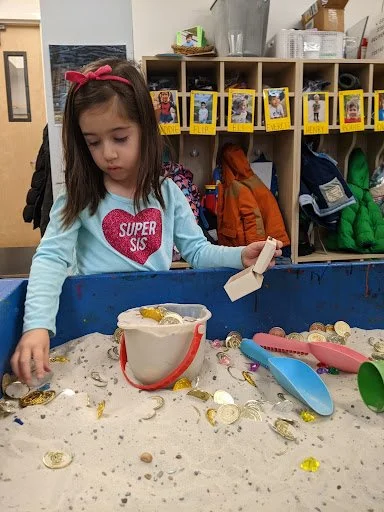
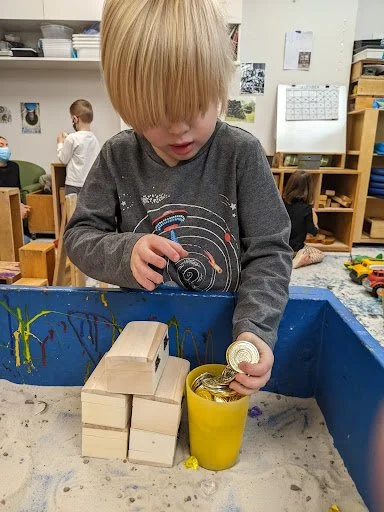
Treasure hunting in the sand table! These materials have sparked lots of fantasy play; sorting and counting; and communication about sharing, negotiating, and compromising.

Kids’ quotes from sand table:

“It’s beauties!”

“I need some money so the bad guys don’t get my gold!”

Car Wash

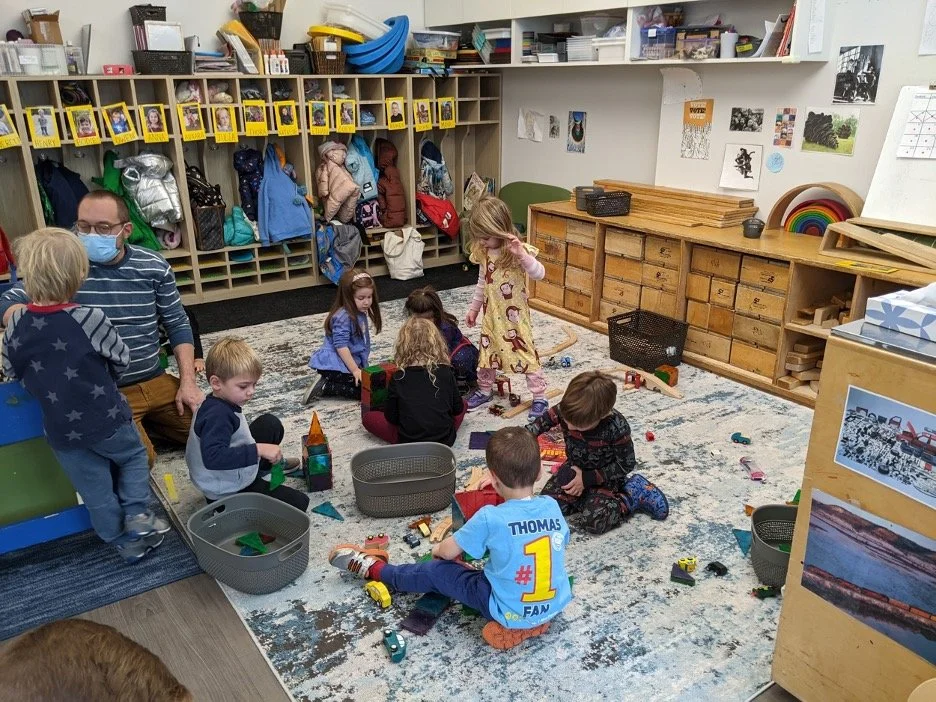
On any given day in the classroom, you’ll find many children playing with vehicles. We offer lots of different opportunities for this type of play, and children approach it in a variety of ways. While some build roads and bridges for their cars to drive on, others enact a variety of fantasy games in which cars race, buses drive people around and dump trucks are repeatedly filled then dumped. Vehicle play offers many opportunities for growth as children explore a variety of physical properties, act out familiar scenarios and negotiate materials and ideas with other children.


So far this year, most of the vehicle play opportunities in the classroom have been on our block rug. We have been noticing that some children like vehicles so much that they are hesitant to move to other areas of the room. Others who are interested in vehicles might shy away from an area that is so busy and has undefined spaces. Because of this, we decided to move some cars to the water table.

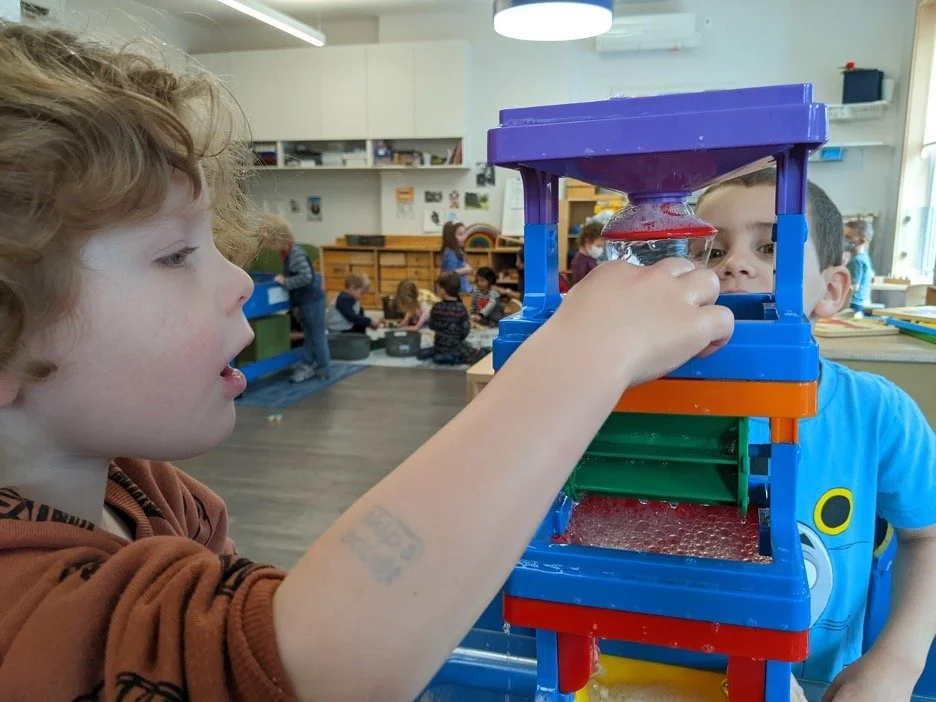
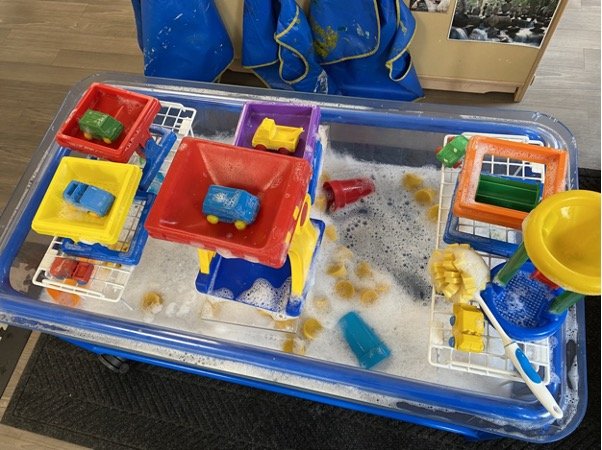
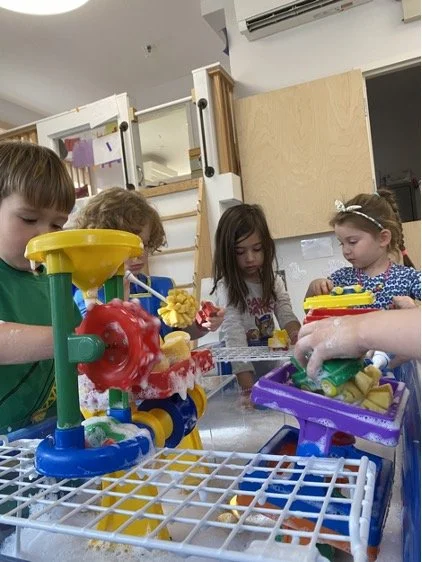
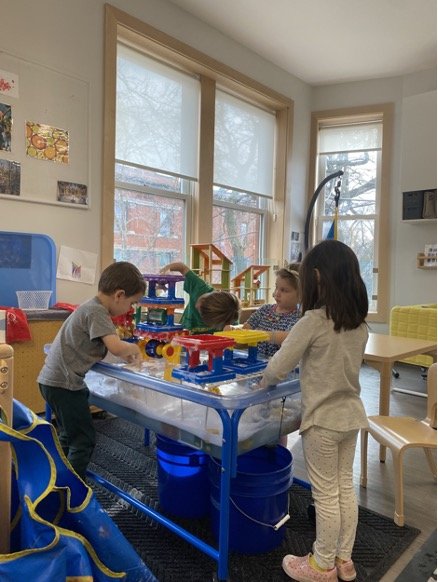
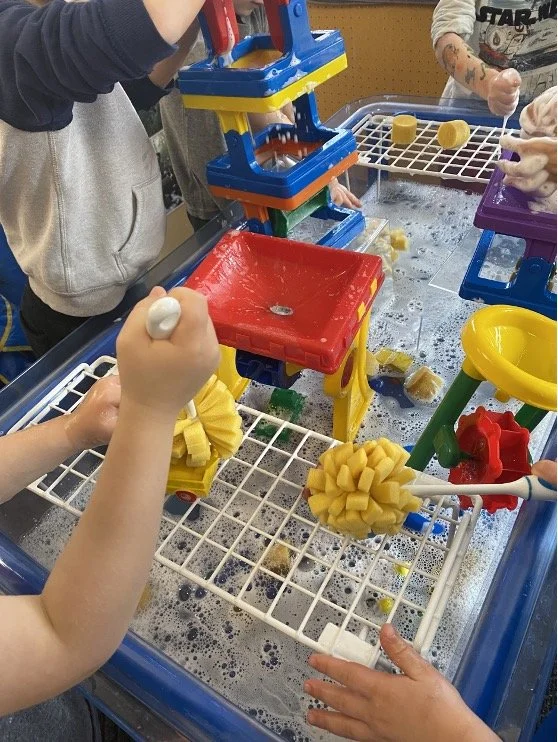
In the water table, we have set up a variety of vehicles with sponges, brushes, soapy water and water wheels and sieves. We modeled using the sponges and brushes to wash cars as well as pouring water over the wheels and sieves while cars are underneath, getting cleaned. Children have been excited to explore this new form of vehicle play. Some have been engaged in squeezing water out of sponges while others are diligently wiping down cars. A few children have been interested in watching the water pour through the wheels and sieves while others reenact their experiences in drive-through car washes.

This new set up has sparked interest in vehicles from children who had formerly not sought them out and encouraged those who spend most of their day on the block rug to investigate new areas of the classroom. Exploring a familiar item in a new way has been exciting to children and offered teachers new insights into their thinking.


A new fishy song + Literacy Development

We taught a new song, also recorded by another teacher a few years ago:
3 Little Fishies and a <insert grownup (Daddy, Mommy,etc)> Fishy, Too

Literacy Development

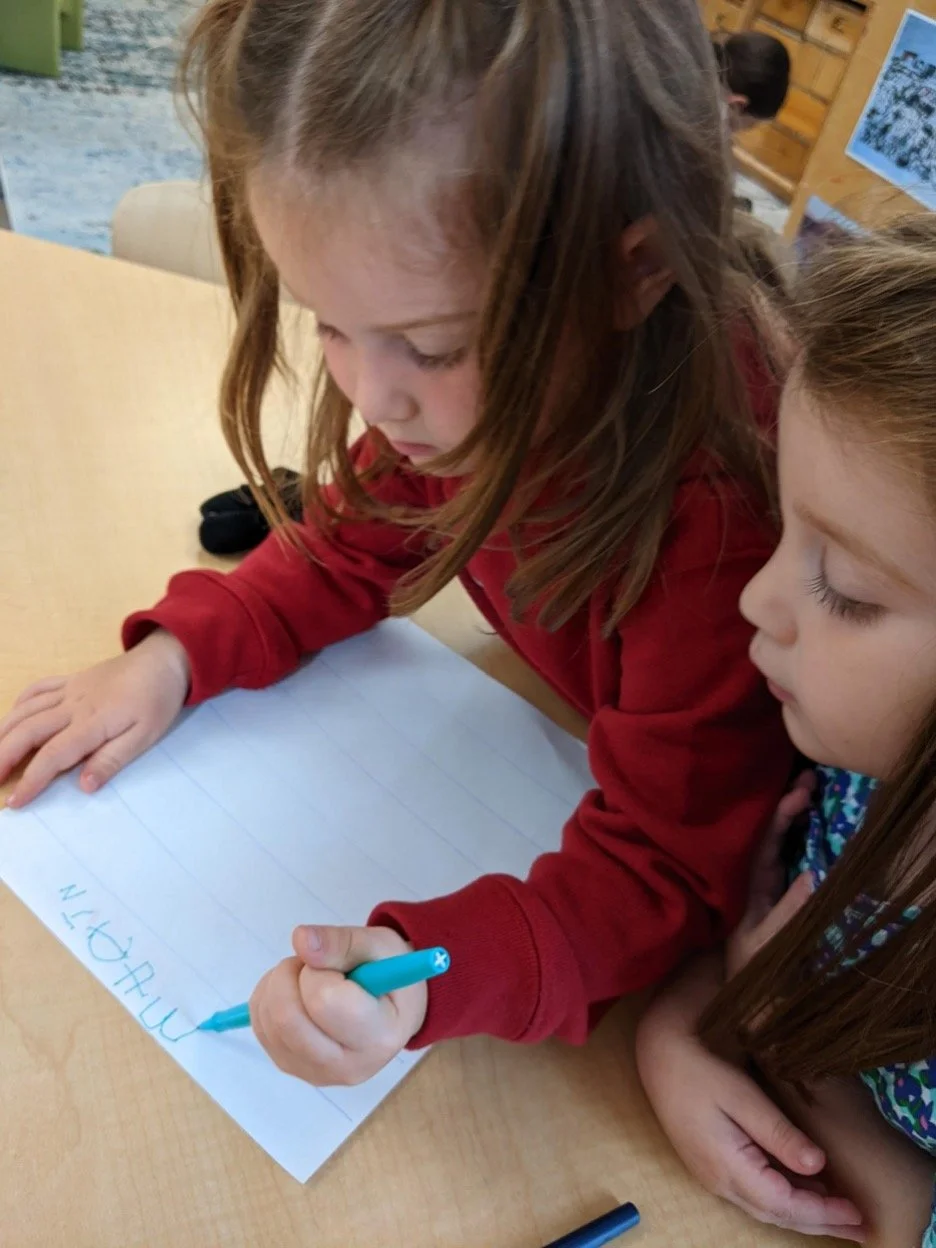
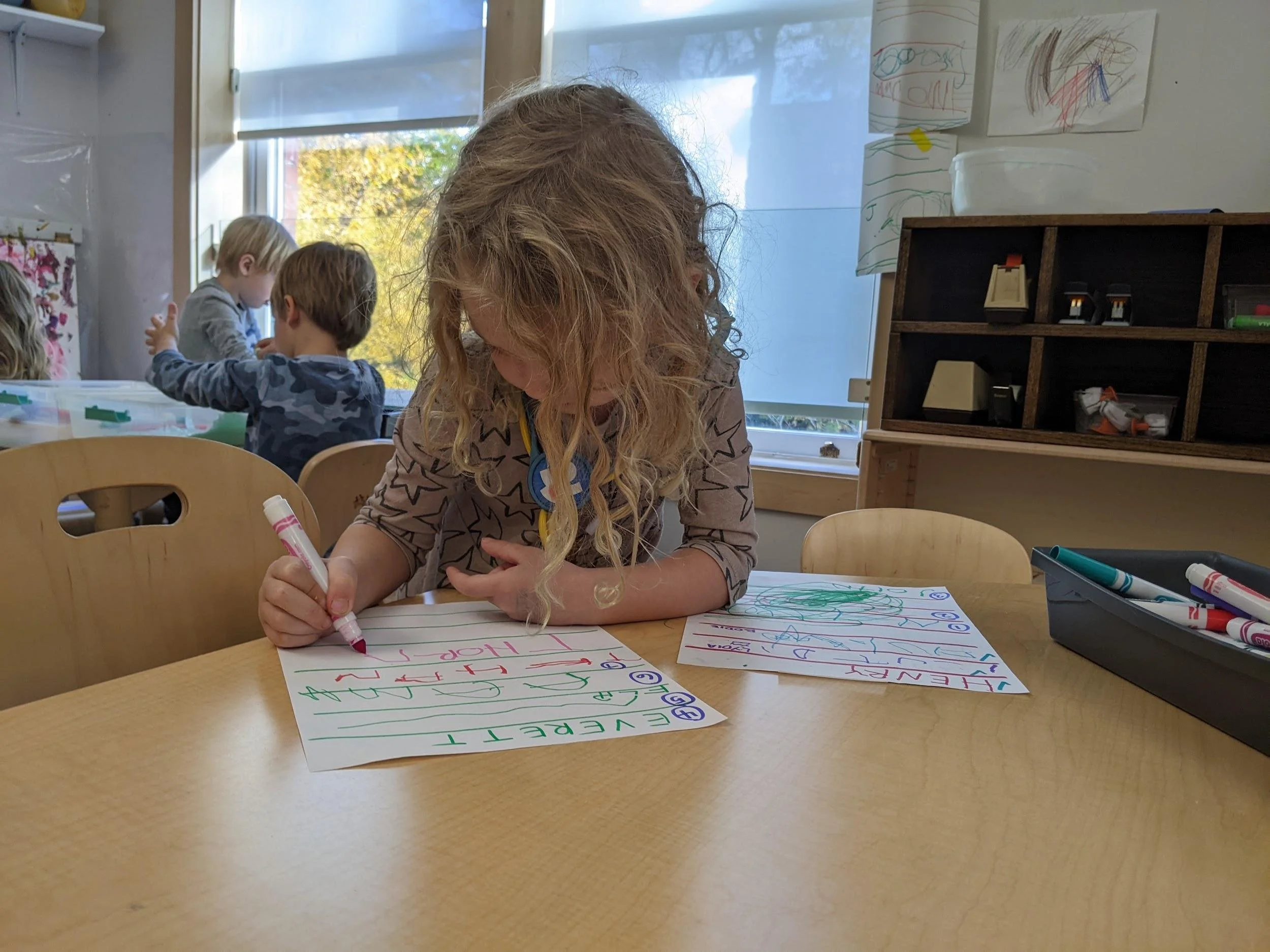
Many kids begin the school year telling teachers they do not know how to write their name when we ask them to put it on a painting or when they want to sign up for a turn.  We encourage them to make any marks they do know, to “show us how you do it.”  Then, we might ask if we can do it the way we know next to theirs, so they can see the standard shapes of the letters.  

On another occasion, we might bring their cubby tag over so they can look at the letters and try to make the same kinds of marks, or draw dots for someone to connect to form a particularly tricky letter. 

Sometimes, someone needs actual physical support, a teacher’s hand over theirs, to have the confidence and/or physical strength needed to try to make a mark.  Each time someone tries, the challenge is less daunting, and eventually kids are writing names on lists and artwork without a reminder to do so.  Even if a signature is not a clear A-M-A-N-D-A, teachers get to know them and can decipher them most of the time.  We read these signatures aloud at group times, when recalling who has had a turn and who is waiting for a turn, who is next for an activity, demonstrating that all that hard work is worthwhile: the grown-ups can read what has been written.

This is the beginning of understanding the value and meaning of a complex system we use (and often take for granted) everyday.  Literacy is not simply memorizing the alphabet and having phonetic awareness.  We cannot simply transfer reading and writing to children.  We must create literacy-rich environments and provide myriad opportunities for potential breakthroughs in understanding and skill.  The ability to read and write is strengthened by a desire to read and write.  That desire is deepened when confidence is acquired in a stepwise fashion, and when activities are presented in approachable tasks.  

Eventually, we begin to discern who is ready for more than their own name.  We might suggest they write their friend’s name on a drawing they’ve made for them, or someone may ask us how to spell MOM for a painting they’ve made especially for you.  We might ask someone to make the sign up list for BLOCKS and help them sound out B-L-O-K-S, an invented spelling that is a good first step in understanding the way letters work together.  Children who want a teacher to read a favorite book to them each day may one day be encouraged to read it to their peers, and when they say they do not know how to read, a teacher will remind them they know the story and can read the pictures.  Another step in the larger process.  

Eventually, children will begin to notice letters on street signs or in the grocery store, begin to decipher APPLE on a sign or ask to write CUCMBR (again, invented spelling, to be encouraged) when they make a menu for the playhouse kitchen.  

There will be starts and stops, stalls and staggers in this process.  Everyone does not do it at the same time, and something that seemed to be solidly understood may seem to suddenly disappear as one’s focus shifts to another area of development.  Between 2 and 5 years old, we are all taking in so much information and developing very quickly.  Teachers do not expect to see a straight developmental line, but recognize that the path will be individual and lots of things will spring up along the way, all worth exploring and beneficial for building a well-rounded understanding of the world.  It’s all interconnected.  Group life, our classroom group in this case, offers a good lens for seeing just that.

Hoot Owl Hoot!

Have you heard about the Hoot Owl Hoot Game at home?

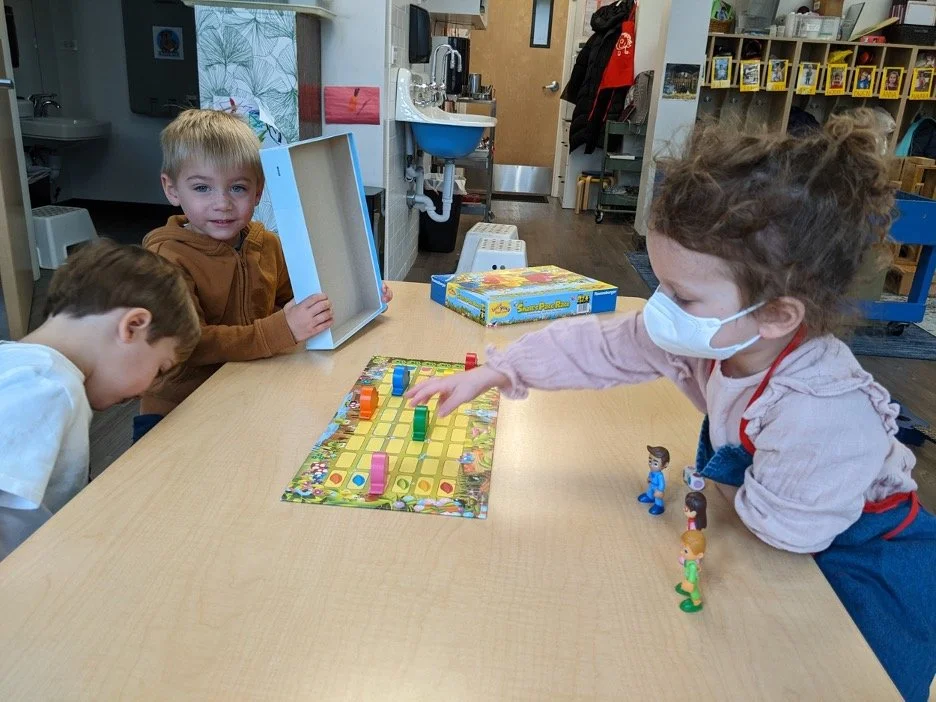
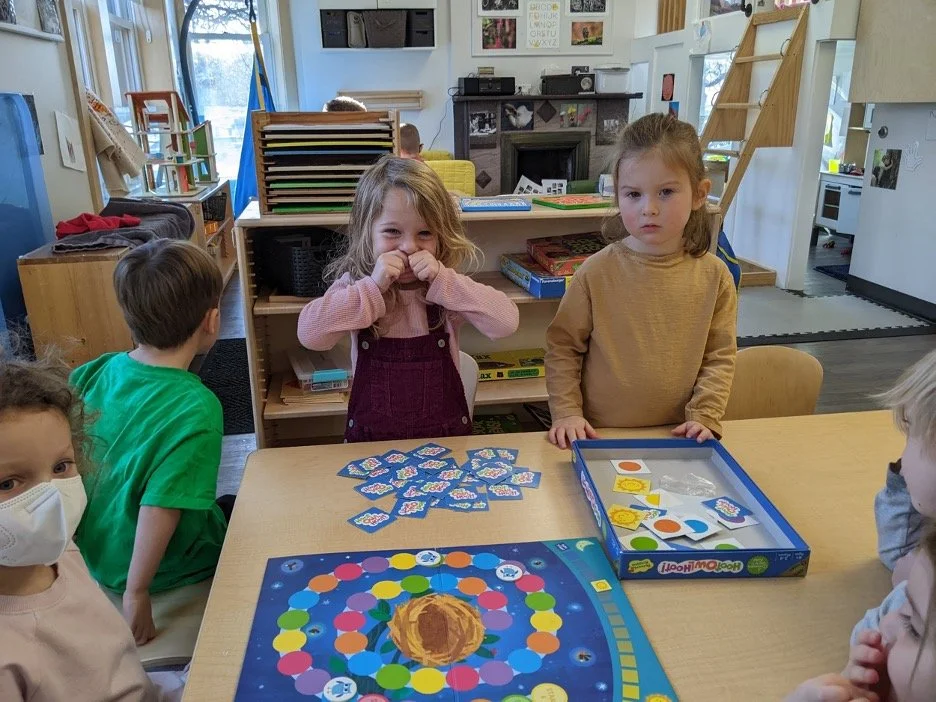
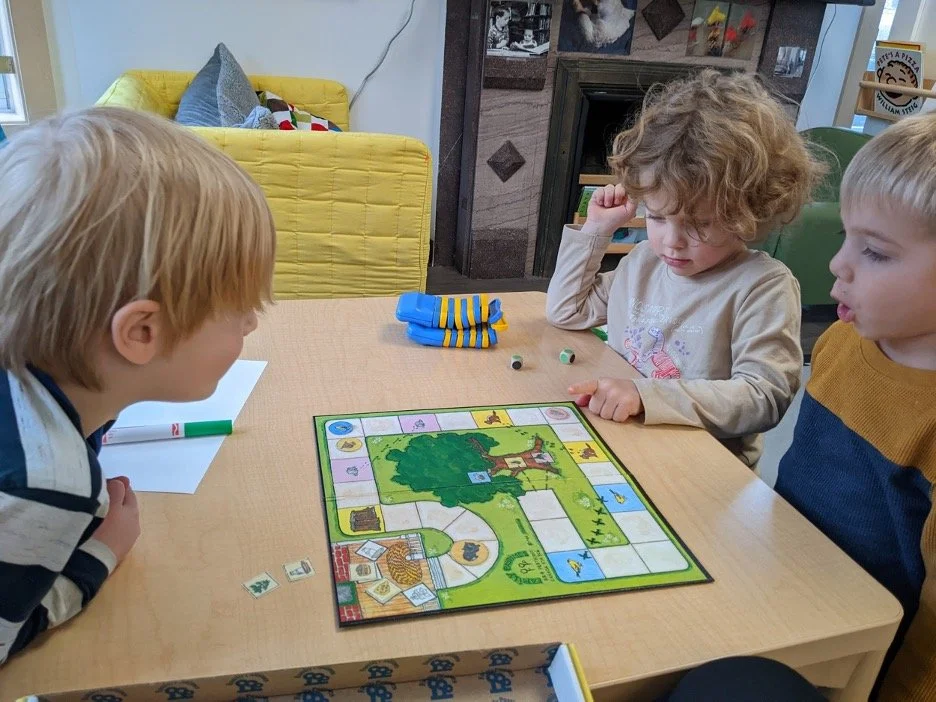
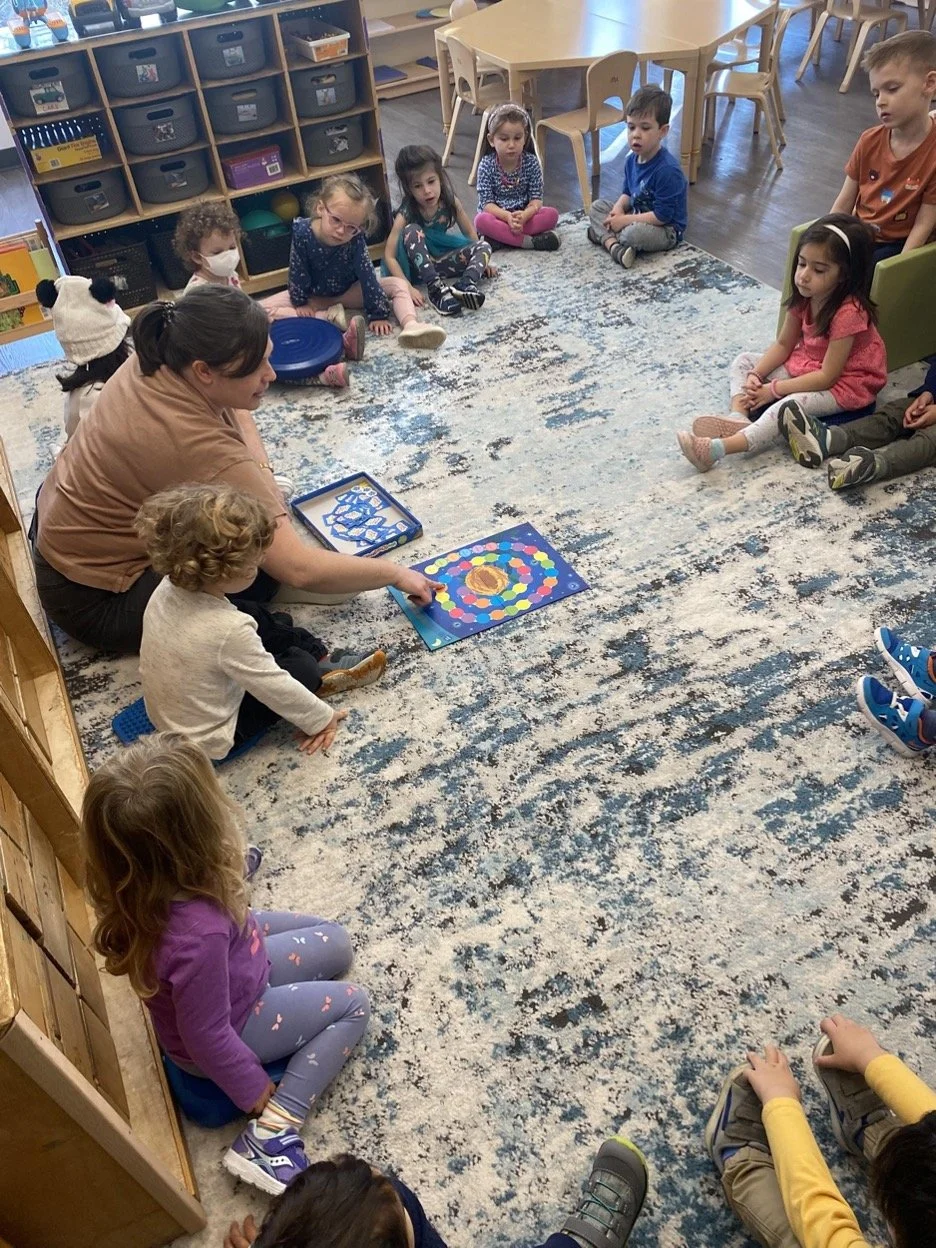
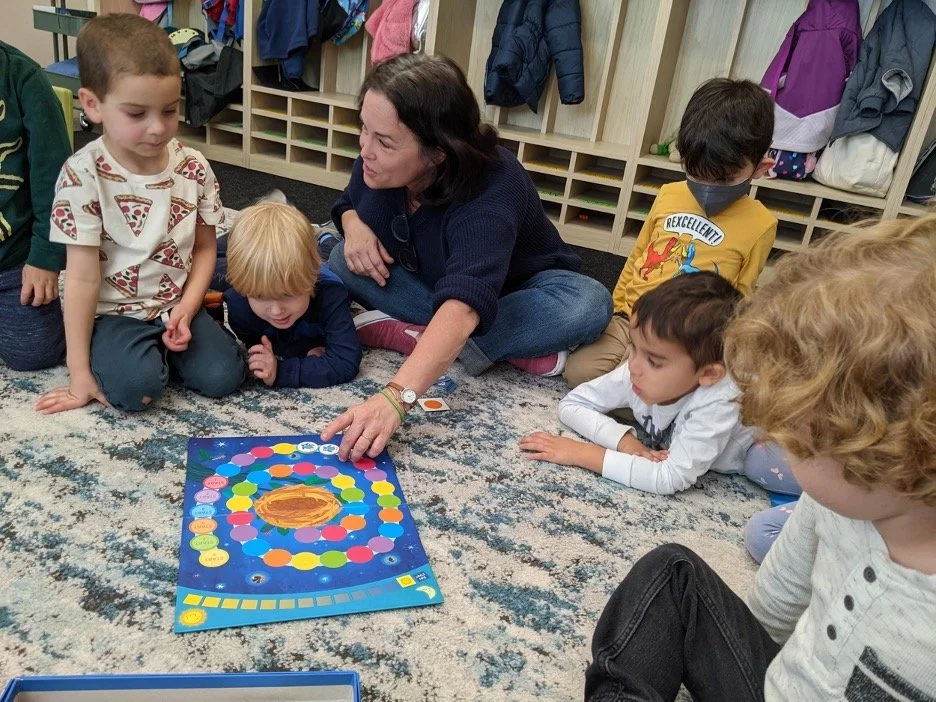
This week we introduced this new board game in the 4am class. And while we have had other board games on our shelves since the beginning of the year (Snail Race, Teddy Bear Bingo, Garden Matching Game) we felt that kids were ready for this next step, demoing a board game during our group time. Most of the games we have in our room are cooperative games. We choose these games because players work together toward the same goal. There are no individual winners or losers. This is not to say that we are against competitive games, only that cooperative games foster a feeling of community and a shared purpose which can create a climate of inclusion and foster negotiations that feel good to preschoolers. Introducing a brand new game to a group of 18 3 and 4 year olds requires a lot of patience and focus for everyone, teachers and children alike. It requires kids to stay on the edge of the rug, so that everyone can see. This is so much harder than it sounds! It requires children to listen to the procedures and rules of the games and to not touch the board or pieces. However, the novelty of this new game and the drama around, “Will the owls make it back to the nest before sunrise?!” had everyone so invested and enthralled, that our community of 4AMers were able to sit back, watch, ask questions, make observations and take it all in.

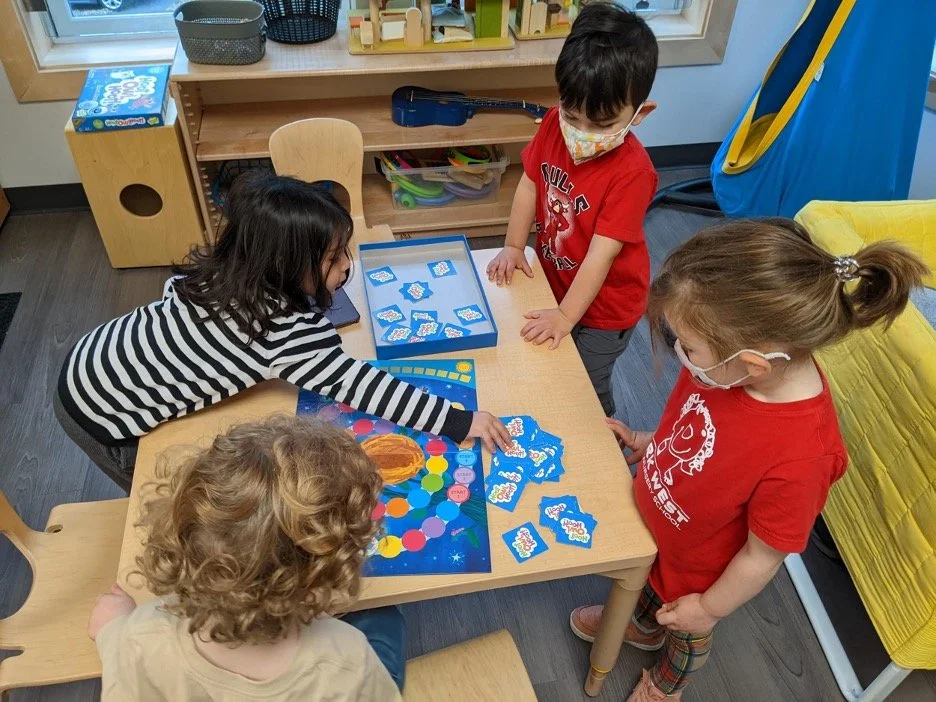
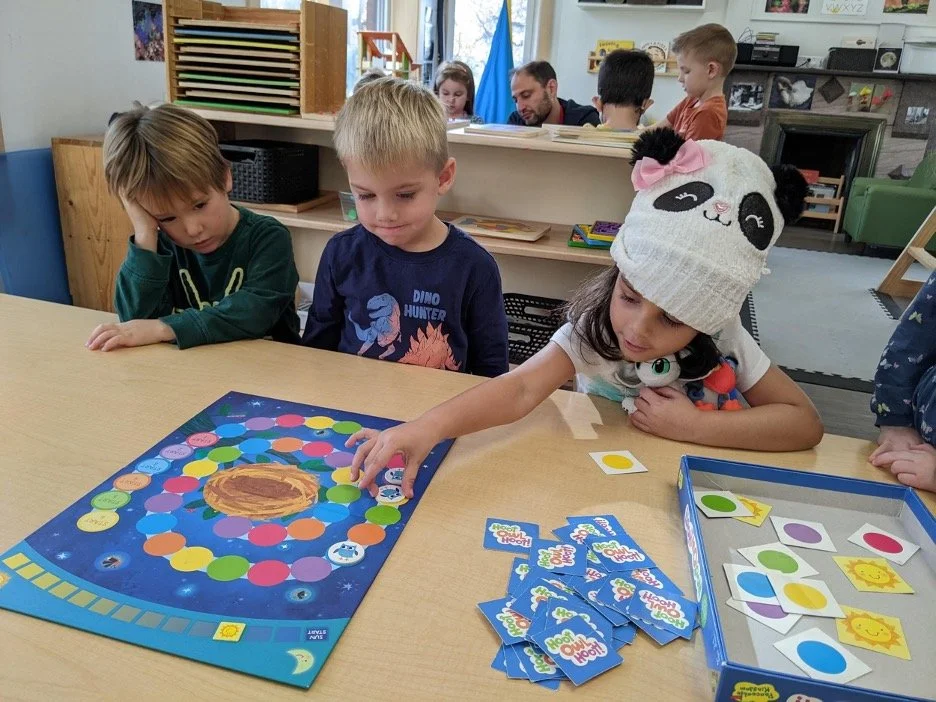
During the group time demo, Amanda opened up the board and started taking out the pieces one by one. The board has a large nest in the middle with a path of colored circles spiraling around, ultimately leading to the nest. The pieces of the game include 3 owl disks and one small sunshine card. There is also a deck of cards with colored circles on them and mixed into this deck are larger sunshine cards. Amanda let everyone know that even though there were three owl disks, that there could be 1,2,3 or 4 players and more importantly, that no one gets to actually BE one of the owls. Instead, the kids playing are really helping all of the owls get home before sunrise. Participants are to take turns choosing a card from the deck. If it’s a color, then they can move one of the owls to the next colored circle on the board. But, if they choose a sun, then the little sun card gets moved closer towards day time. It’s a lot to process for these kids. The teachers then “play acted” together with kids watching, sometimes trying to take two turns rather than letting the other person have their turn in order to demonstrate how to manage these types of disagreements. For example after Kristin’s turn, she tried to take another card right away. Amanda chimed in with, “Kristin, I think I get to go now.” Then Kristin said,  “But I want to have another turn right away.” And as if on cue, kids chimed in with, “It’s not your turn Kristin. Don’t worry, you will have a turn again after Amanda.” This play acting acknowledges how children are subverting their own wishes to keep the game going, and emphasizes the structure of turn-taking.

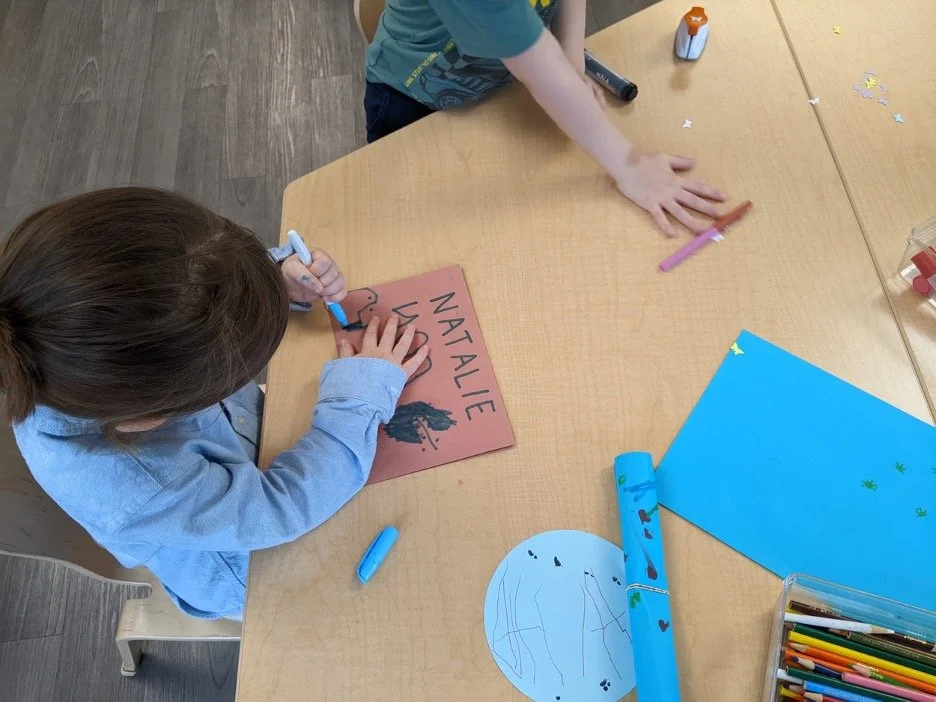
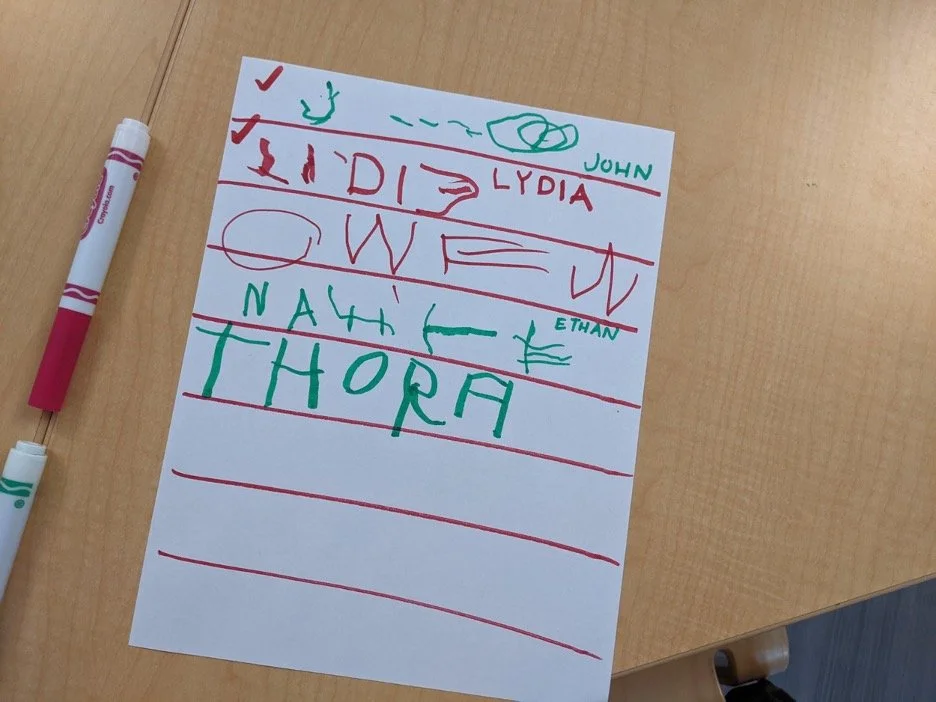
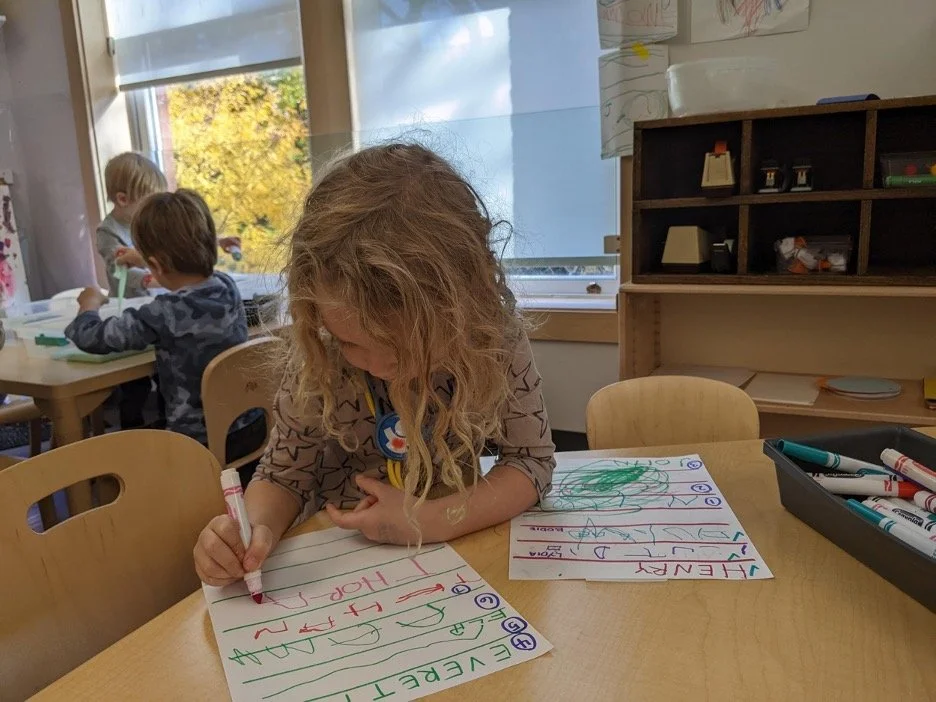
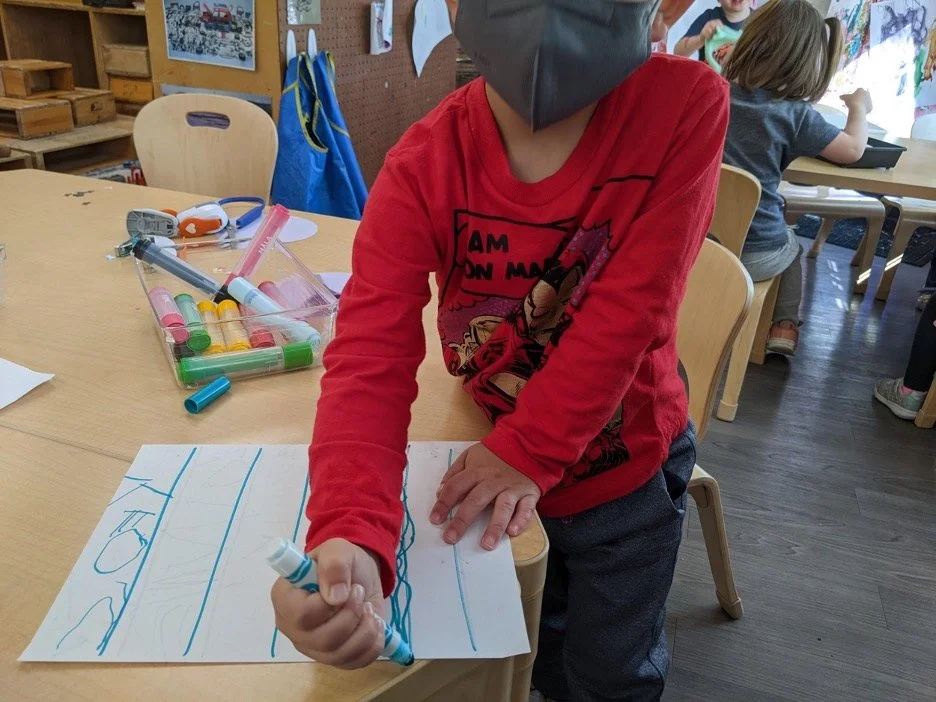
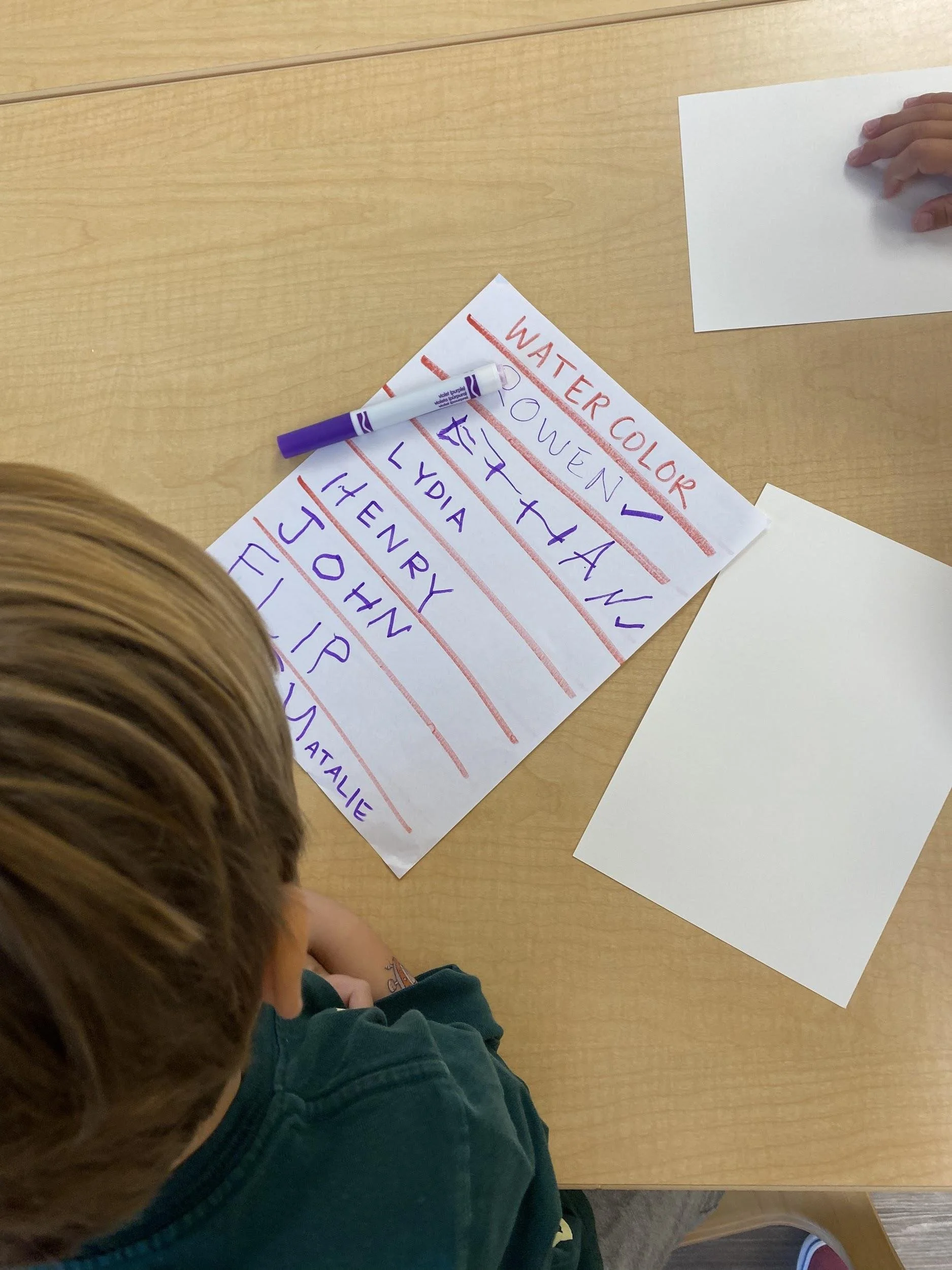
As you can imagine, everyone wanted to play the game during our long play time, and so a sign up list was started. At this point, many kids know what a sign up list is, and even know how to get one started themselves. All you need is a piece of paper, a marker, and then you draw horizontal lines all the way down. Finally, you choose a line and write your letters. Some kids go and get their cubby tag to help them remember their letters, some come and ask a teacher for help, and some who are just getting the gist of writing, fill their space with intentional lines and curves. All of these approaches to early writing are thrilling for us as teachers, and as we can imagine, are thrilling to you as well.

We introduced a few new activities/materials last week:

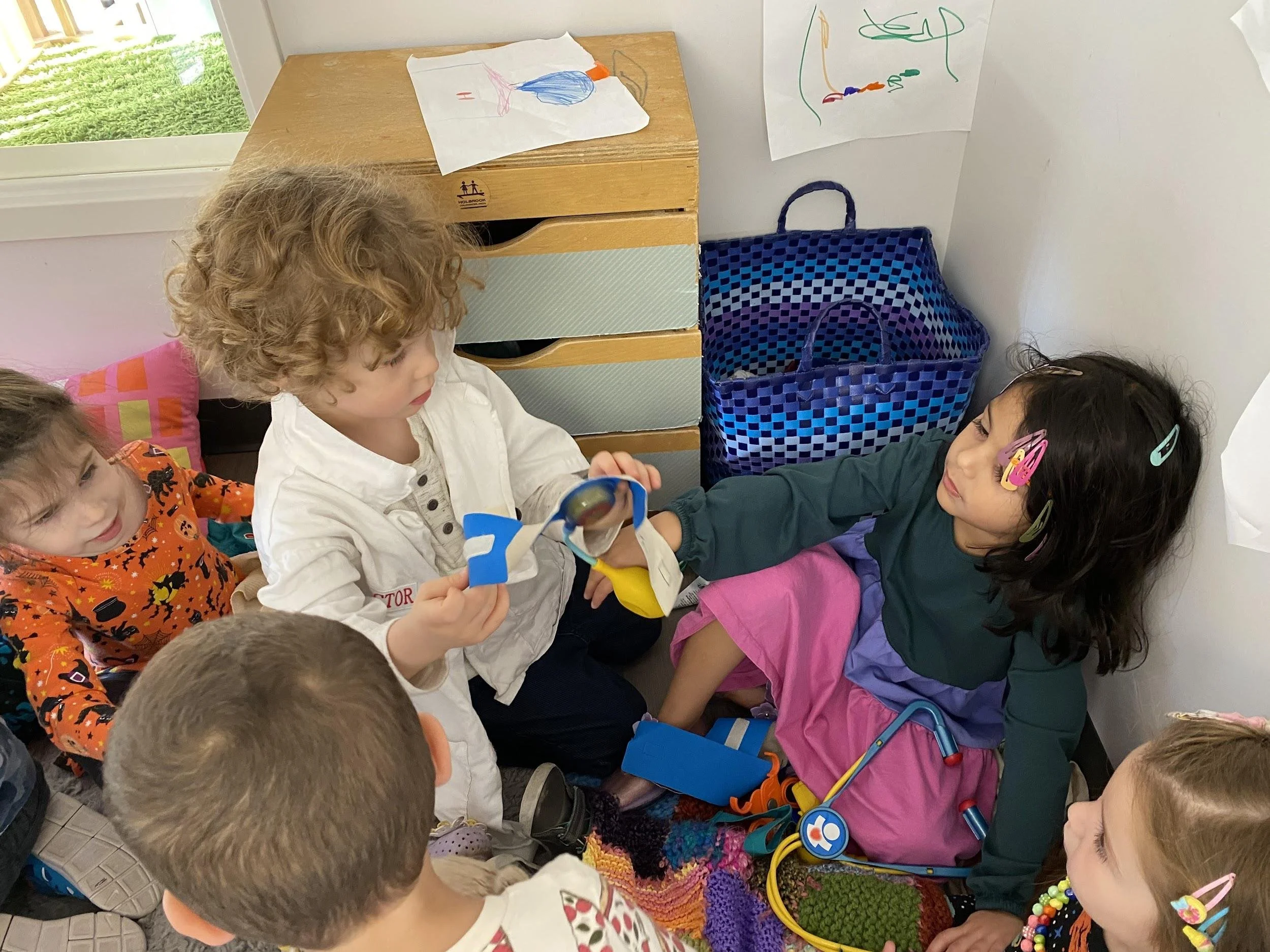
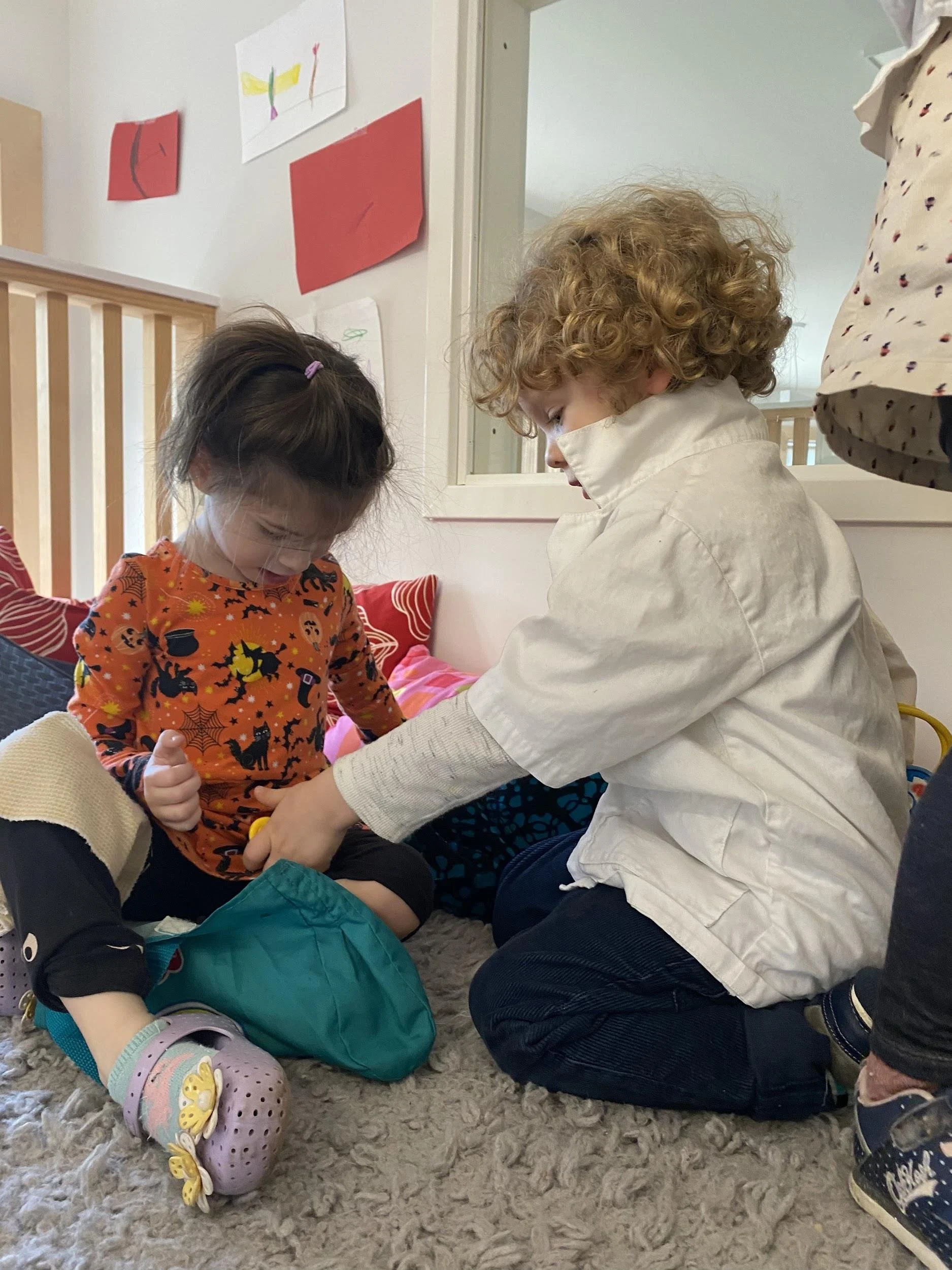
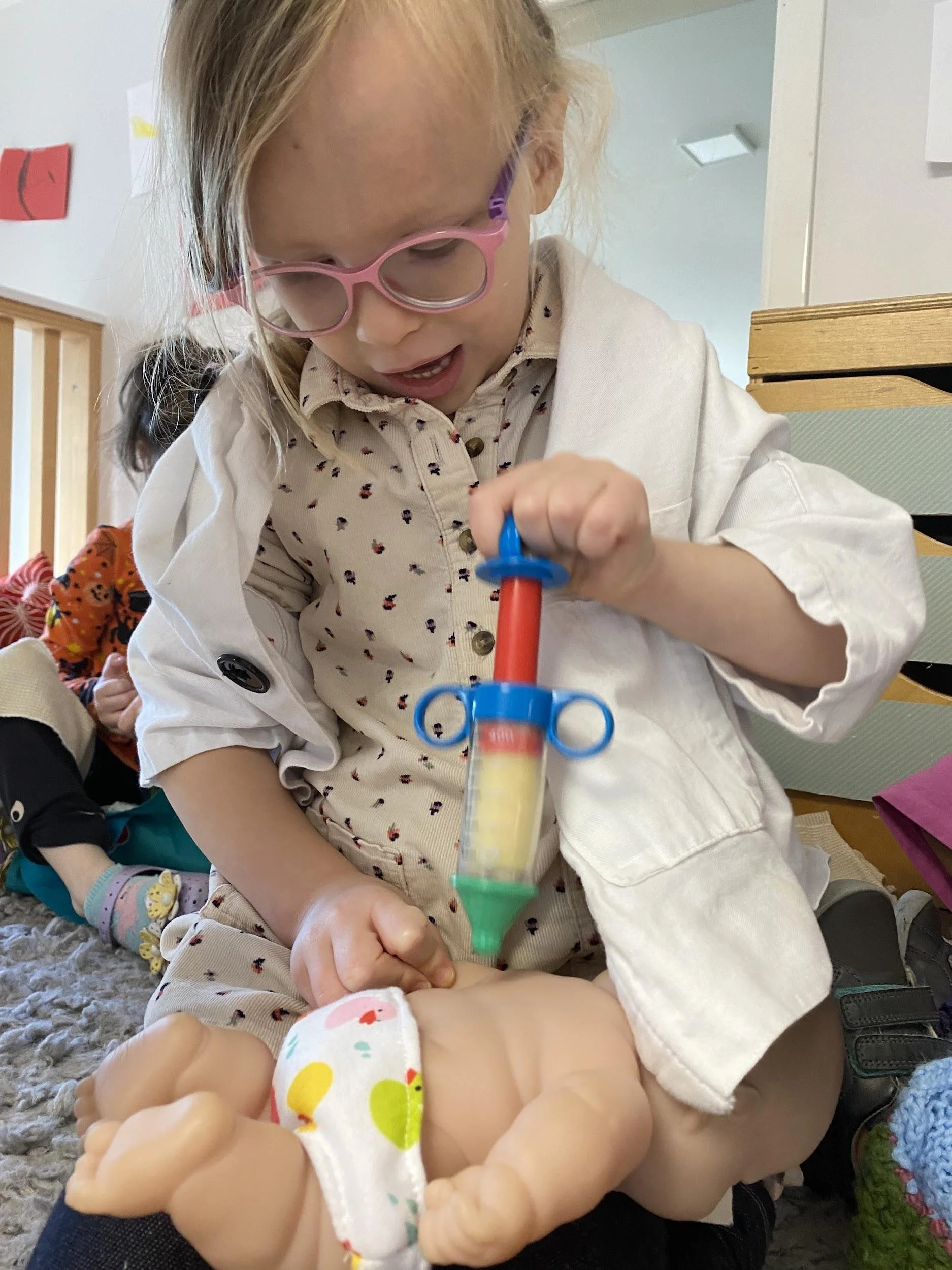
Doctor’s kits and jackets in the play house.

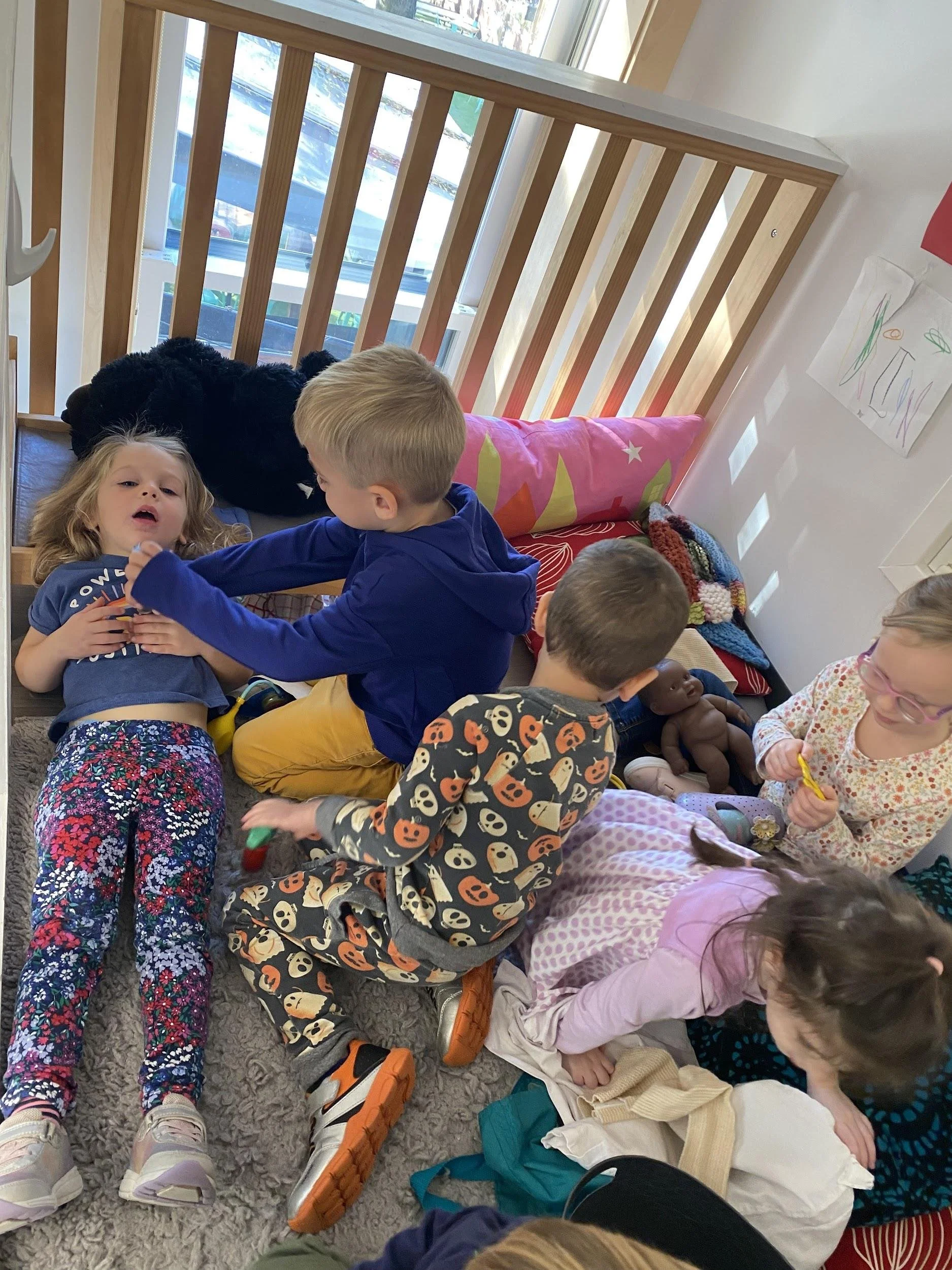
A very busy doctor’s office!

Doctors have been caring for children.

Doctors have been caring for baby dolls and stuffed animals, too.

Thora helps Maya attach a paper to the easel.

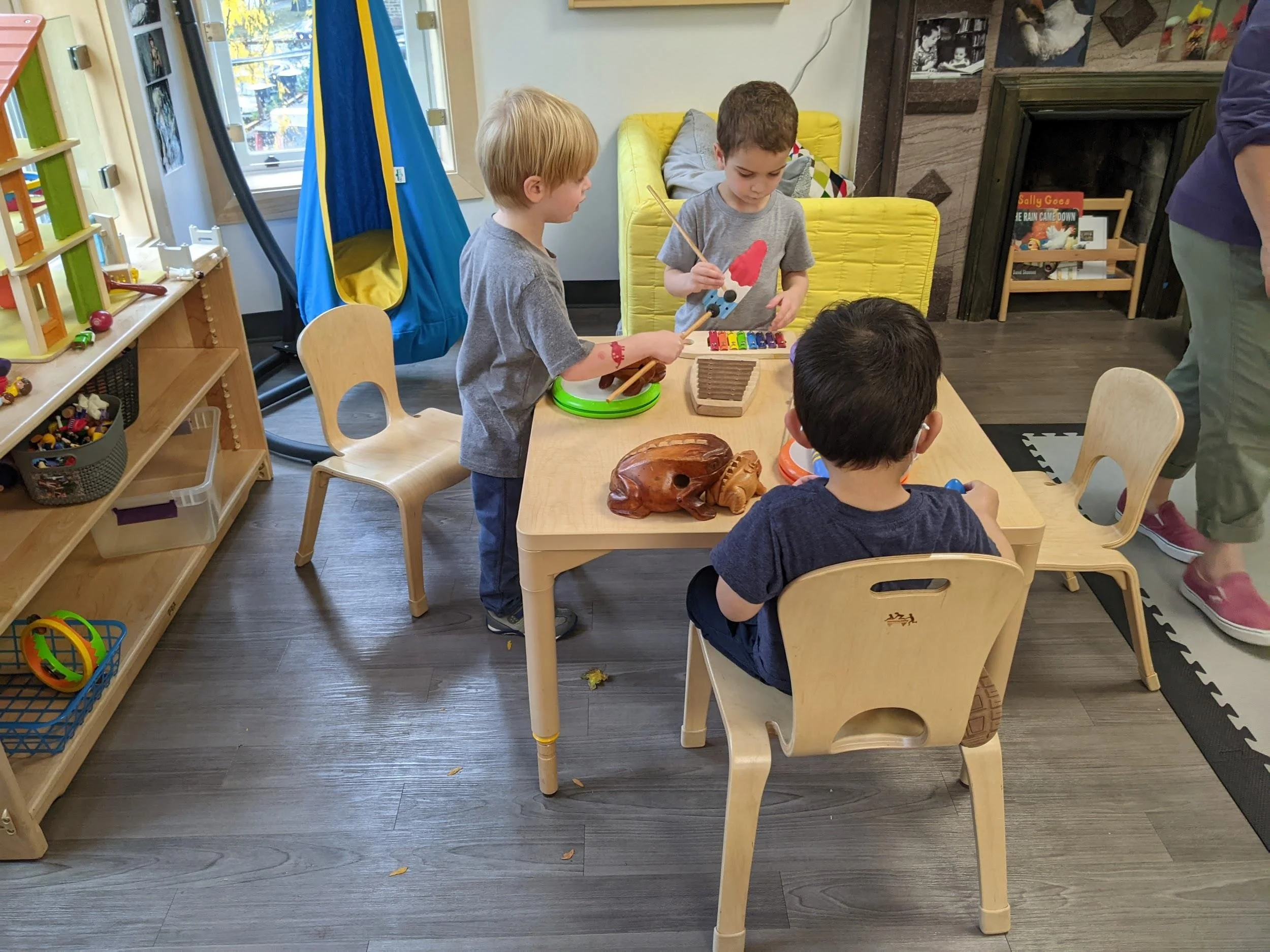
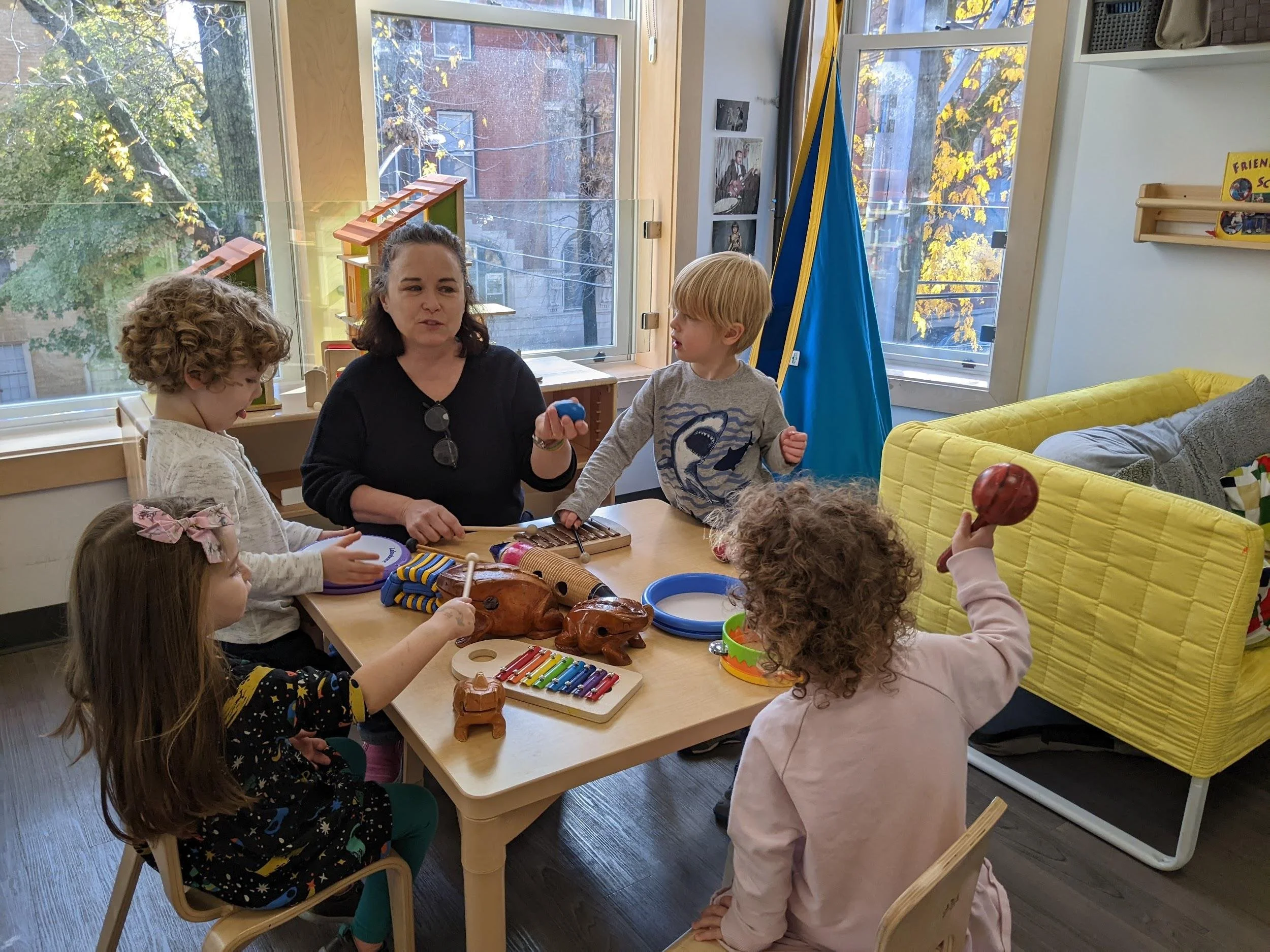
Musical instruments are available.

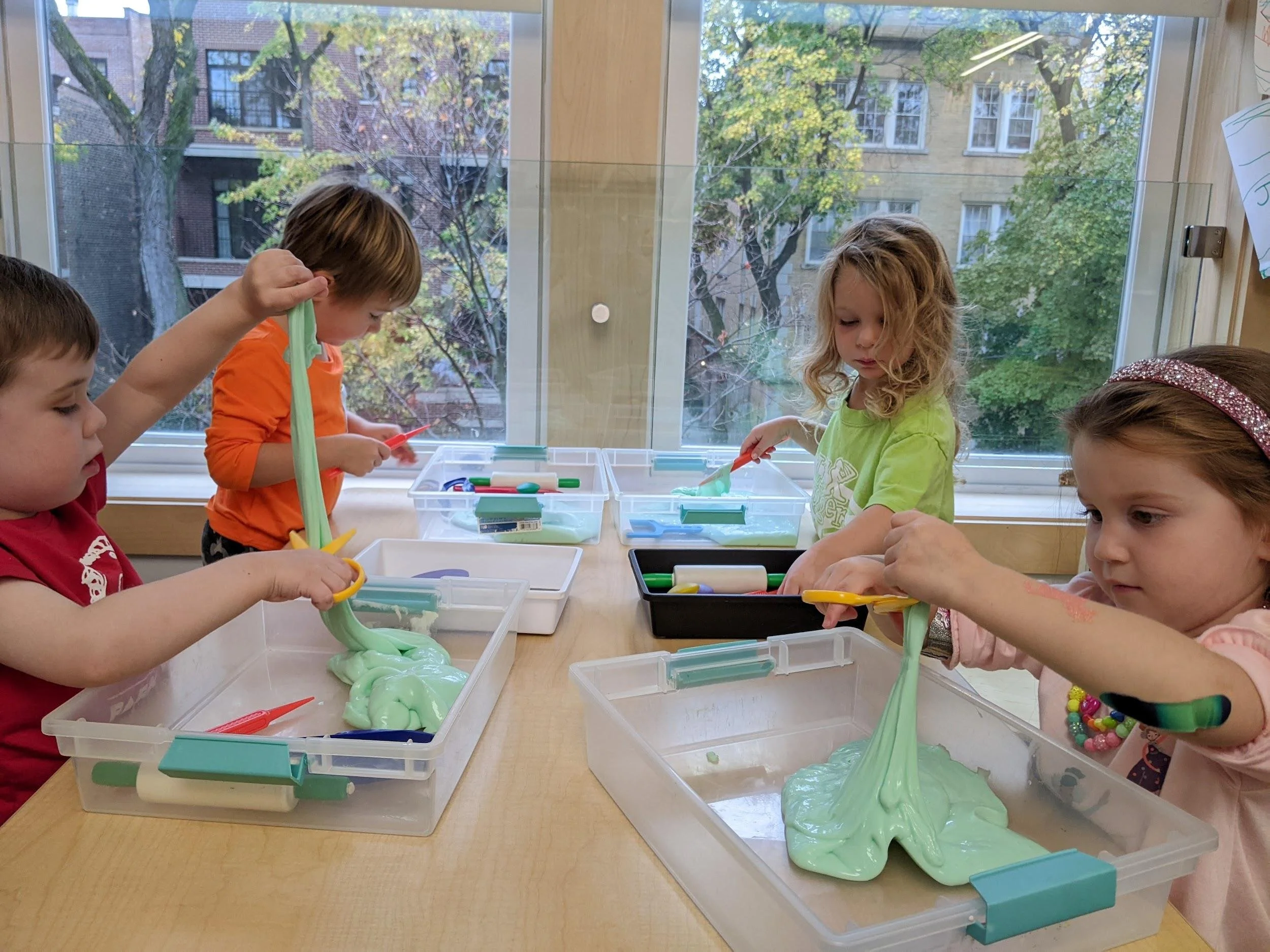
Homemade silly putty: roughly equal parts liquid laundry starch and glue, plus a few drops of food coloring.

Silly putty has encouraged almost everyone to sign up for a turn!

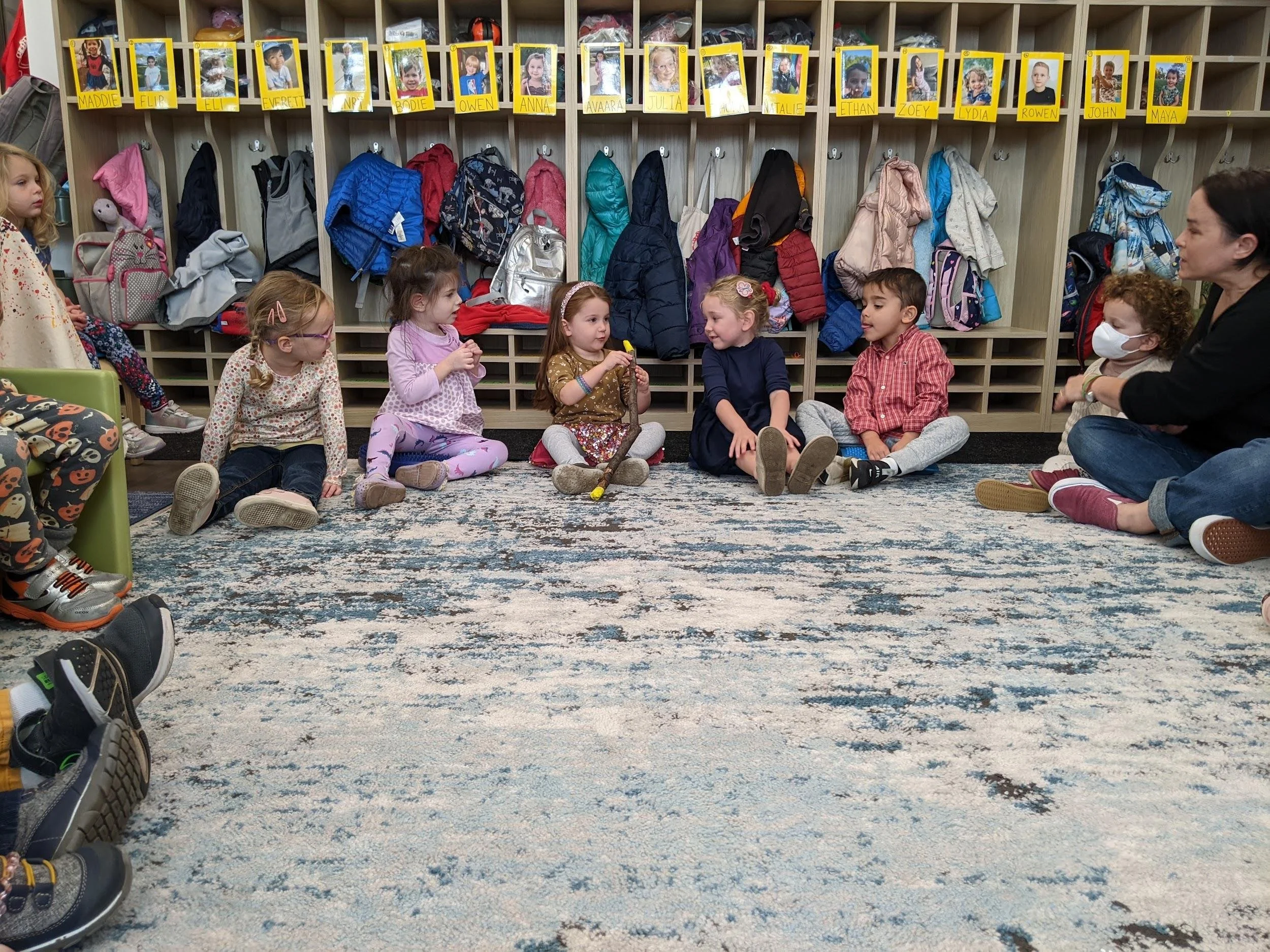
Everyone really wanted to talk about Halloween, so Kristin introduced a “talking stick” to facilitate turn-taking during group time.

Sharing, Taking Turns, and Protection of Work

We’ve heard of kids who have said, I know about sharing. That’s when my mom takes my toy and gives it to my brother! In our desire to encourage young children to share, sometimes we use adult ideas of fairness and niceties that don’t make sense or feel very good to children. If another child paints on your child’s painting, you might be inclined to say, It’s ok! We can all share. But, think about how you would feel if your work was interrupted by another person who changed what you were doing. You would rightly be offended, and your child has the same right to protect their work from others’ interruptions.

Intentions are good. We want our children to be able to share materials, play together, and consider others’ feelings as they work cooperatively. We share those goals, too, but at Park West we take a different approach. We use a system we like to call Protection of Work. We try to protect children’s work while instituting a system for turn-taking that ultimately helps kids manage this on their own.

So, what to do when your child is the one so badly wanting that turn? First, language can help a lot. We encourage kids to ask for a turn. In the beginning, this means teachers are saying all the words, but this modeling gives kids an idea of what they can say: Can I have a turn? Are you done? Now the first child can decide if they are finished with the toy or not. If a child grabs a toy from another child, teachers may say: Look! She is using that truck right now. She was holding it. Let's ask her to tell us when she is done. Then we will go ahead and talk to the child who is using it. These exchanges enable everyone to see just how this process works. A way to support kids during these kinds of exchanges is to help the asking child find something to do while the first child finishes their turn. We also make sure to follow through when the first child is finished. Do you remember who wanted a turn? Let’s tell her it’s her turn, now. 

Sometimes teachers do need to help move the turns along, especially if the first child has been using a coveted toy for a very long time. We will remind the first child that their classmate is waiting, or help the classmate ask again, and express that it feels like a long time to wait for a turn. Ultimately we want children to start to consider other children’s points of view and get the idea that this system works, whether they are the one desirous of a turn or the person trying to execute their idea before relinquishing the toy to a classmate. 

Sometimes teachers might adjust the approach, depending on the kids involved, the materials, and the particular situation. Everybody might want a turn with a new toy in the classroom, so teachers might help orchestrate shorter turns until the frenzy dies down. At some point, we might use a sign up sheet to help track all the kids who are waiting. At other times, a child may need a little more time to finish their turn, even if it means the child waiting has to wait until the next school day. What’s important to us is that these different approaches all can further the trust that everyone who wants a turn will get a chance and that there are people — parents, teachers, friends — who agree to this same process and will help facilitate it.

Materials like magna tiles usually have enough pieces for several children to play at the same time, but if one child is using all of the pieces we might point out, “You’re using all of them, and there are none for Alex to use. Which ones could she use?” Sometimes, Alex’s desires are specific so we might ask her, Which ones did you want? Then we’d help Alex ask for those. She may just need two more squares to finish the sides of her house. If the first child really resists, we might have to say something like, Can you give some to Alex, or should I help you? Children who experience this Protection of Work tend to relax when they realize that there is a system in place that works, whether they are the person wanting a turn or the person having the turn. After learning how to ask for turns, take a turn and let somebody know when you’re finished or not, children are freed up to use the materials. Once they know that they can ask for a turn, children begin to use the technique with kids in their families or in other venues. Parents can help siblings implement the strategy, even with toddlers who don’t really understand or have the words yet. Baby is using that right now. Let’s tell him you want a turn, and then wait until he’s done or I see Baby trying to grab that. It looks like he wants a turn. Can you tell him you’re using it? I’ll help him find something else to do, but let’s be sure to give him a turn when you’re finished.

When children get to the point when they are motivated to share materials with another child, it’s because the drive to be together helps them override their desire to have all the turns or keep all the materials to themselves. 

When we help kids ask each other for turns, honor their right to work with materials until they’re finished, and follow through consistently, children feel empowered to manage turn-taking and sharing in a way that is effective, that makes sense, and that feels good to them.

Friendship

“You’re not my friend!” Makes your heart sink, right? We’re hearing this phrase at school, but it might not mean exactly the same thing to us as it does to the kids who are using it.

Developmentally, kids who are three and four have typically only just started to solidify their knowledge of the intricacies of working and playing with one other person. Negotiating and compromising, following someone else’s lead, and incorporating someone else’s ideas with your own are very big challenges. With such skills newly acquired, there is a lot of risk in trying to take them to the next level, small groups. This is one reason why we see such extreme defensiveness from some kids. They’re holding onto their relationship with the friend with whom they do feel confident taking risks and trying new ideas.

Here’s where it gets a little more complicated: kids are beginning to realize that they enjoy spending time with lots of other kids, in small groupings and in pairings. But, what do you do with that when you’ve only known friendship to be a concept you share with one other person? You accept someone as your friend when you want to do something with them, but reject them as your friend when you want to spend time with someone else or alone. That’s what friendship means to many kids right now: you are my friend when I am playing with you, you are not my friend when I’m not playing with you. So, most of the time kids are not trying to be hurtful when telling someone they are not their friend. It can be a matter of misunderstanding the complexities of friendship. Kids are still building this concept, and will continue to as long as they keep coming up against interactions and ideas that challenge and expand their preconceived notions.

There are times when someone has picked up on the fact that telling someone, “you’re not my friend,” hurts their feelings, and so they use the phrase to retaliate when they feel like they’ve been wronged, rather than as an exclusionary tactic. In this group, it happens when one’s preferred playmate is already engaged in play with another person and does not want to be joined by someone else. The one who is jealous of the relationship their preferred playmate has with someone else might tell them, “you’re not my friend,” in order to try to make them feel as bad as they do. Teachers try to help tease out what is going on in every situation in order to respond appropriately, and that begins by having a conversation with the kids who are involved.

We see the conversations we have with kids about what it means to be a friend to be beneficial for each person involved. When there is a conflict, we try to slow everyone down and really get to what is at heart for each person. We try to be free from judgment and ask simple questions like, “Did you say Matt is not your friend?” “You played with Matt in the gym today, and it looked like you were friends. Why not now?” Sometimes there are clues we can pick up on: a child’s eyes following another peer while trying to work through the conversation, or an existing play scenario with another person nearby. Then, we might ask something like, “Did you want to play with Sam right now instead of Matt?” or “Is Matt having a turn to play with Jason?”

Once we know what the motivation was, we can help work out a solution or compromise. “It’s okay to tell Matt that you want to play with Sam. Do you think you’ll want to play with Matt again another time?” Usually, the answer is yes, and we help work out a plan for when this will be. If not, we talk about why not. Sometimes feelings have been hurt on both sides and it’s not until the moments leading up to both are acknowledged that kids can move forward. Depending on where kids are developmentally, we might nudge someone a little more towards trying to incorporate another peer into play, but we’re not looking to move that faster than anyone is ready for. We think everyone needs time to master one-on-one play before moving into small group play. If there does seem to be malicious intent, we are clear about why this is not okay, but we still try to have a conversation about the motivations involved. Among other things, we see these conversations as opportunities for expanding emotional vocabulary, and offer new words to describe the nuanced feelings involved: “it sounds like you are jealous that she is playing with someone else, and it’s okay to tell her that” or “it looks like you are disappointed that she doesn’t want to play with you right now”.

Not everyone leaves these conversations happy. A lot of the time, someone is still hurt and has to then face the challenge of finding something else to do when they still want to be with their original choice. Teachers assist kids in this process with suggestions for other kids to be with or activities to try. And, there are times when someone is so overwhelmed by emotions that we suggest they just take a break from trying to be with someone else. We help them settle into another activity alone or with a teacher, and revisit the conversation about friendship after they’ve calmed down.

Our approach may look different to you from child to child, because it is. As with every point of development, each person is in a slightly different place; we respect that, and try to meet everyone where they are. We will be assessing and reassessing where each child is and what we can do to scaffold their development throughout the year.

When you hear about hurt feelings at home, comfort your child, but try to have a conversation about friendship too. You can use examples from your own life as models for the complexities of friendship: you and your partner probably don’t do everything together even though you love them, and maybe you have a friend you only see a few times a year, or one friend is fun to have dinner with, but you enjoy going to a museum with another. Reassure them that if they didn’t play with the pal they hoped to one day, they might the next, and ask questions about what they did do that day. Try not to fuel their hurt with your worry. If you think we’re unaware of something that is causing your child pain and confusion, write us a note or give us a call and we can observe their peer interactions more closely and follow-up with you.

Watercolors and Talking about Art in the Classroom


This week we are introducing watercolors. We say introducing because it really is a process. A process of experimenting, discovering, creating, and exploring. While assisting in our classroom, you will undoubtedly observe teachers focusing on the process of exploring art materials. There are many important reasons that we allow children to investigate art supplies and leave them be.
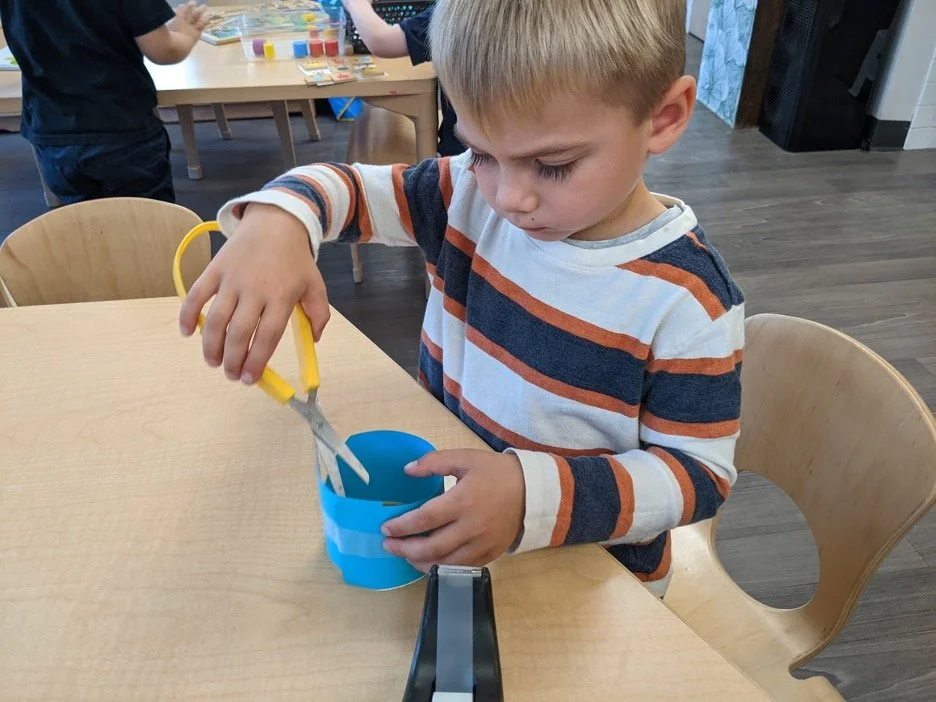
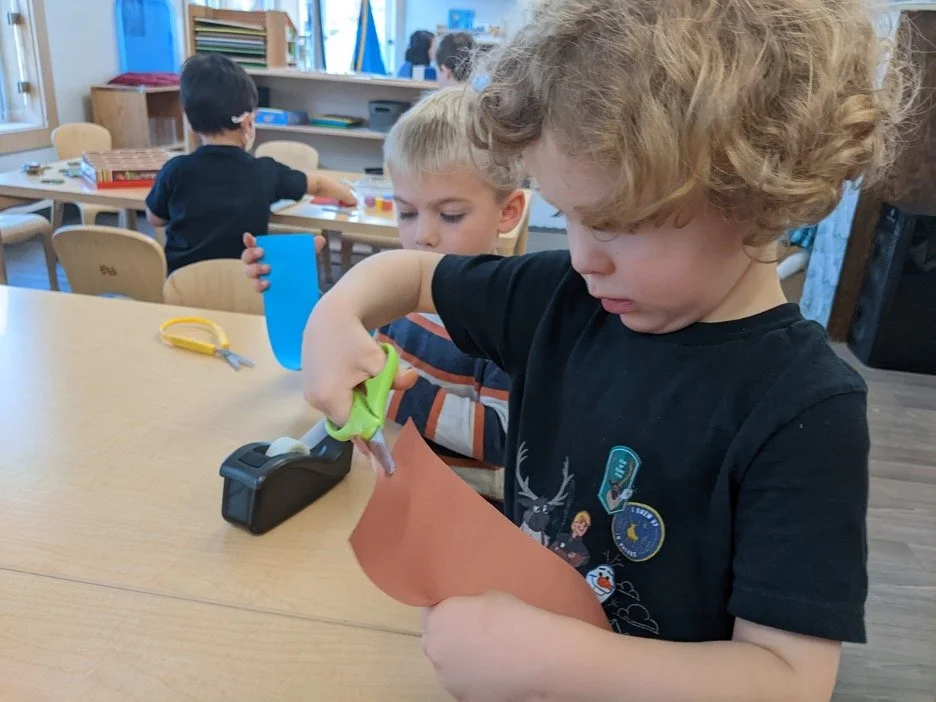
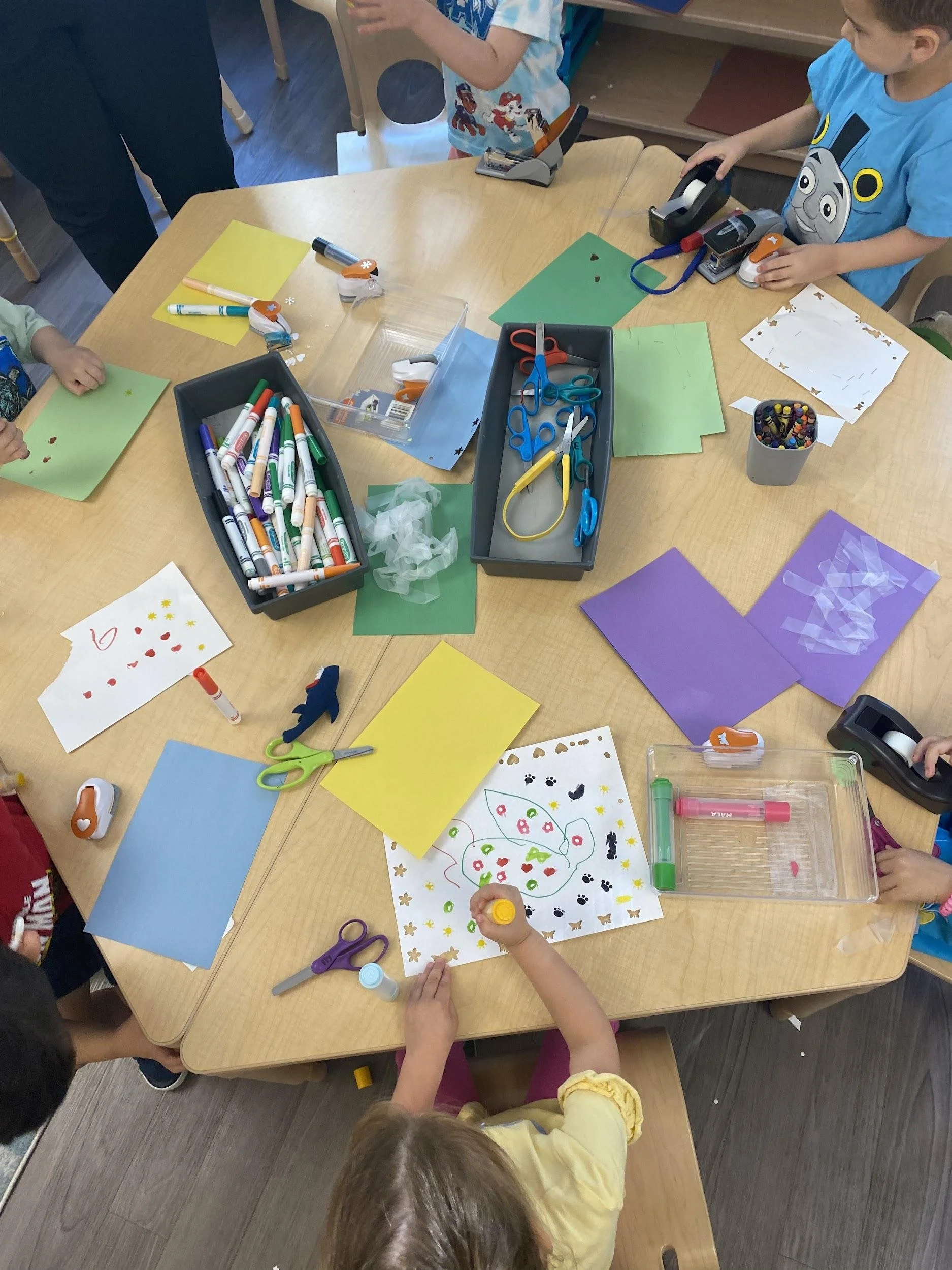
One reason is simply that children take joy in creating. When they engage in art as a process, they have numerous opportunities to observe, predict, plan, compare, and problem solve. “Do I put the brush in the water first or in the color?” “How do I get the color on my brush?” “What about if I want to try another color?” “Why is my paper so wet?” The benefits of open ended art activities (like our art shelves) help children refine their fine motor skills by using scissors to cut, tape to pull, markers to draw, stampers to push, etc… you get the idea. And just as important, they also get to feel a sense of ownership and pride in their original creations.

And so let’s talk about some ways to engage with children while they are creating or when they come to show you what they worked on. Although it is completely natural to ask children, “What is it you're making? or “What is it?” we find that these are not really questions that encourage self expression. The reason being, a lot of times children aren’t creating art to make “something.” They are just exploring the materials at hand. You will undoubtedly hear teachers saying things like, “I see you put paint on all the parts of the paper,” “You are cutting long pieces of tape,” “You are making squiggly lines,” “Tell me all about it,” “You are using two crayons at the same time!” “You worked so hard cutting those pieces,” ...etc. These kinds of observations allow children to take ownership over their work, and can really create a feeling of confidence. We encourage you to try this at home.

Prompts to encourage talking to kids about their art-making:

 • I wonder… 

 • I notice…

 • I see… 

 • Tell me about that…

 • I see you are taking your time…

Questions to ask about their art

• How did you do that?

• Would you like to tell me about your art?

• How did you make that color?

• What were you thinking about when you made this?

• I wonder what might happen if you keep going...

New Student + Building Roads

New Student

Welcome, Maya, Jessica, and Itai!

A new student, Maya, will be joining 4AME next week. We look forward to getting to know Maya and her parents, Jessica and Itai! They’ve been added to the class email group and their contact information is included in the class contact list available to you on the Parent Portal. 

Building Roads

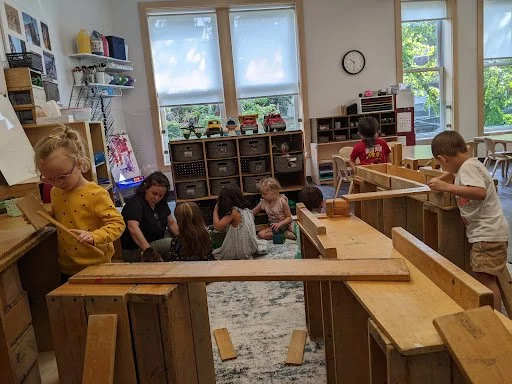
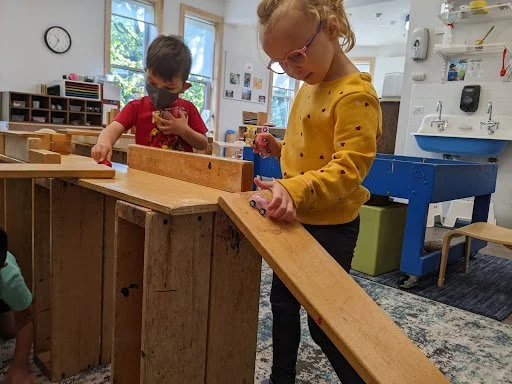
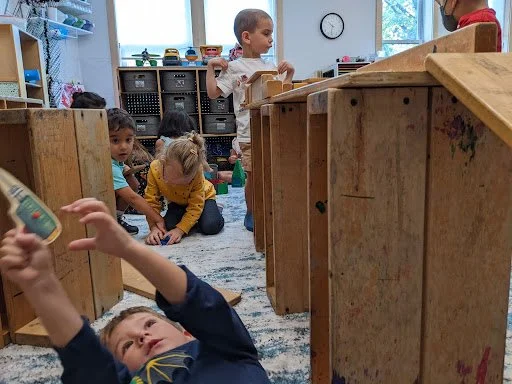
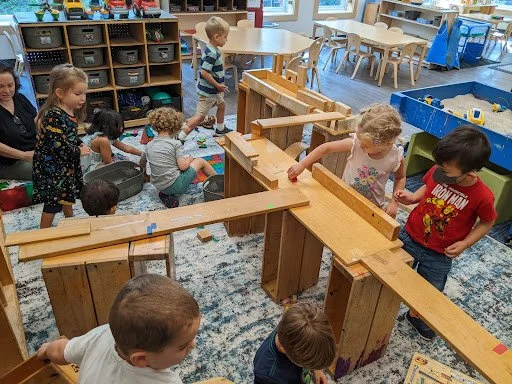
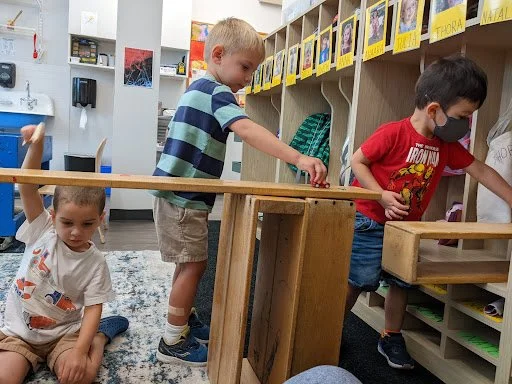
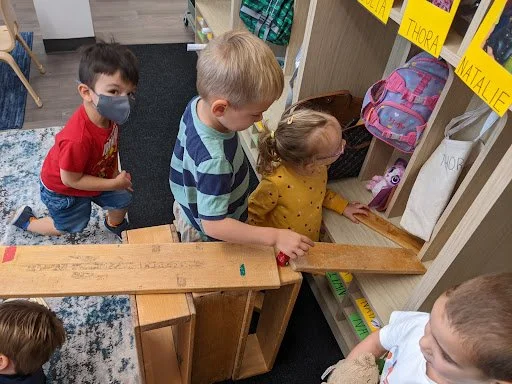
A couple weeks ago, we built an elevated road in the center of the block rug. Children had been driving on top of block shelves and on top of tables. These are okay places to drive, but they are along the periphery of the room, so children’s backs were to each other most of the time. 

This new road began with two separate stretches parallel to each other.

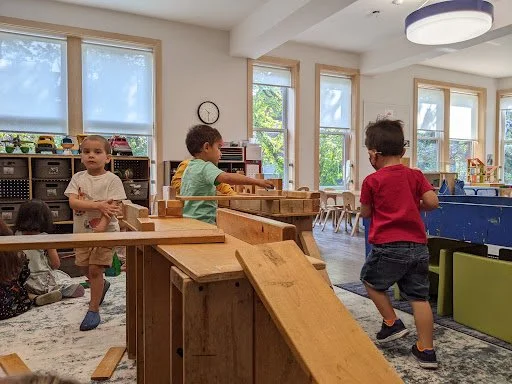
Before long, children built bridges between the elevated stretches, as well as walls to protect their vehicles from falling. More children came, and the road action inspired other kinds of building play nearby.

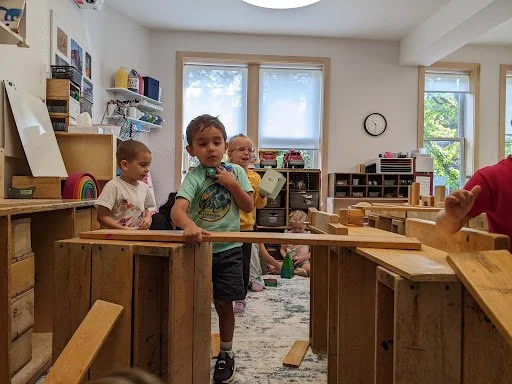
On and off ramps were added, and more and more kids joined in the play.

Adjustments were made by a construction crew, and more builders and drivers arrived.


The end of the road?


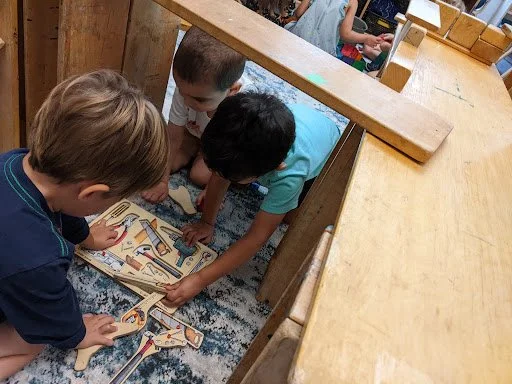
These photos were taken during one play time. In just under one hour, every child in class that day connected on the block rug. It was hard work, and it was exciting. It was a dynamic, beautiful snapshot of group life.

Some Songs + Dough, Again?

We've already compiled quite the list of group time songs, and we sing them on repeat. You see, young children thrive on repetition, need repetition. Repeated encounters with songs (also, materials, activities, people..) provides not only a sense of comfort, but opportunities for new discoveries, for mastery of skills, and for deepening understanding. 

A former teacher and dear friend recorded some of our songs. Here are a few we've been singing lately:

Little Fish

Bumble Bee

Time to Put the Baby to Bed

Three Orange Pumpkins

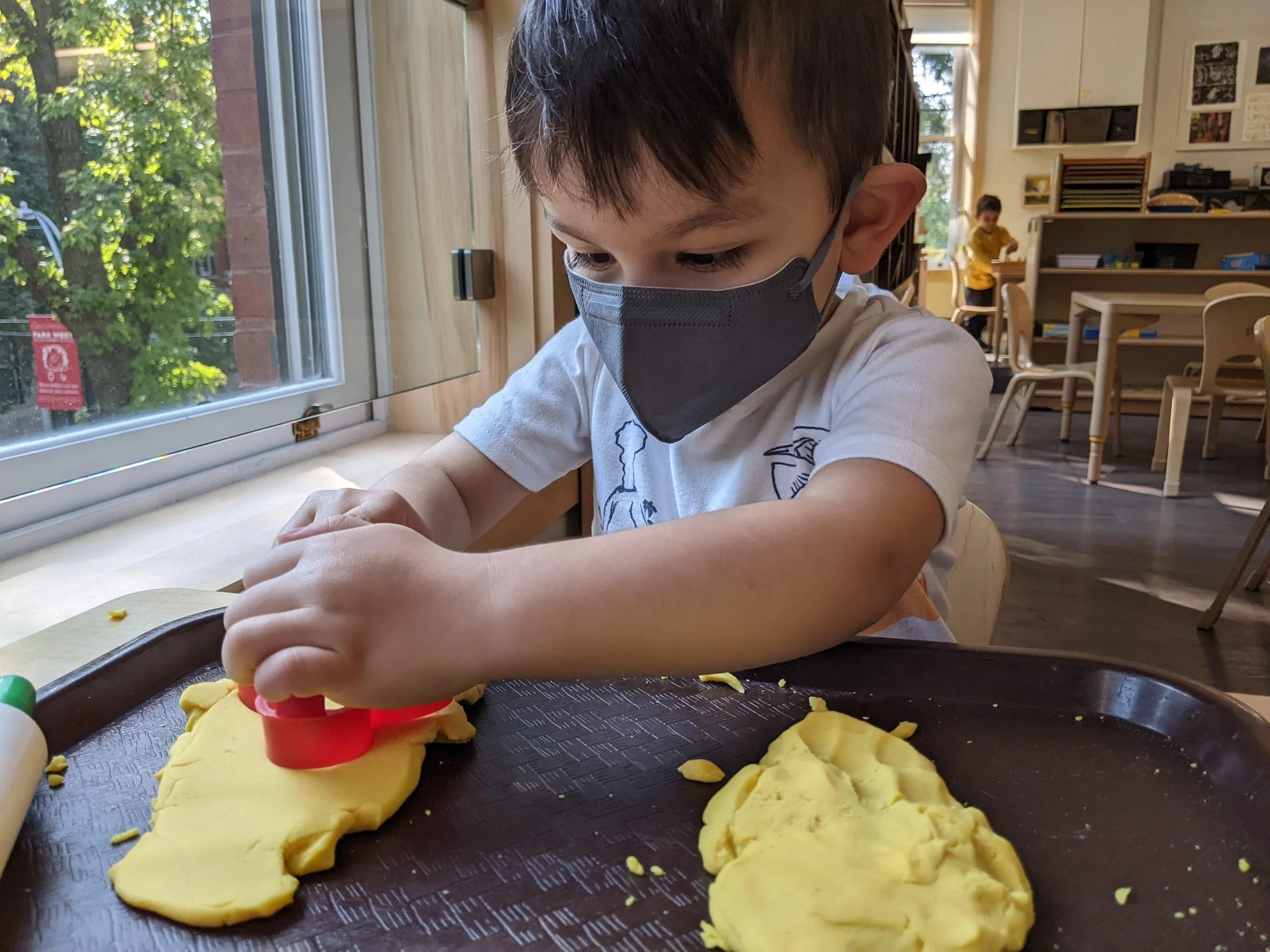
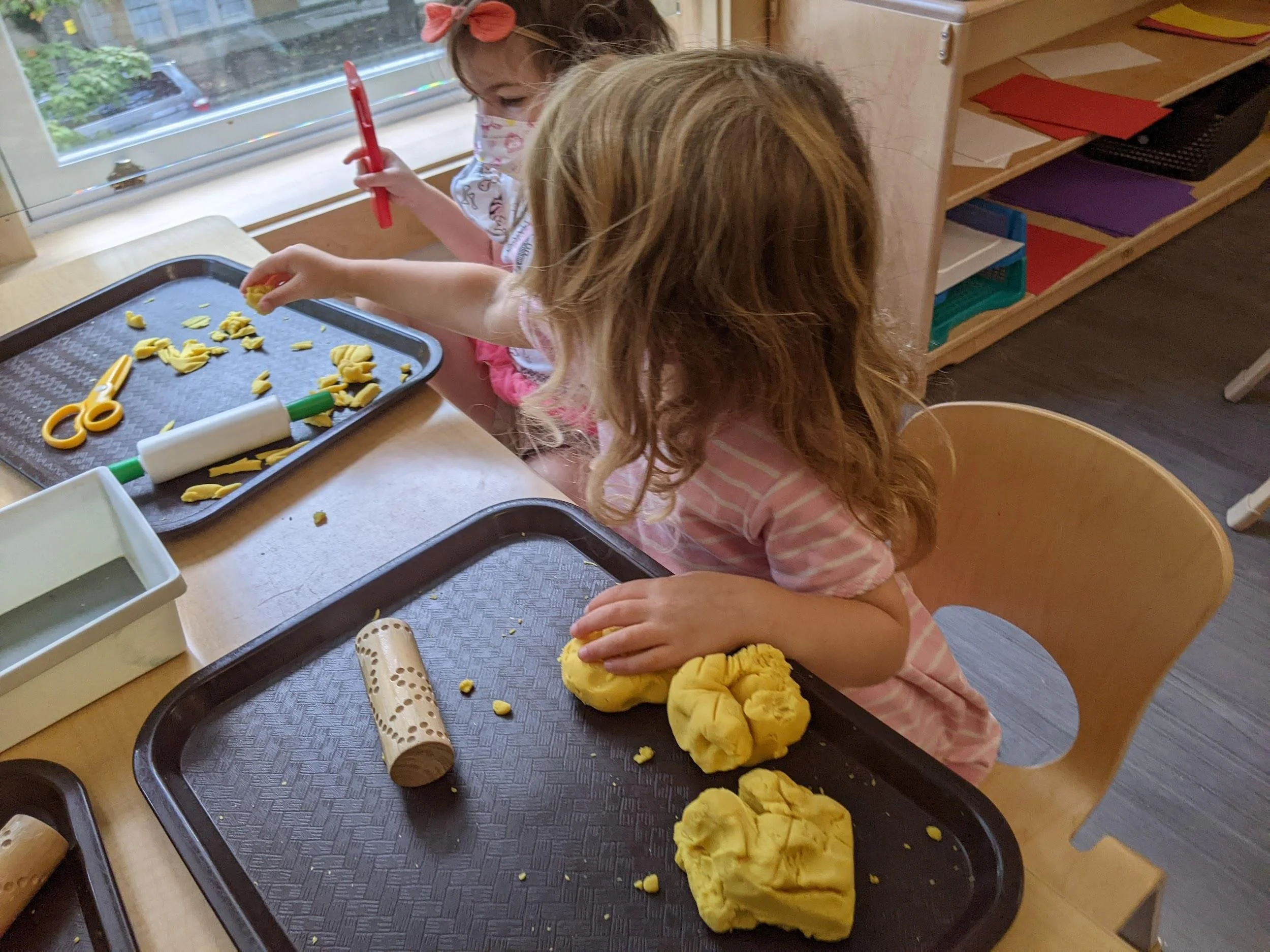
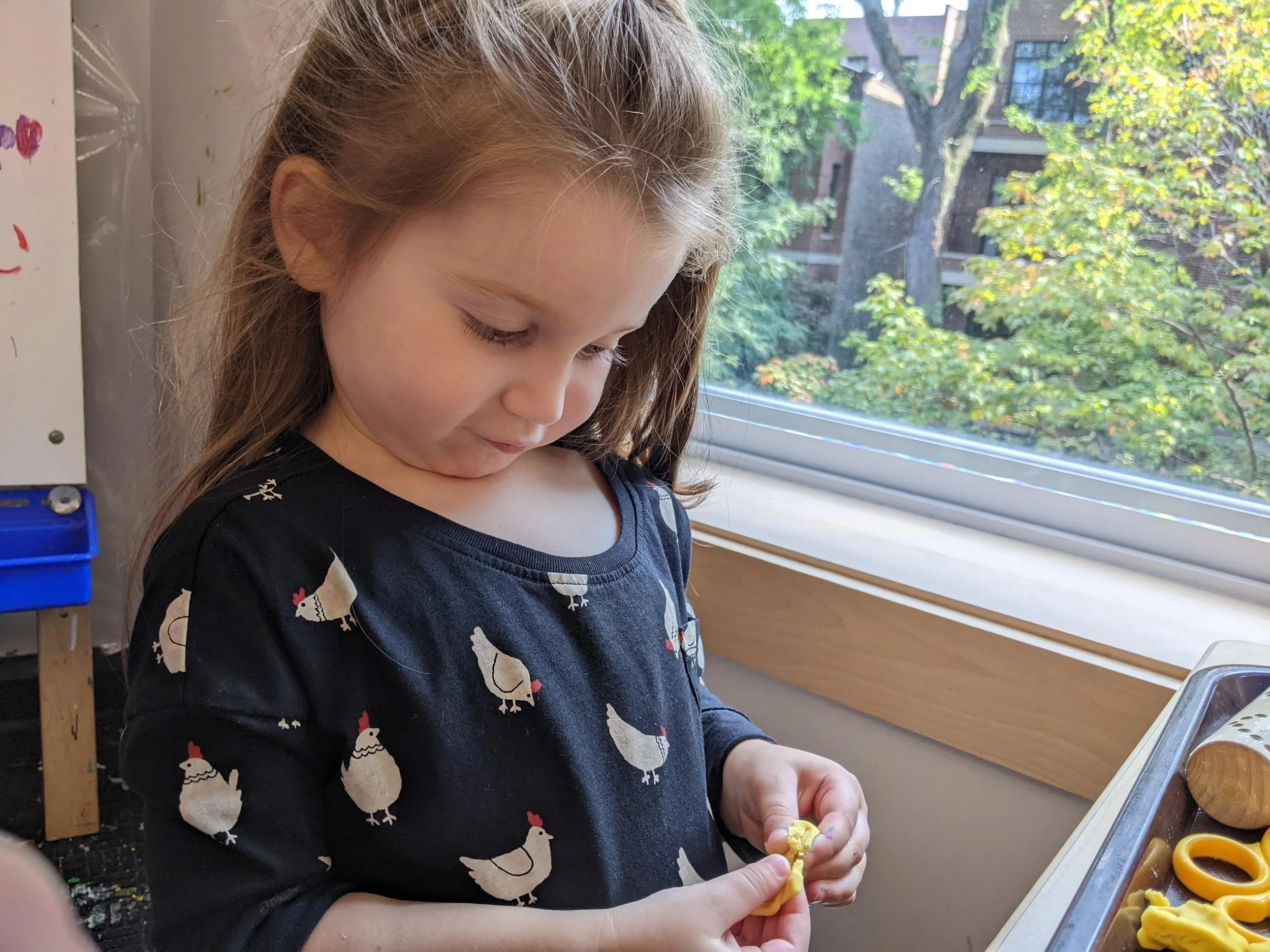
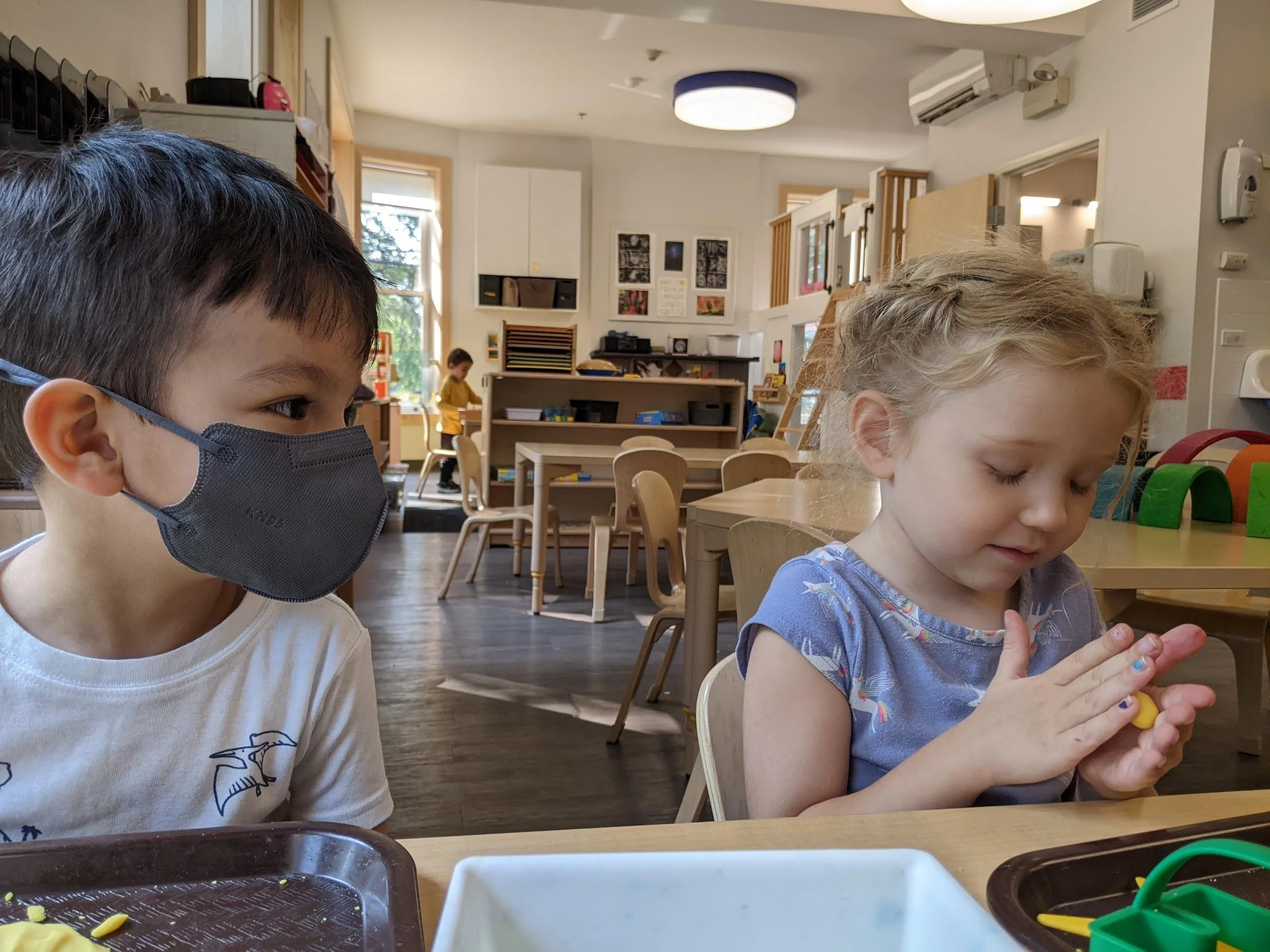
Play dough has been available to children since we started school. This will not always be, but we have found that it is incredibly helpful for children to have familiar materials during these first few weeks of school. They revel in the satisfaction of knowing what to do when so many things about school are new and challenging. We have provided novelty each week with new additions: different rollers, cutters with or without handles, a second dough color, dough extruders, people and animal figures; each providing new opportunities for exploration and discovery. Children have been likely to connect with each other at the dough table. They are stationary for a time, they can see each other, their space is clearly defined, they are asking for a turn with materials, they are showing off their creations and discoveries, and a few children are so inspired they have been singing a dough-duet each time they are at the table together!

A quick note on photos: We may not always include photos in these messages. When we do, we likely will not include a photo of each child. We’ll try to be mindful of who is included along the way so we can balance representation throughout the school year. For today, a small group of children exploring dough:

Teacher Absence and Assisting

EXTENDED TEACHER ABSENCE

Beginning Tues 9/27 and for a full two weeks, Kristin will be absent from school. She is traveling to Seattle with one of her children. In her place will be a dear friend of ours, a former co-teacher of Amanda’s, and Kristin’s current Parent-Tot Monday co-teacher, Byl (pronounced “Bill”). We are very happy to have Byl with us. He will likely sub other times this school year, so it’s great for the kids to get to know him now!

ASSISTING

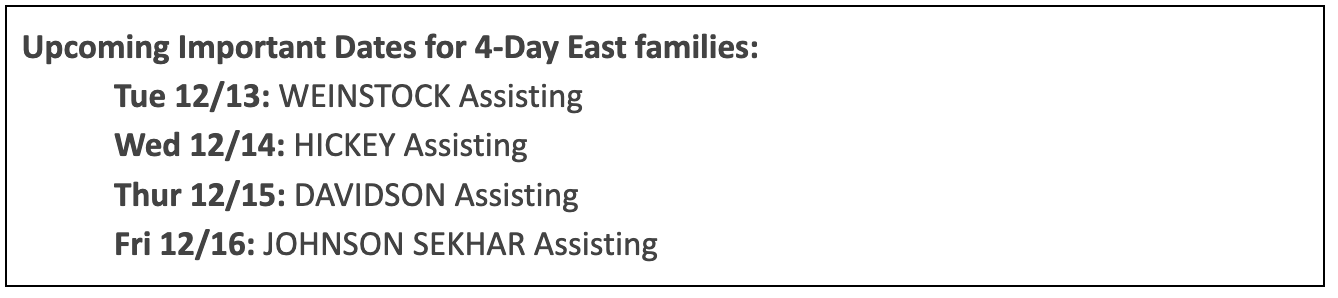
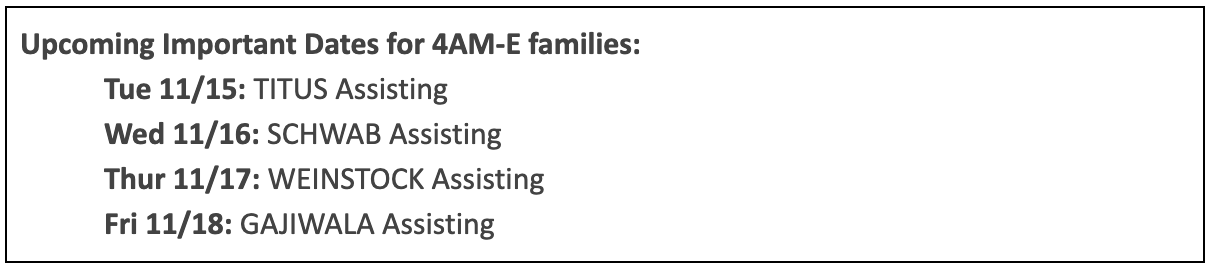
Assisting is an opportunity to be with your child in the classroom, and can only be done by a parent.  These days can feel stressful and challenging, as you and your child try to navigate such a novel event.  Some children are really excited about having a parent join them at school, and others are overwhelmed by the idea.  Some children want to spend every moment together, and others would rather go about the day as they might on any other day, while their parent attends to tasks and observes or plays with other children.  All of these are okay experiences to have.  Parents, too, have different ideas about assisting days: many feel most comfortable with a list of jobs to take care of, while others really like to settle into play with a group of kids, or take some time to read a book with their own child.  Again, all of this is okay.  We will help you balance the assisting responsibilities with your child’s needs and your hopes for the day.  There are plenty of tasks we ask for your help with, but we also see assisting as an opportunity for you to get a look at the classroom, to observe how teachers relate to children, and how a large group of your child’s peers interact with one another. 

When you arrive at school on an assisting day, please come 20 minutes early.  Head upstairs to the classroom with your snack, so teachers can confirm that it is okay to serve.  We will be working on setting up the classroom and the gym, but at least one of us will be available to help you get started.  Take some time to help your child adjust, take off coats, wash hands, and put on an apron. Then, you’ll head down to the snack prep kitchen to begin preparing things. Wash and cut your produce, fill pitchers with drinking water from the filtered water tap, and put food items in serving bowls.  

At 8:25 you’ll need to assist with arrival, so be sure to come back to the classroom to get your jacket before then.  During this time, you will be greeting children and walking in with those who are ready to say goodbye to their caregivers outside.  When you come back to the classroom, we will be having a short play time.  It is primarily a time for you to be with your child.  Follow their lead, and try to get a look at what they’re interested in here at school.  Keep in mind, however, that assisting days are not typical days for your child.  They might be shyer, more temperamental, and clingier to you; as teachers, we’ve seen it all.  While perhaps surprising to you, we think these behaviors are honest responses to a novel experience (even if you’ve assisted before!) and it is okay for you to take some time alone with your child as needed throughout the day.  Alas, fear not!  We will help you through any bumpy moments.  We will also walk you through your responsibilities for the day when you arrive each time, so do not feel like you have to commit this all to memory right now.

Please keep in mind a few final items – do not use your cell phone in the classroom.  If you have special circumstances requiring you to be on-call during your assisting day, please tell us when you arrive.  Then, if you must answer your phone, step out and let someone in the office know so that someone can replace you in the classroom.  We also ask that you do not use your phone to take photos or film video throughout the school day – this can be obtrusive to children’s play and can also be a violation of families’ privacy wishes. Teachers and the room parent will form a plan together to have photos to use for the class yearbook and specific projects that necessitate a photo.  That said, we are more than happy to snap a photo of you and your child in your aprons either before or after class!

Children are not allowed to use the spray bottle with the bleach solution.  If they want to help with a job, you can suggest they take the cubby tags down (it doesn’t matter if they stay in order!)  Children cannot roam the hallways unattended.  After class, it is your responsibility to know where your child is.  

This is a lot of information, but rest assured, we will help you each and every time. We also have a timeline/checklist available for your reference.


Community: “This is my School”


“This is my school,” one of the children in the class repeated during his first day as he went through all the parts of our schedule. “Yes, this is your school,” teachers would say to reassure him. As we embark on this new year, the question of “What is school?” looms large. We teachers believe that school is foremost a community. But what makes a community?  Is it a concrete structure? Is it a mindset? The dictionary defines community as “a feeling of fellowship with others, as a result of sharing common attitudes, interests, and goals.” These past few years in particular, our communities have been ripped apart due to the global pandemic. Our world communities, our national communities, our cities, our neighborhoods, our schools, our friends, and families. And yet thankfully, life moves on.

  In looking at the dictionary definition of community, it’s interesting to see how the idea is explained that one must share attitudes, interests, and goals. While we assume we, parents and teachers, probably all share some similar goals, children obviously don’t walk into the classroom with shared specific goals in mind. Or maybe they do!  Surely children do not necessarily all share the exact same common interests or attitudes! In fact, we teachers from day one in the classroom work diligently to help children understand that we all can have different ideas, different likes and dislikes, different “attitudes” about so many things. And that this is OK! In fact, it’s beautiful. Children are often bewildered by the concept that not everyone loves chocolate ice cream the best, or that dinosaurs are not everyone's favorite, or that someone doesn’t even like the color pink. Children at this age are egocentric. No offense. It’s just the way it is. It is the stage of development that they naturally are in, and that they will be in for a while. One of our jobs as preschool teachers is to help children begin to “de-center,” take a look around, notice that others are nearby, and that they sometimes have similar ideas but sometimes they have different ideas. In school, it is our hope to share a common desire to care and to be a part of something. This is what we feel it means to be a part of a community. This is what it means to be part of a community at Park West. So welcome, we are so glad you’re here.