We’ve been working on some interesting painting projects: paddle ball painting last week and spray bottle painting this week.
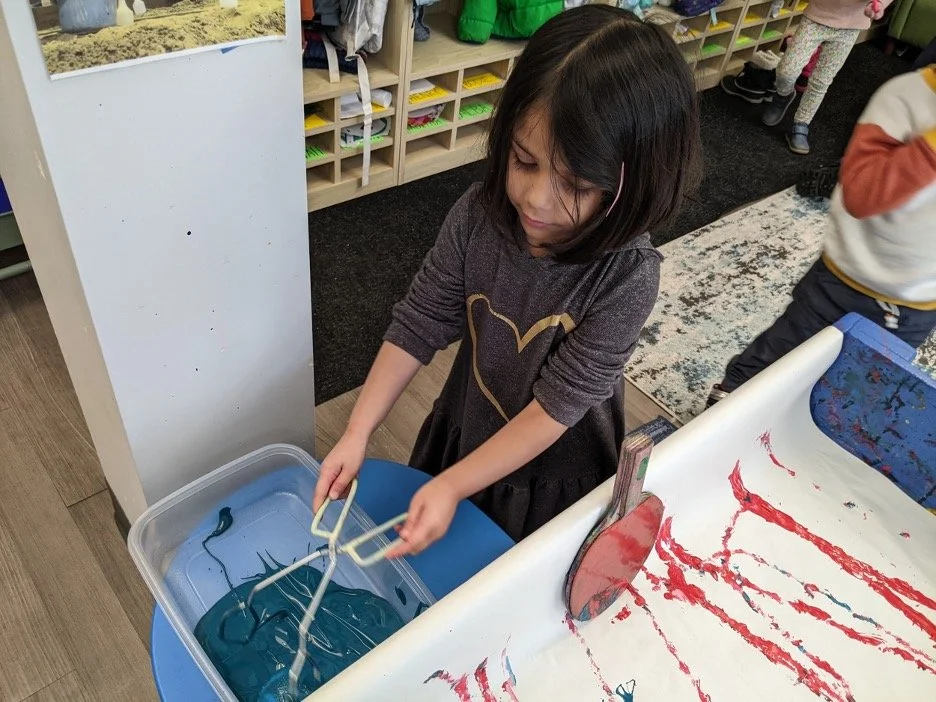
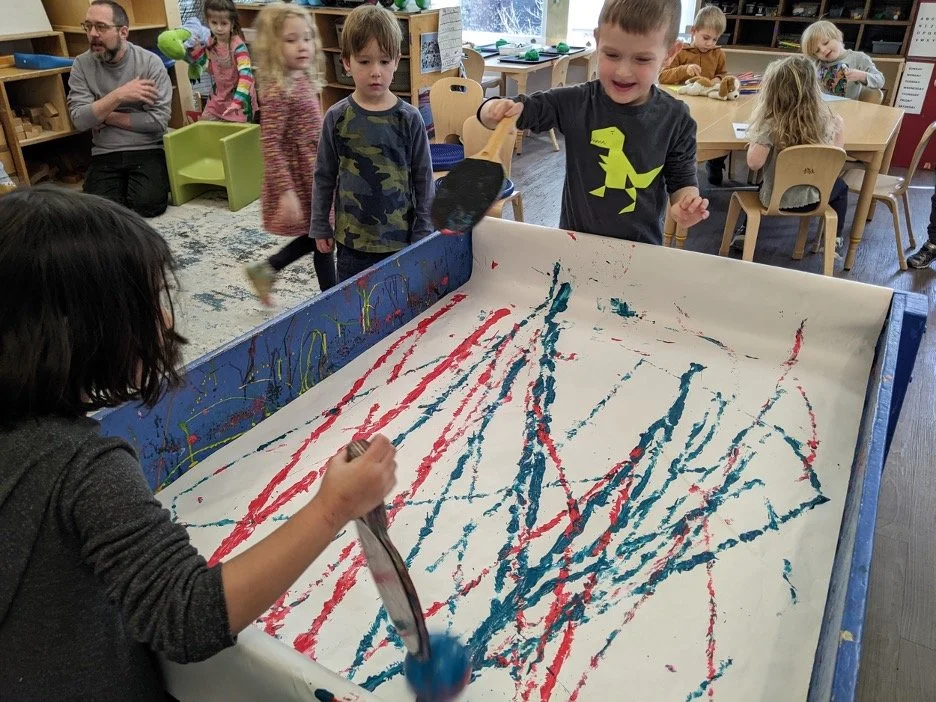
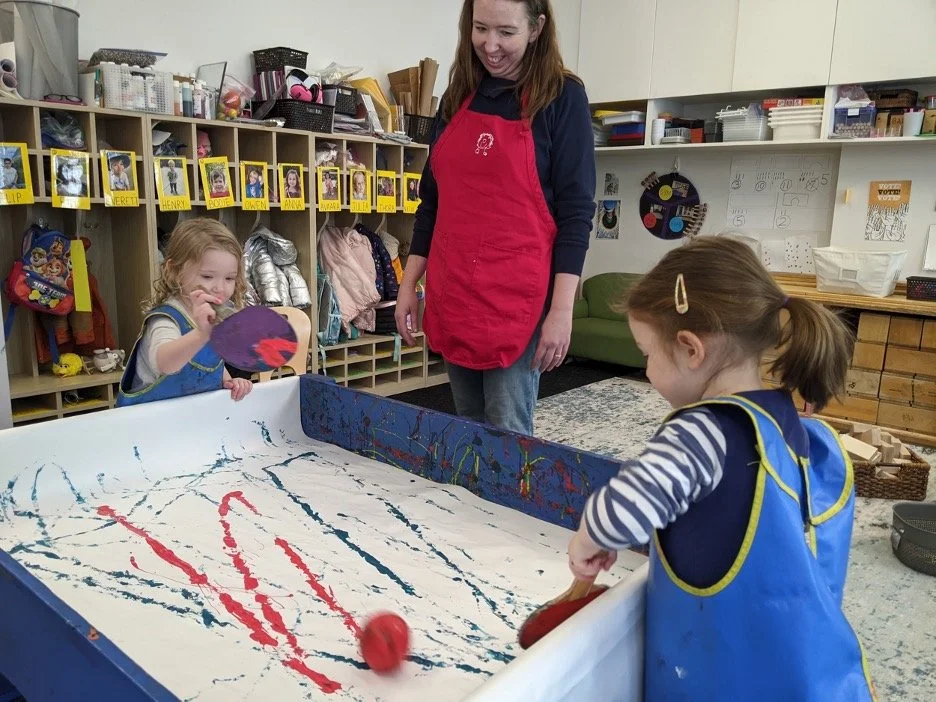
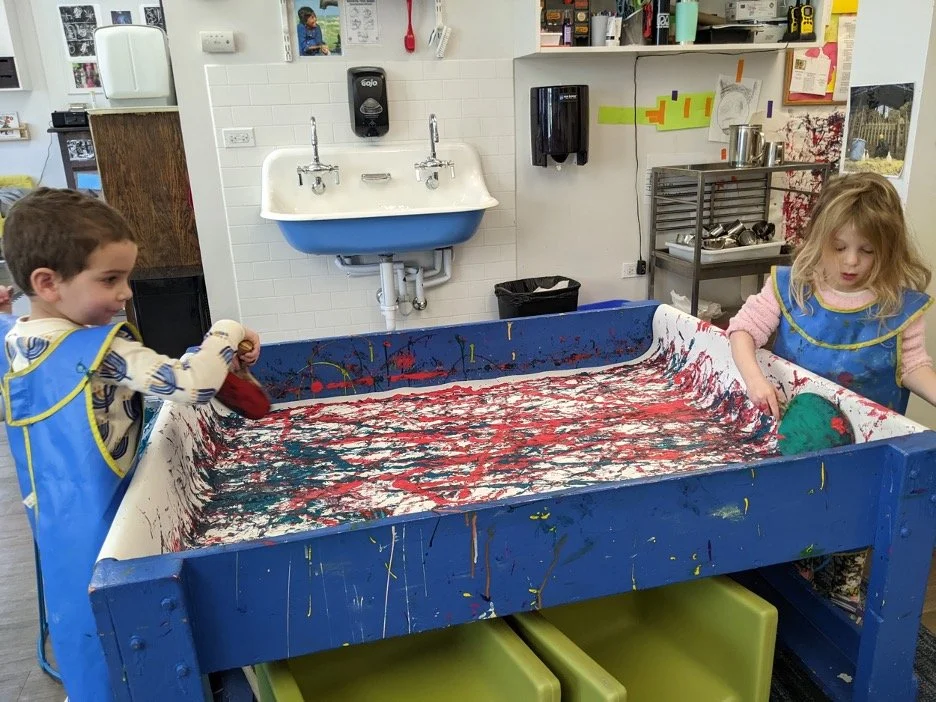
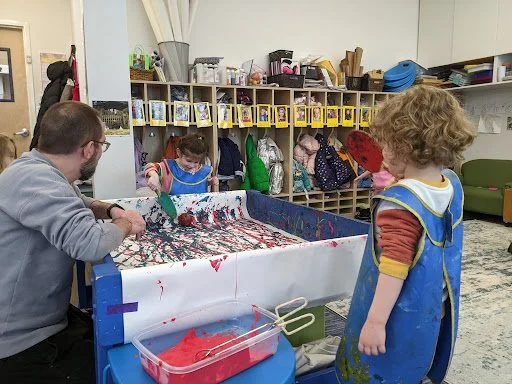
Paddle ball painting was an extension of the balls, tongs, paddles we wrote about recently. We lined the empty sand table in large butcher paper and poured paint into trays placed at either end of the table. Each station also included one set of tongs and one paddle. Children signed up for turns to paint with a partner. They used the tongs to roll a ball in the paint and then place it on the paper in the table. At this point, nearly everyone had to pause to think about what to do next. They were holding tongs that had drippy wet paint on the ends, but they wanted to be holding a paddle to begin passing the ball back and forth. Making that transition is complicated and really includes multiple steps to plan. This whole project is a really fun way to stretch kids’ motor planning skills.
After sorting out where to place the tongs and picking up the paddle, they tapped the ball and sent it sailing across the table to a partner who hit it back to them – sometimes! Another challenge: how hard to push to make a ball covered in paint move across the table? And then, just when they figured out how to get that going, the paint was no longer covering the ball so it moved much faster with much less force.
After a few passes back and forth, the duo might have noticed that there was no paint left on the ball and decided to take it out. Or, they might not have been sure how to communicate about that. Another challenge, but social this time. How do you decide when it’s time to take a ball out and how do you come to an agreement about that? Who gets to put the next ball in? Which color? What do you do if one person feels done with the game? There was a lot to sort out, but there was a lot of motivation to do all that work.
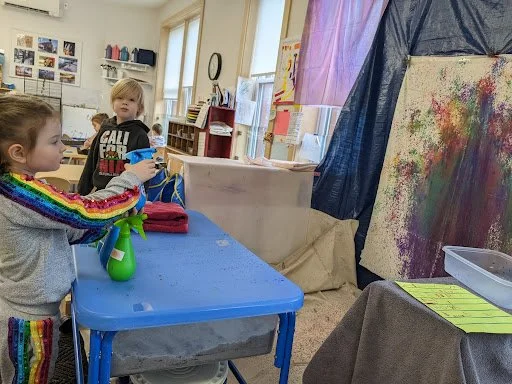
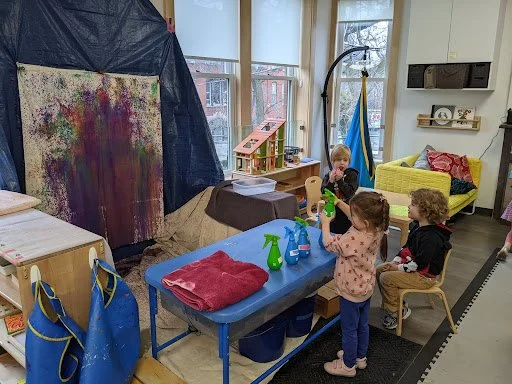
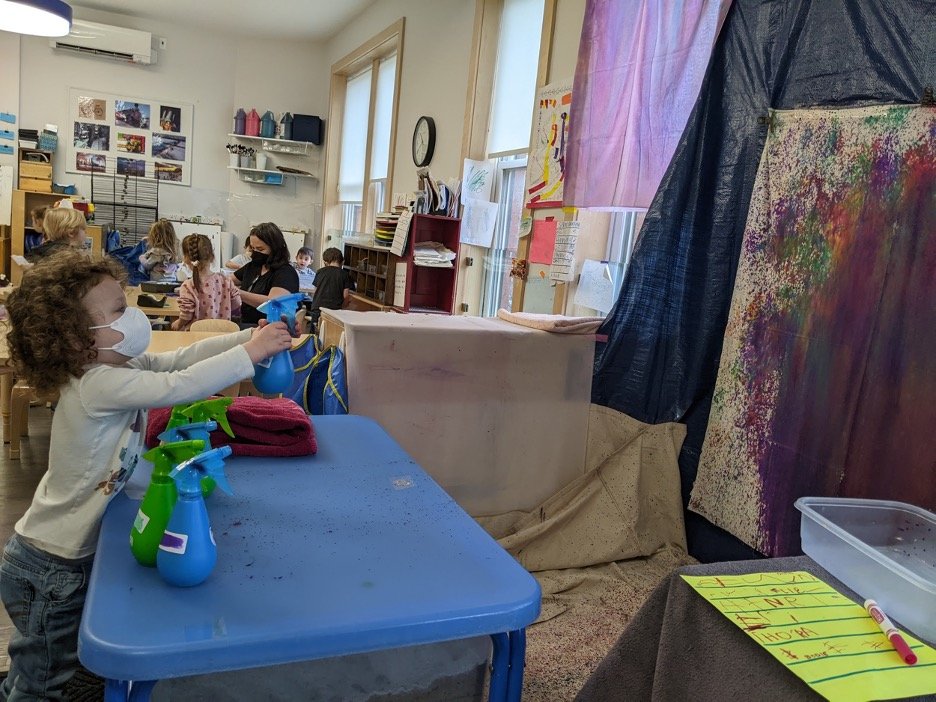
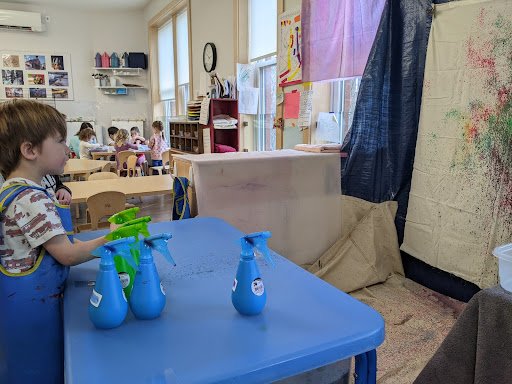
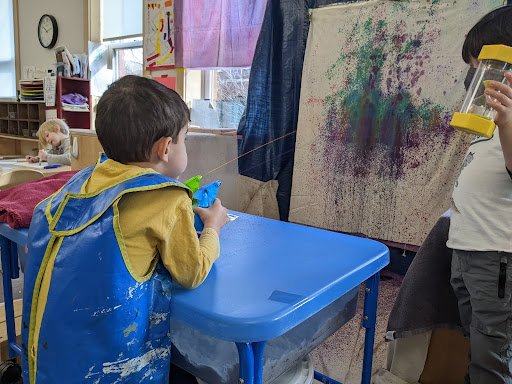
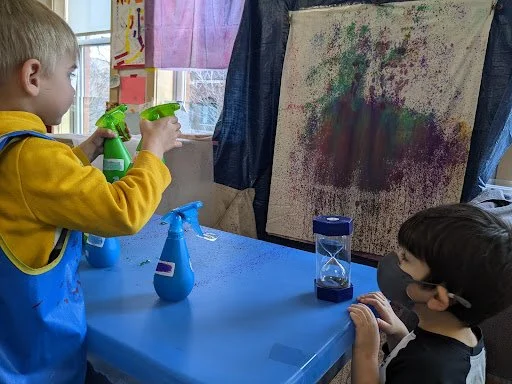
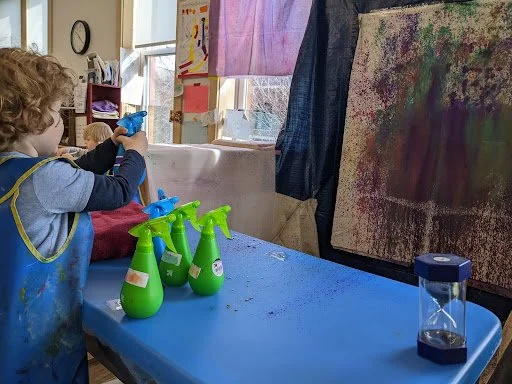
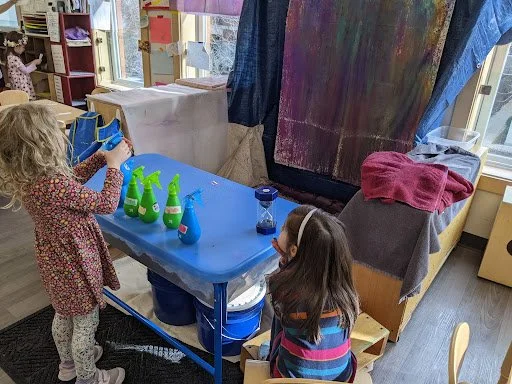
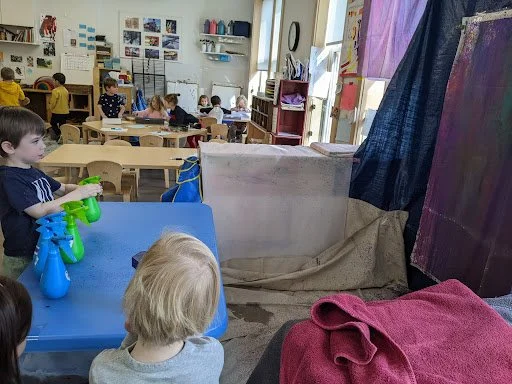
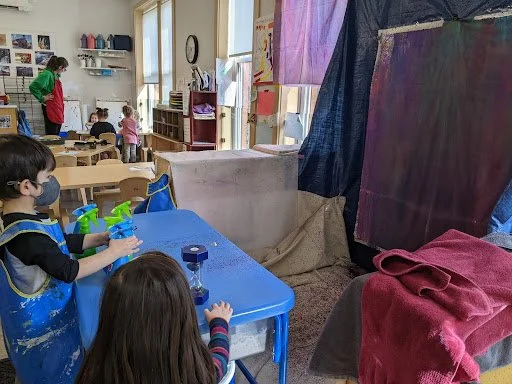
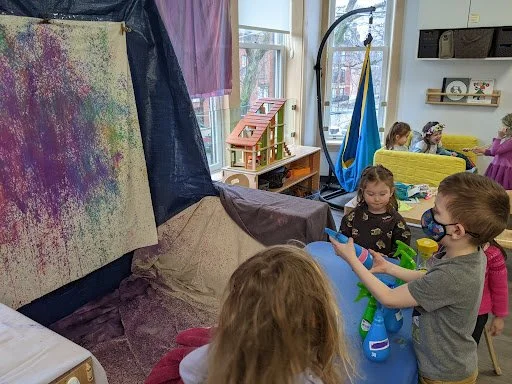
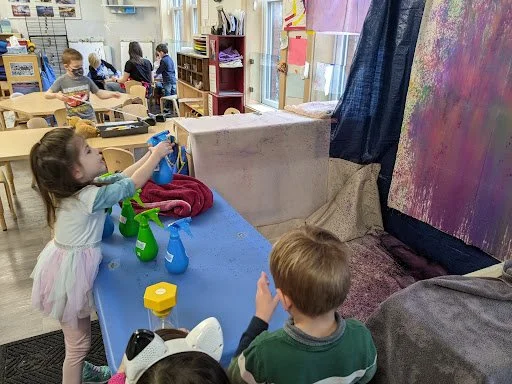
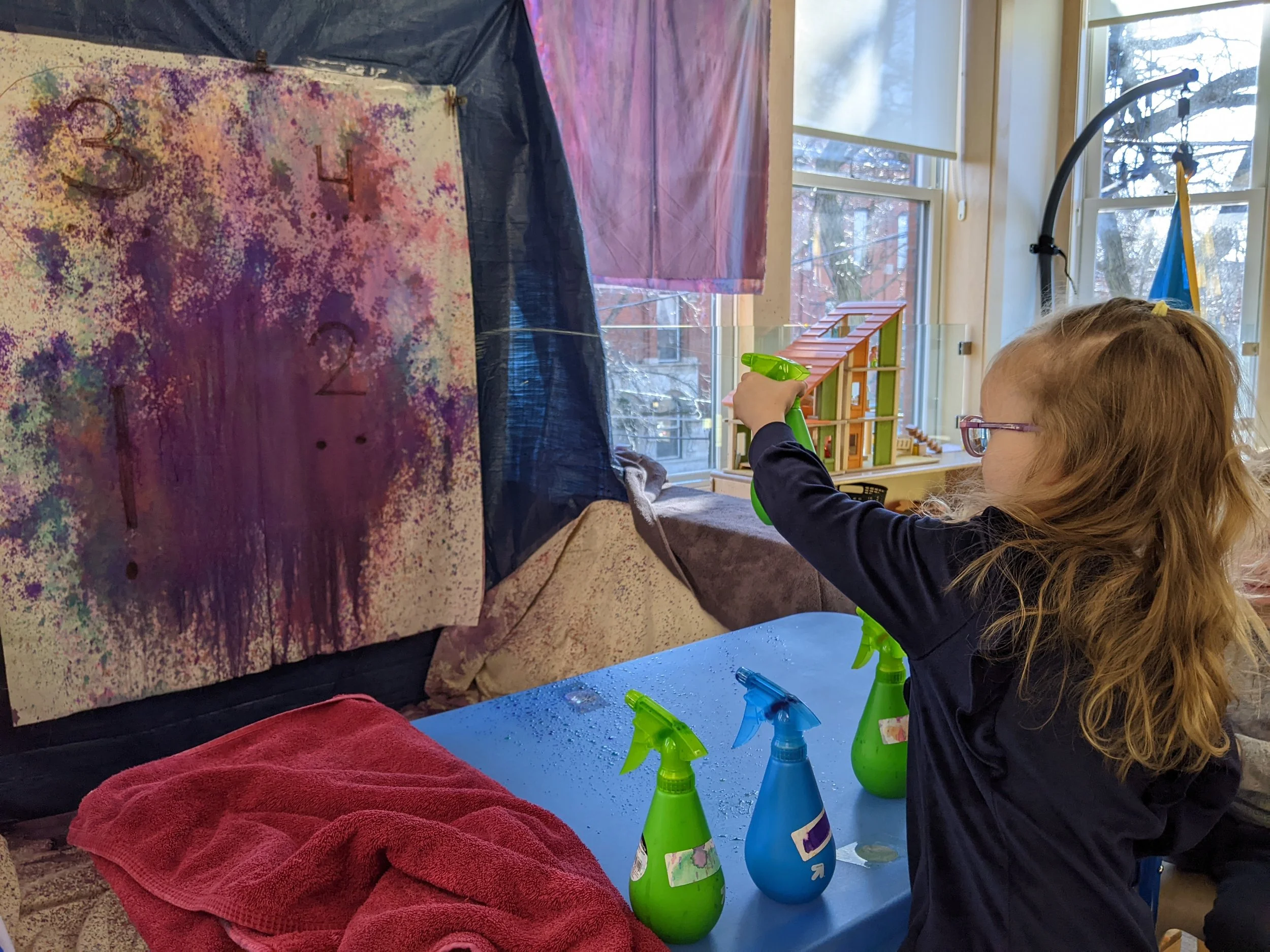
Spray bottle painting is, in some ways, a much simpler project. There’s a large piece of fabric hanging on the wall and you get to aim a spray bottle filled with liquid watercolor paint at it. There’s still a fair amount of planning that goes into the activity. How does one hold a heavy spray bottle filled with paint anyway? Then, how do you squeeze that trigger? How do you do both at the same time? Many kids tired quickly. It takes a fair amount of strength to extend one’s arm and squeeze the trigger repeatedly. This kind of work is really good for developing the muscles in arms and hands that will aid fine motor work like writing.
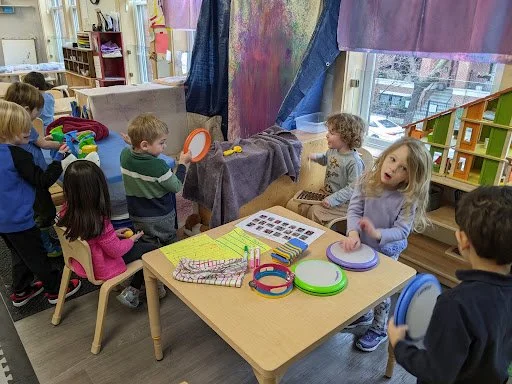
Children have been taking turns solo. It’s a nice respite from the social and emotional challenges involved in paddle ball painting (and everywhere else!) It’s proving to be a positive social activity anyway. Children have been enjoying watching each other. Many have even noticed what a great vantage point the top of our playhouse is. Some have shown an interest in turning over the timer and tracking turns as we go through the sign up list each day. Since it’s set up near our musical instruments, some kids have taken to forming a band to play “spray paint music” to encourage the artists.