
Block play provides rich opportunities for development. Through block play, children grapple with many mathematical concepts including counting, measurement, comparing, proportion, symmetry and balance. In fact, research has linked block play with math competence in later stages of life. In addition, children gain firsthand experience with scientific principles related to gravity, balance and weight. Block play provides natural opportunities to make and test hypotheses, promotes both gross and fine motor development, aids spatial awareness and provides opportunities for collaboration and negotiation with peers.
Block building follows a natural progression, and once children have moved through more than one stage, we often see them fluidly move between different stages of block building and combining them in their play. Here at school, we provide large hollow blocks which allow children to build structures that they can play in as well as unit blocks, which are smaller and allow for more intricate constructions.
As well-loved as our blocks are, we have noticed that our numbers are starting to dwindle as blocks get worn out and retired or lost. We decided it was time to get some new ones and enlisted children’s help in taking inventory of our block supply. During play time, several children helped teachers identify the different block shapes and trace them onto a large sheet of paper. Then, these same children decided to trace some blocks onto their own papers. Some even tried cutting those shapes out.
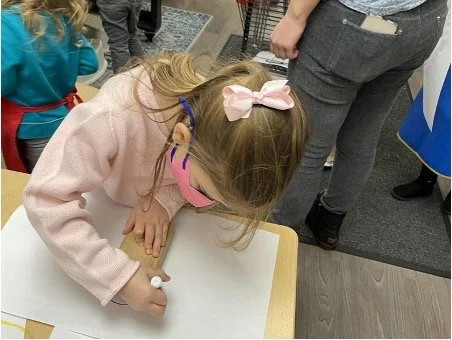
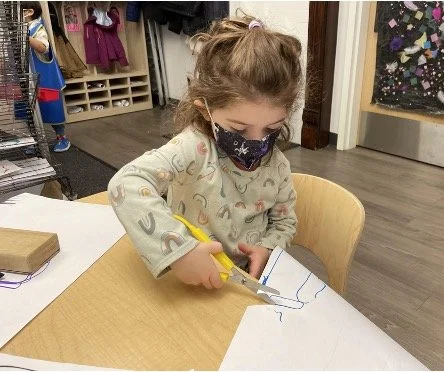
As a whole group, we matched the actual blocks to the outlines and then counted them. Here are our papers with tally marks and how the blocks look stacked up all together.
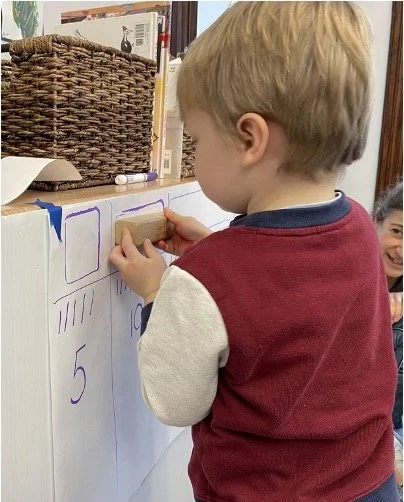
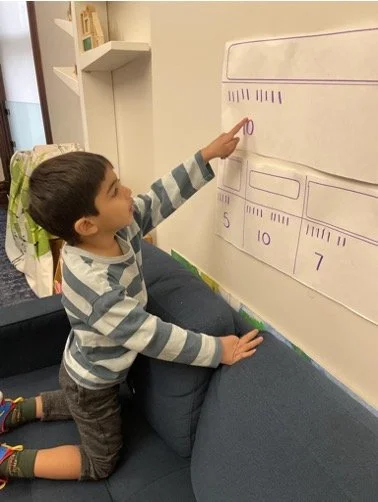
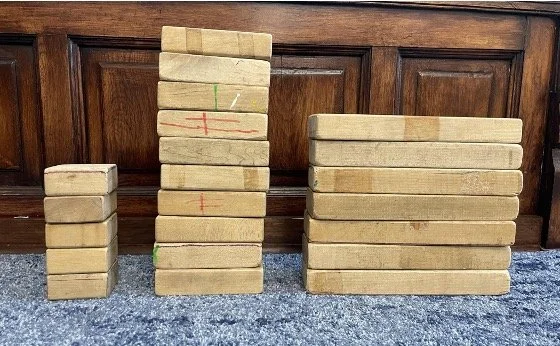
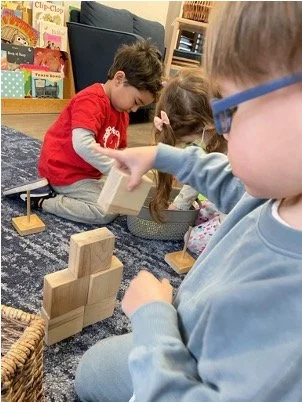
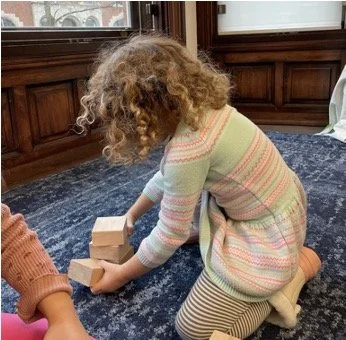
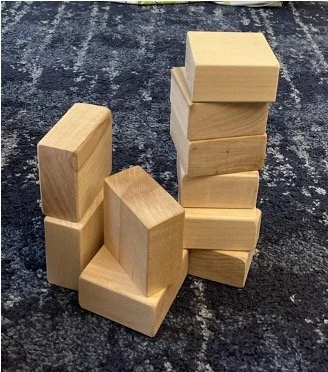
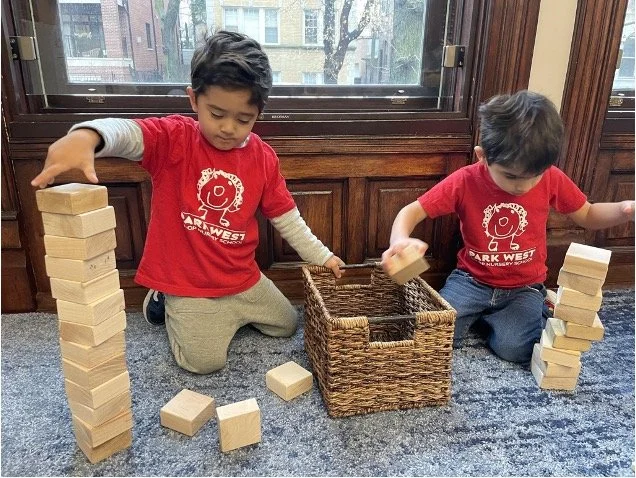
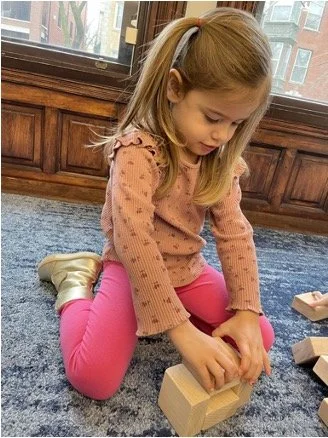
Everyone agreed that it would be nice to have more unit blocks. Teachers ordered some and have been introducing them gradually. We started with the square shaped blocks, also called half-units. After introducing them at group time, we offered them to children on their own during short play. Having lots of only one kind of block has inspired new ways of building. It has been exciting to see children explore these new blocks and expand their block-building techniques.
Valentines Day
We will not celebrate Valentines Day at school with children in the 3 day class. For children of this age, we feel it is important to maintain a consistent and predictable schedule at school and so will not add any celebrations. Please do not send cards or treats to school with your child.