Has your child mentioned that we no longer have sand in the sand table? A few weeks ago, the kids from the 3-Day class transferred the sand from the sand table into the water table on a Monday. The next day when 2-Day kids arrived at school they found a thin layer of sand in the sand table along with red and yellow condiment bottles full of sand and some brushes. It was interesting to watch the sand pour out of the bottles and make patterns on the mostly bare sand table. Children also found it interesting to draw in the sand with a finger or create patterns with a brush.
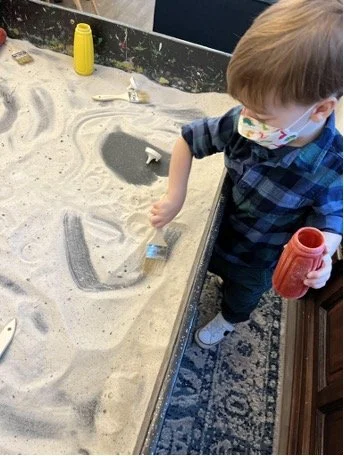
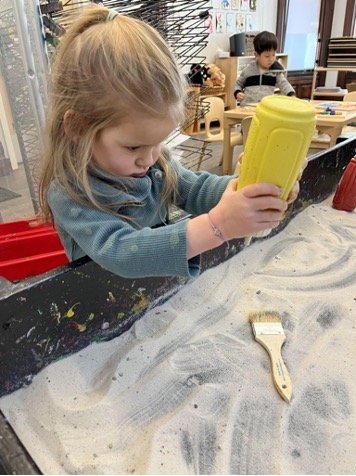
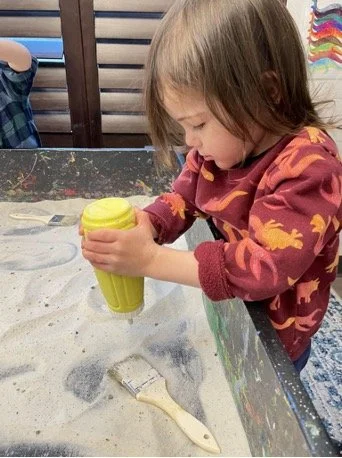
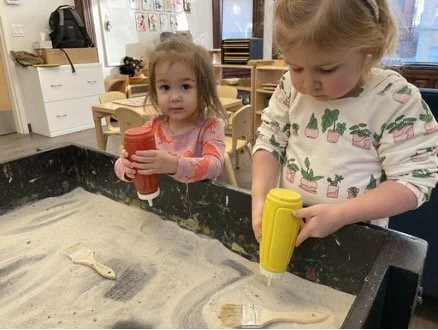
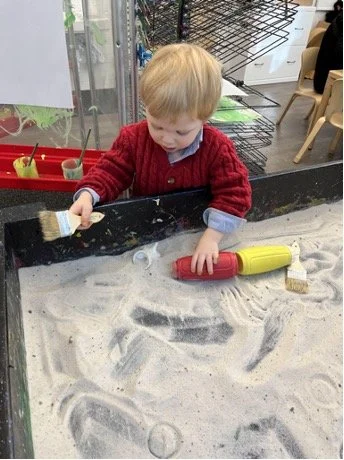
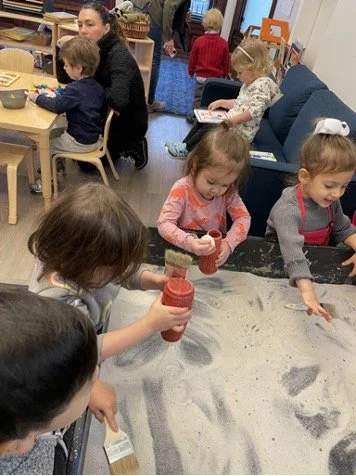
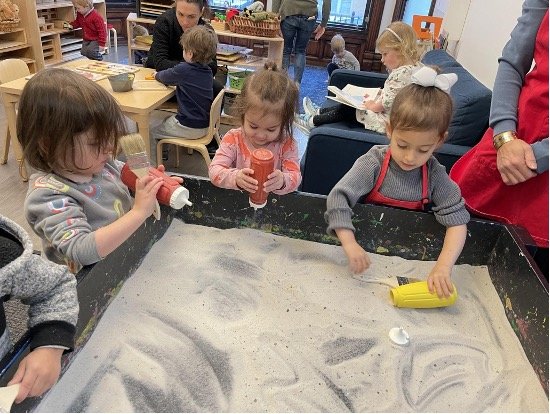
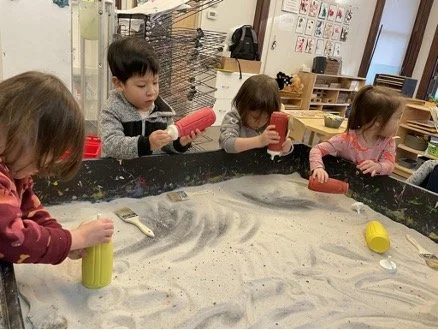
Offering a familiar material in a novel way is a way that we spark children’s thinking and build their awareness of the world around them at school. When you have just a small amount of sand, you use it in different ways and notice new things about it. It also provides a different sensory experience. Children notice the different feeling as they drag a finger through the sand or pour sand out of a bottle onto their hands or fingers.
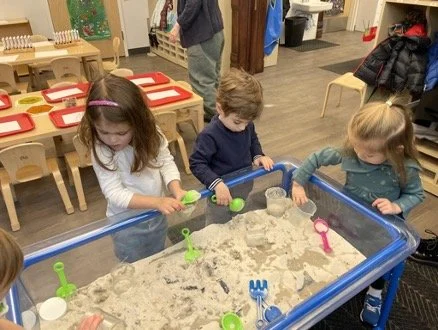
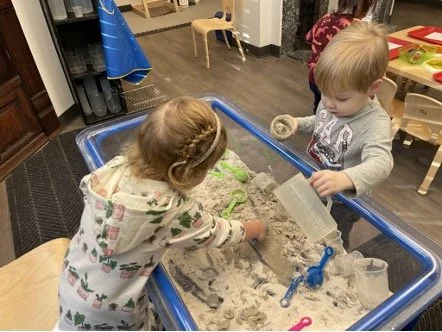
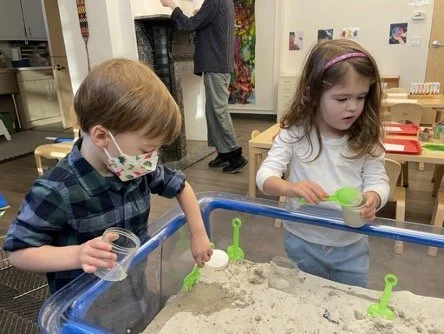
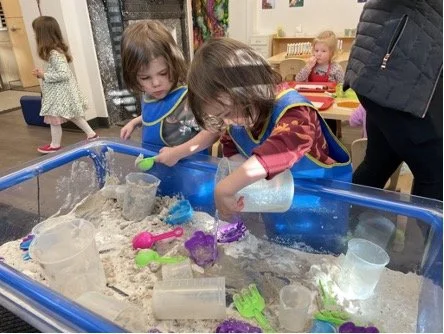
Now, our water table has wet sand in it. Children are engaged in experimenting with how sand behaves when it is wet. We have provided a variety of sand molds, buckets, shovels and other tools for exploration. Children have experimented with using buckets to create sand castles, molding scoops of pretend ice cream out of sand and making big mounds of wet sand. Some children love the texture and feel of wet sand. For others, tolerating the way it can stick to your skin is a challenge. For those who find it more challenging, we provide tools so that they can interact with the wet sand without touching it, if they prefer. Engaging in such sensory experiences helps to build a child’s ability to process and organize sensory input. When they are done, we show children how to rub the sand off of their hands and refer them to towels or the sink if necessary.