

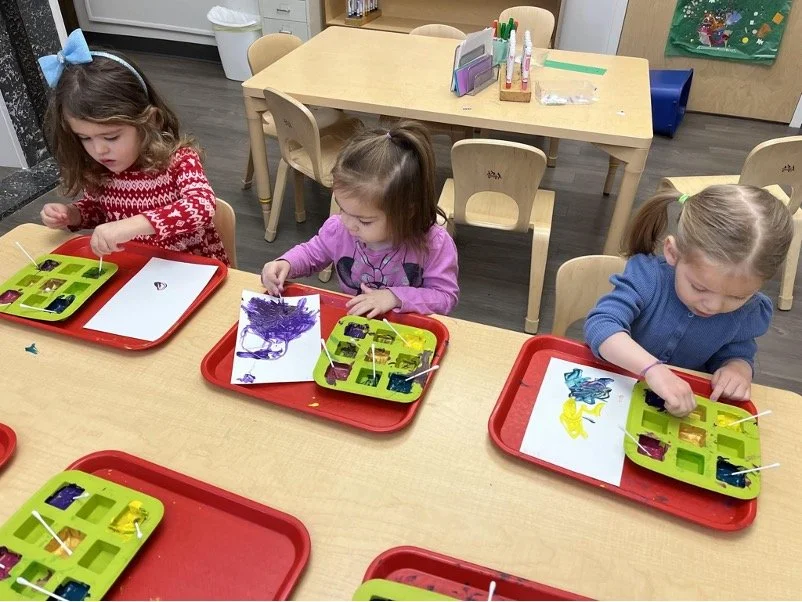
In our classroom, we continue to explore paint in various ways. Most recently, we offered q-tips with a variety of paint colors. Although children have some familiarity with paint, using q-tips to spread the paint onto the paper requires some thinking. Since q-tips are quite small, children must use their fingertips to grasp the stick, whereas many typically use a whole-hand grasp to hold a paintbrush. One can use different techniques to apply paint with a q-tip: the paint can be dabbed on with the tip, resulting in circular shaped dots or it can be spread, typically resulting in lines or swirls. We challenged children to return each q-tip back to its original paint pot in order to keep the colors from mixing. Once the paint was on the paper, however, many children were interested in watching the colors blend.
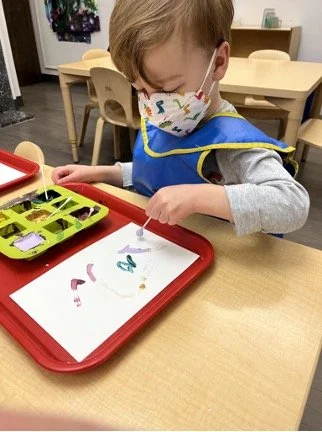
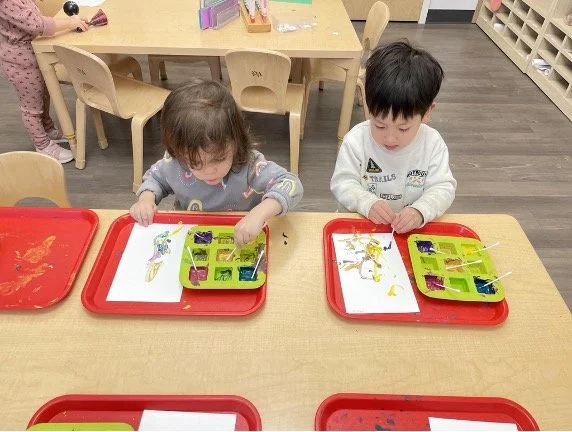
Children approach these activities in a variety of ways. Some are focused on a particular color or combination of colors. Some experiment with changing the colors by mixing them. Some experiment with different ways of applying the paint, while others spend a long time applying paint in one specific way.
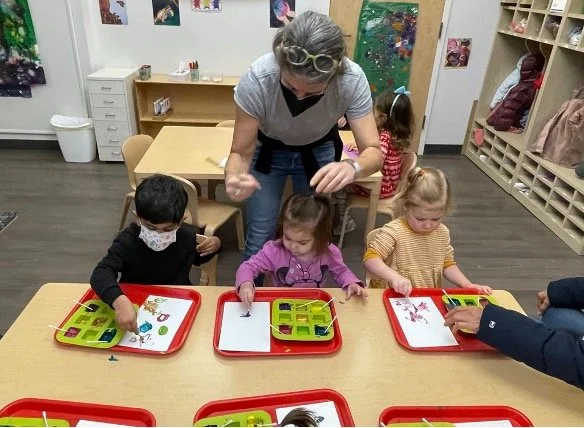
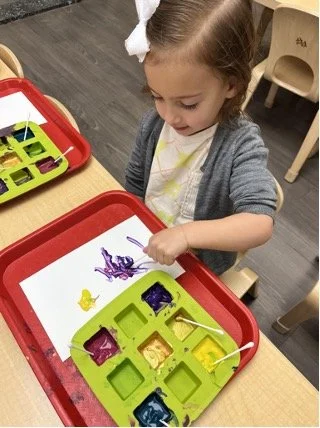
We see tremendous value in allowing children the freedom to explore materials in their own way. It helps children develop an understanding of physical properties, as they explore how each material acts and reacts. Children build their ability to problem solve as they adjust their strategies in response to the new tools and materials. It stimulates language development, as children discuss their observations, answer questions about what they’re doing and talk about what it reminds them of. These experiences provide important sensory input that stimulates the development of the nervous system. Perhaps most importantly, they help build a child’s confidence, initiative, creativity and sense of self as they generate their own ideas and explore their own unique questions.